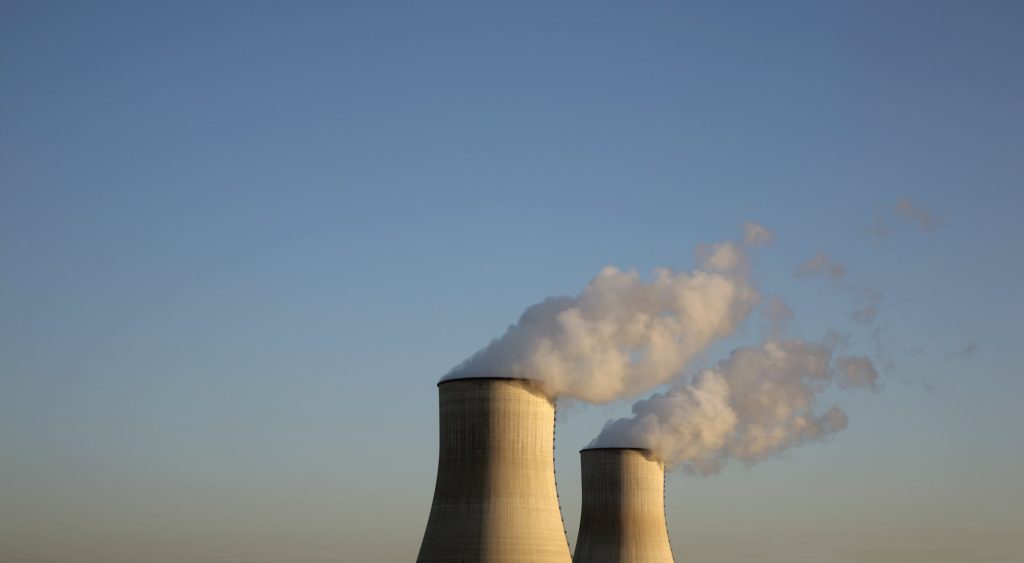
Nuclear startup X-energy began its investor roadshow Wednesday as it works toward its IPO, setting its target price between $16 and $19 per share, according to documents filed with the U.S. Securities and Exchange Commission. If it lists at the high end, the startup could net about $814 million.
X-energy and its peers have been riding a renewed wave of interest in fission power as demand for electricity has surged on the back of AI data centers and societywide electrification.
Amazon is one of X-energy’s biggest backers. The tech giant led a $500 million Series C-1 round and has pledged to buy as much as 5 gigawatts of nuclear power from the company by 2039.
The IPO is sure to come as a relief to X-energy’s investors, which have put about $1.8 billion into the company, according to PitchBook. The startup had previously attempted to go public via reverse merger with a special purpose acquisition company, but the two parties canceled the deal in 2023 as the SPAC craze petered out.
X-energy’s reactor is what’s known as a high-temperature, gas-cooled reactor. Inside, uranium encased in spheres of ceramic and carbon is cooled by helium gas. The gas then transfers heat to a steam turbine loop to generate electricity. The fuel design, known as TRISO, is expected to be safer than previous fuel arrangements, though it’s not widely used today.
The startup said in its SEC filing that it’s already embroiled in a patent dispute with another company that recently went bankrupt. Ultra Safe Nuclear Corporation (USNC) went bankrupt in 2024, and its assets were purchased in bankruptcy to form Standard Nuclear. X-energy alleges that USNC infringed on its fuel fabrication patents and that the matter hasn’t been resolved to its satisfaction during the course of the bankruptcy proceedings.
Outside of China, development of new nuclear reactors has all but stalled, stymied by delays and cost overruns. A new breed of startups hopes that by shrinking reactors, they’ll be able to overcome some of the challenges that have beset traditional designs.
Meet your next investor or portfolio startup at Disrupt
Your next round. Your next hire. Your next breakout opportunity. Find it at TechCrunch Disrupt 2026, where 10,000+ founders, investors, and tech leaders gather for three days of 250+ tactical sessions, powerful introductions, and market-defining innovation. Register now to save up to $410.
Meet your next investor or portfolio startup at Disrupt
Your next round. Your next hire. Your next breakout opportunity. Find it at TechCrunch Disrupt 2026, where 10,000+ founders, investors, and tech leaders gather for three days of 250+ tactical sessions, powerful introductions, and market-defining innovation. Register now to save up to $410.
None of the small modular reactor startups have built a power plant yet, though several are racing to meet a deadline of July 4 set by the Trump administration.
While many might miss the arbitrary deadline, they’re still likely to achieve criticality, the moment when fission reactions become self-sustaining.
But the road from criticality to profitable power plants is likely to be long. Mass manufacturing can help bring costs down, but it usually takes around a decade for the process to start paying dividends. What’s more, the number of reactors these companies are planning to build might be more than other companies have attempted, but it might not be high enough to reap the true benefits of mass manufacturing.
X-energy expects that by the time its reactor production techniques are mature — what experts call “Nth-of-a-kind” — it will be able to bring costs down by 30% relative to the first-of-a-kind. Investors should pay close attention to how much that first reactor costs. It could make or break the company’s prospects.