
You’ve heard the pitch a thousand times: AI is the silver bullet that will solve everything from customer churn to supply-chain bottlenecks. But the truth is messier. The pace of change in AI and analytics is so fast that most technology leaders are struggling just to keep their heads above water. You likely won’t get far with AI unless you have a modern data strategy, which means wading through a digital drawer full of fragmented environments and uneven governance practices.
You don’t have to go it alone. Sharing data modernization best practices and implementation strategies with other decision-makers and executives helps cut through the noise. Technology leaders are finding that connecting with their peers in a high-powered learning environment is a secret weapon that accelerates their efforts, driving data and analytics innovation.
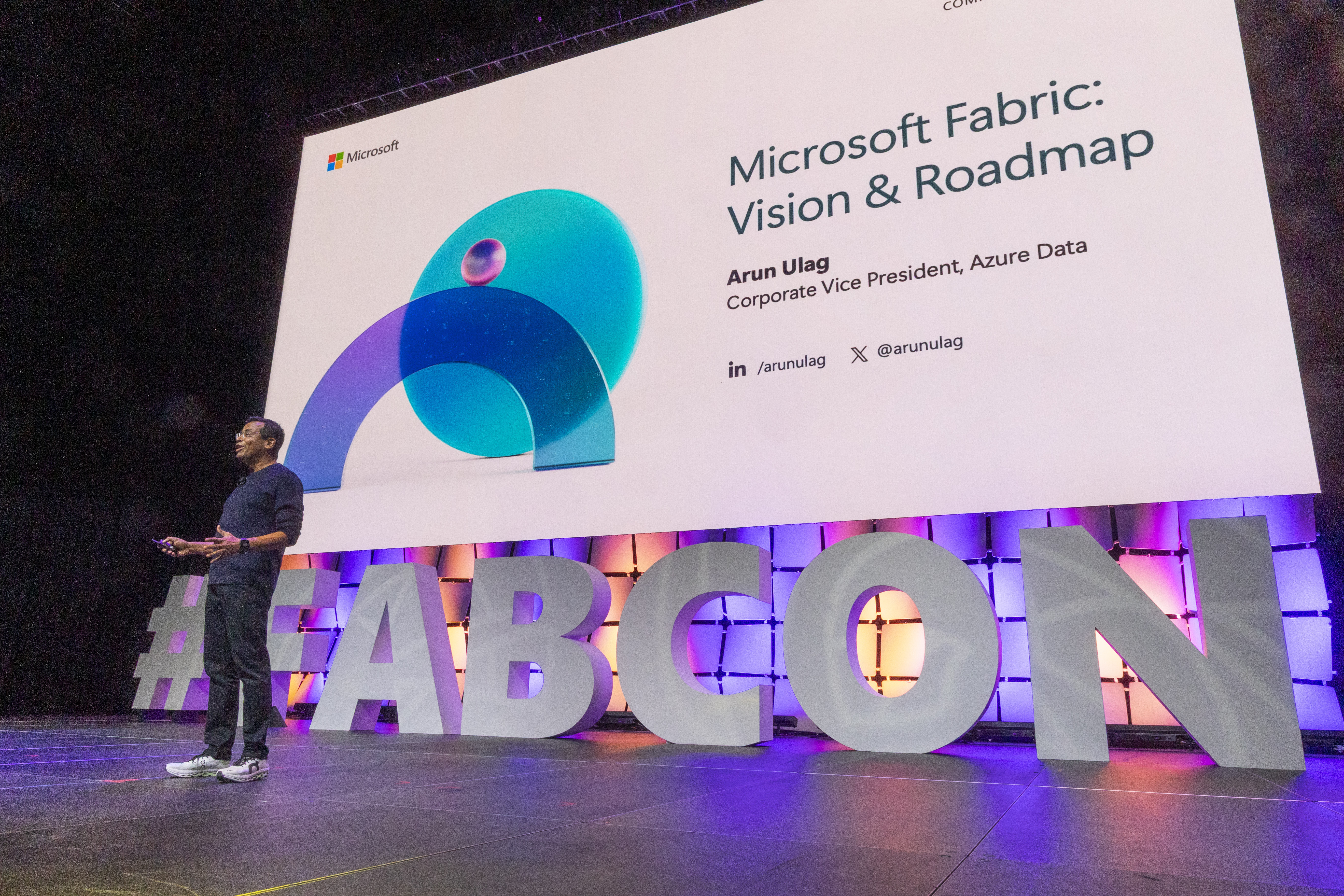
This is where the Microsoft Fabric Community Conference (FabCon) comes in. The event is the ultimate gathering for professionals exploring the power of Microsoft Fabric. Designed for data enthusiasts, analysts, and IT leaders, the conference features inspiring keynotes, more than 200 innovative breakout sessions, expert-led workshops, and networking opportunities. Last year’s FabCon attracted more than 6,000 attendees, and this year’s event promises to be even bigger.

Attendees say FabCon isn’t just another vendor trade show. Rather, it’s a community space designed to bridge the gap between platform promises and real-world implementations—and the experience moves the needle from hype to actual business results. Community is key at FabCon; attendees navigate and collaborate to prepare their data estates for AI.
The high cost of trial and error
For many organizations, the biggest barrier to AI innovation is a lack of clarity. Technology leaders are tasked with a nearly impossible job: Reduce data duplication and complexity while simultaneously preparing their teams for massive AI-driven workloads. When you don’t have a clear roadmap for modernizing your data estate, you end up in a cycle of costly trial and error that can stall even the most promising AI initiatives.
Make-A-Wish America, for example, must ensure forward movement. As a nonprofit, it doesn’t have the luxury of burning cash on experimental tech stacks that might not pan out. It must enable high mission impact using constrained technical resources—and the stakes of a failed implementation are quite high.
“As a nonprofit, we don’t have unlimited resources,” says Sunni Reich, director of Data, Reporting, and Analytics at Make-A-Wish America. “FabCon helped us quickly get answers, confirm our strategy, and connect with experts who could help us overcome challenges without costly trial and error.”
If you are working with limited headcounts or tight budgets, you know that a single afternoon spent with a peer who has already solved your problem is worth more than a month spent reading documentation.
Navigating the policy sprawl of the modern enterprise
While smaller organizations struggle with resources, the giants of the industry face a different monster: scale. When you operate at the level of a company like Lumen Technologies, your data isn’t just fragmented, it’s siloed across different continents, business units, and legacy systems.
This disconnection leads to what industry observers call “policy sprawl,” where governance requirements become so complex that they prevent the very AI-readiness they were designed to support.
“We were dealing with fragmented data and governance challenges across the organization,” says Eric Mahaffey, senior director, Data Architecture and Governance at Lumen Technologies. “FabCon gave us actionable insight into how others are approaching policy integration and AI readiness.”

But the value isn’t just in the high-level strategy; it’s also in the tactical wins. Jerod Ridge, director of Data Science and Analytics at Lumen Technologies, says that something as simple as a feature update can change the game if you know how to use it.
“One example was using the endorsement feature to more clearly govern what data assets are considered ‘blessed’ across teams,” Ridge says. That’s the kind of practical, “boring but important” insight you may only get when you’re talking shop in a hallway between sessions.
The force multiplier effect
One of the biggest misconceptions about tech conferences is that they are only for the person attending. In reality, the most successful companies treat FabCon as a strategic investment in their internal culture.
Michal Struginski, platform lead for Data Analytics at Flora Foods Group, describes a phenomenon that should attract the attention of every manager: the force multiplier.
“One FabCon attendee often becomes a force multiplier internally,” Struginski explains. “They bring back insights, context, and confidence that help teams build momentum.”

When you send a lead engineer to this event, they won’t just learn about the Microsoft Fabric roadmap—they’ll witness the practicalities of implementing at scale. Attendees return with the ability to reduce organizational resistance because they can say, “I saw this work at Lumen,” or “I talked to the product team, and here is how we can avoid a specific bug.”
Why sharing experiences moves the needle for AI
You could simply watch a keynote on YouTube, or read a product roadmap on a blog. What you can’t do from your desk is have a candid, off-the-record conversation with a peer who is facing or has faced the same challenges.
Attendees at FabCon consistently report that value is amplified in those informal moments—roundtables, Q&A sessions—and within the detail-sharing conversations that happen over coffee or in between talk tracks. It’s about validating your decisions. There is a unique kind of confidence that comes from hearing a subject-matter expert confirm that your architectural plan is sound.
As Reich from Make-a-Wish America puts it, “We left with concrete next steps, not just ideas, but guidance we could apply immediately.”
Struginski of Flora Foods adds: “Seeing the roadmap firsthand helped us clarify our own architectural priorities. FabCon gave us the confidence to simplify parts of our data design and focus on the approaches that would scale best for our teams.”
In a world of abstract AI potential, actionable insights are a valuable currency.
Building for 2026 and beyond
The goal of data modernization isn’t just to survive this year’s AI hype cycle; it’s to build a resilient, scalable architecture that can handle whatever comes next. Whether it’s deeper exploration of real-world AI use cases or tightening the alignment between your data and your business goals, the connections made at FabCon are designed to last well beyond the closing sessions.
To accelerate your organization’s move from experimentation to tangible impact, you need to tap into a vibrant community of decision-makers and practitioners who are actively navigating the same waters.
Ready to cut through the noise?
Join the community, talk to experts, and stop guessing about your data strategy. Register for FabCon and use the discount code TECHCRUNCH at checkout to receive $200 off the registration fee.