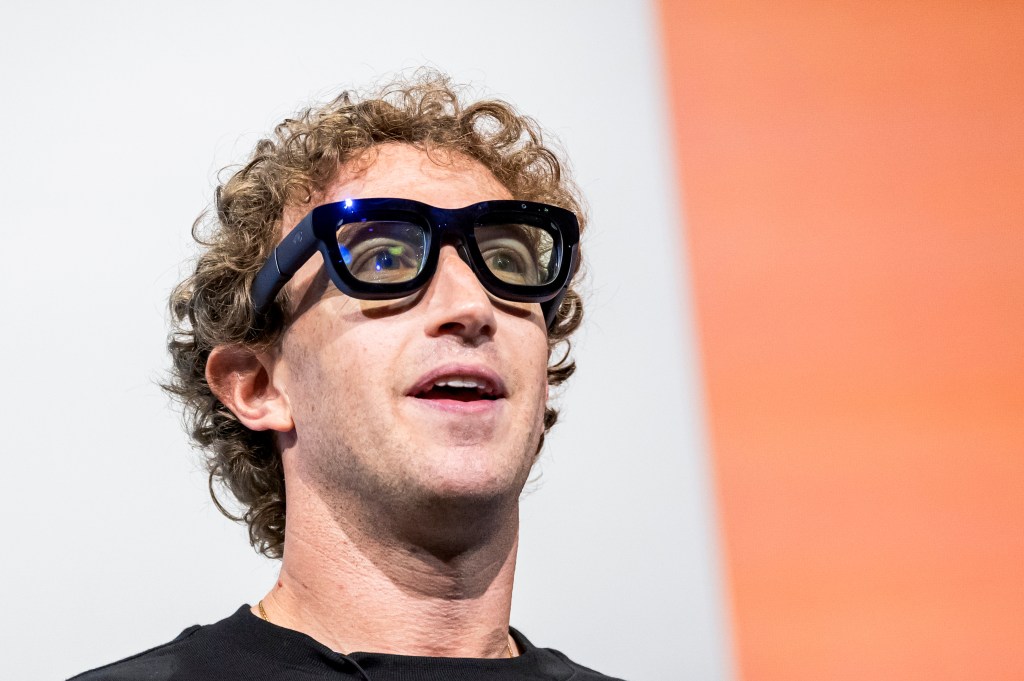
Meta has updated the privacy policy for its AI glasses, Ray-Ban Meta, giving the tech giant more power over what data it can store and use to train its AI models.
The company emailed Ray-Ban Meta owners on Tuesday with a notice that AI features will now be enabled on the glasses by default, according to The Verge. This means Meta’s AI will analyze photos and videos taken with the glasses while certain AI features are switched on. Meta will also store customers’ voice recordings to improve its products, without an option to opt out.
To be clear, Ray-Ban Meta glasses are not constantly recording and storing everything around the wearer. The device only stores speech that the user says after the “Hey Meta” wake word.
Meta’s privacy notice on voice services for wearables says that voice transcripts and recordings can be stored for “up to one year to help improve Meta’s products.” If a customer doesn’t want Meta to train its AI on their voice, they will have to manually delete each recording from the Ray-Ban Meta companion app.
The change in terms is along the lines of Amazon’s recent policy change affecting Echo users. As of last month, Amazon will run all Echo commands through the cloud, removing the more privacy-friendly option to process voice data locally.
Companies like Meta and Amazon are eager to hoard these heaps of voice recordings because they are useful training data for their generative AI products. With a wider range of audio recordings, Meta’s AI can possibly do a better job at processing different accents, dialects, and patterns of speech.
But improving its AI comes at the expense of user privacy. A user may not understand that if they use their Ray-Ban Meta glasses out of the box to photograph a loved one, that person’s face may find its way into Meta’s training data, for example. The AI models behind these products require obscene amounts of content, and it benefits companies to train their AI on the data that their users are already producing.
Disrupt 2026: The tech ecosystem, all in one room
Your next round. Your next hire. Your next breakout opportunity. Find it at TechCrunch Disrupt 2026, where 10,000+ founders, investors, and tech leaders gather for three days of 250+ tactical sessions, powerful introductions, and market-defining innovation. Register now to save up to $400.
Save up to $300 or 30% to TechCrunch Founder Summit
1,000+ founders and investors come together at TechCrunch Founder Summit 2026 for a full day focused on growth, execution, and real-world scaling. Learn from founders and investors who have shaped the industry. Connect with peers navigating similar growth stages. Walk away with tactics you can apply immediately
Offer ends March 13.
Meta’s hoarding of user data is not new. Already, the company trains its Llama AI models on public posts that American users share on Facebook and Instagram.