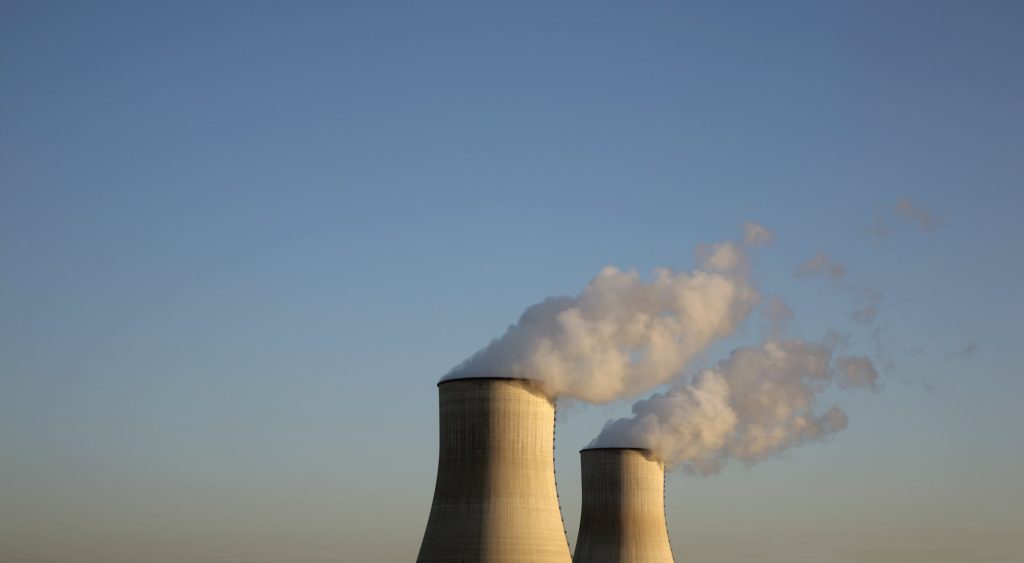
Nuclear startup Kairos Power received approval from the U.S. Nuclear Regulatory Commission to start construction on two test reactors in Oak Ridge, Tennessee. The permit marks a significant milestone for Kairos, which in October inked a deal with Google to provide 500 megawatts of electricity for its data centers.
The fluoride-salt cooled, high-temperature reactors are scaled down versions of what Kairos hopes to ultimately build to supply Google with electricity starting in 2030. And while the new reactors are technically test beds, Kairos intends to connect the power plant to the grid, spokesperson Ashley Lewis told TechCrunch.
The Hermes 2 reactors will be capable of producing 35 megawatts of heat each, and they’ll be connected to a 20 megawatt turbine to turn that heat into electricity. Kairos’ commercial-scale power plant will also feature two reactors capable of generating a combined 150 megawatts of electricity.
Kairos’ design differs from existing nuclear reactors in two key ways: The fuel is made of uranium coated in carbon and ceramic shells, which are intended to be durable enough to contain fissile material in the case of an accident. And the reactor isn’t cooled by water but by molten salt.
The small modular reactor (SMR) startup, which has received a $303 million award from the U.S. Department of Energy, has been working for years to refine its molten salt-cooling system. Fluoride salts’ extremely high boiling points allow the coolant to flow under low pressure. That means in the case of an accident, there won’t be any high-pressure, radioactive material waiting to burst forth should pumping systems fail. Plus, Oak Ridge National Laboratory says that, should power to the pumps fail, molten-salt reactors can rely on passive convection to move salt through the reactor to cool it.
Altogether, those features are enough to qualify Kairos’ designs as “Generation IV” reactors, a classification system created by an international organization backed by national nuclear agencies. The classification system is both vague and broad, so it’s hard to tell exactly how Hermes 2 might score on the rubric.
Kairos has been inching toward approval for the reactor design for the last year and a half. Hermes 2 passed its safety review with the NRC in July and its environmental assessment in August. All told, it took 18 months for the NRC to issue the construction permit, a relatively swift timeline compared with previous reactor permits.
Disrupt 2026: The tech ecosystem, all in one room
Your next round. Your next hire. Your next breakout opportunity. Find it at TechCrunch Disrupt 2026, where 10,000+ founders, investors, and tech leaders gather for three days of 250+ tactical sessions, powerful introductions, and market-defining innovation. Register now to save up to $400.
Save up to $300 or 30% to TechCrunch Founder Summit
1,000+ founders and investors come together at TechCrunch Founder Summit 2026 for a full day focused on growth, execution, and real-world scaling. Learn from founders and investors who have shaped the industry. Connect with peers navigating similar growth stages. Walk away with tactics you can apply immediately
Offer ends March 13.
Now the pressure is on Kairos to deliver on its promises. The company says it hopes to have the first reactor for the Google deal online in 2030 and the rest completed by 2035. In the world of nuclear power, a decade isn’t much time at all.