
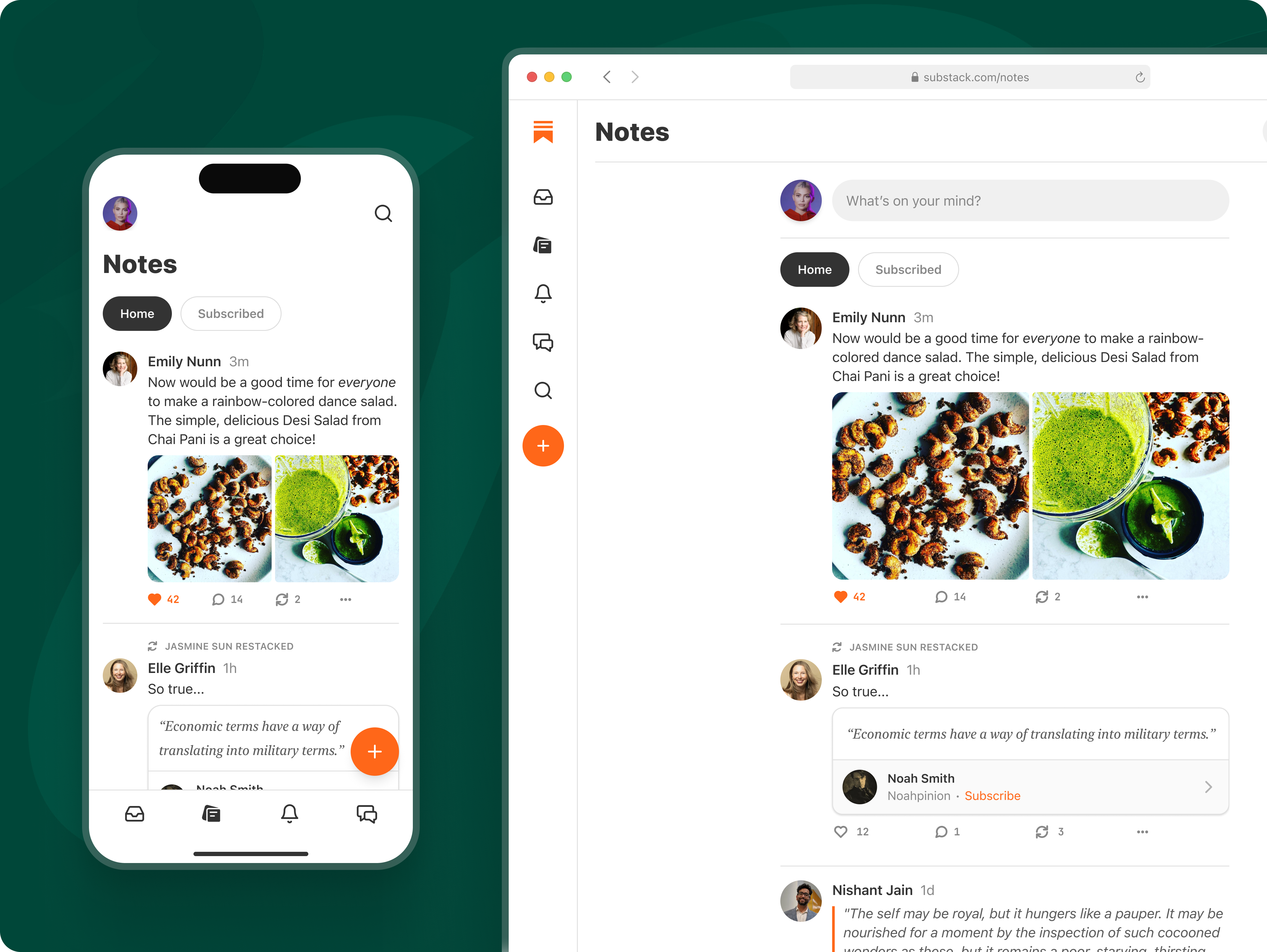
Substack announced today that it’s introducing a new Notes feature that is designed to let users share posts, quotes, comments, images, links and ideas. Notes shared on the platform are displayed in a dedicated short-form feed that looks a lot like Twitter. Once you share a note, it’s essentially like posting a tweet. Each note displays a like count and comment count. There’s also the option to “restack,” or retweet, a post.
The company seems to agree that the new feature looks similar to Twitter, as Substack noted in its announcement post that Notes “may look like familiar social media feeds.” However, Substack argues that Notes differs from traditional social media feeds because it doesn’t run on ads.
“The lifeblood of an ad-based social media feed is attention,” the company wrote in a blog post. “By contrast, the lifeblood of a subscription network is the money paid to people who are doing great work within it. Here, people get rewarded for respecting the trust and attention of their audiences. The ultimate goal on this platform is to convert casual readers into paying subscribers. In this system, the vast majority of the financial rewards go to the creators of the content.”
Substack also argues that Notes won’t feel like traditional social media, and that the goal with the new product is not to create a “perfectly sanitized information environment,” but to allow for constructive discussion where there is enough common ground to seek understanding “while holding onto the worthwhile tension needed for great art and new ideas.”
Given the company’s propensity to host controversial writers and the otherwise deplatformed, this direction with its Notes feed could see it wading even deeper into the culture wars surrounding what constitutes free speech. The more Substack associates its brand with the more extreme personal brands of divisive media personalities, the less it may be able to attract the larger (and typically more moderate) readers that constitute the majority of any network’s user base.
The launch of Notes isn’t the only way Substack has attempted to capitalize on the Twitter chaos in recent months, as the company rolled out a Chat feature last November. It also took a more direct shot at Twitter, when it warned in a post last year that “Twitter is changing, and it’s tough to predict what might be next.” The post had encouraged creators of all sorts to port their Twitter follower base to Substack. The new Notes product, which is pretty much a Twitter clone, takes Substack’s hopes on capitalizing on the Twitter chaos even further.
It’s worth noting that with Notes, Substack is not only taking on Twitter, where many back-and-forth threaded discussions between writers and readers already take place, but also other online communities where writers have been building out networks of their own, like Discord, Slack and Telegram.
Disrupt 2026: The tech ecosystem, all in one room
Your next round. Your next hire. Your next breakout opportunity. Find it at TechCrunch Disrupt 2026, where 10,000+ founders, investors, and tech leaders gather for three days of 250+ tactical sessions, powerful introductions, and market-defining innovation. Register now to save up to $400.
Save up to $300 or 30% to TechCrunch Founder Summit
1,000+ founders and investors come together at TechCrunch Founder Summit 2026 for a full day focused on growth, execution, and real-world scaling. Learn from founders and investors who have shaped the industry. Connect with peers navigating similar growth stages. Walk away with tactics you can apply immediately
Offer ends March 13.
Today’s announcement comes a week after Substack opened up a community fundraising round, letting writers invest in and own a piece of the company. As of today, Substack has $7,138,675 in pledges.
The company revealed that readers have paid writers more than $300 million through Substack, and that the platform now has more than 35 million active subscriptions, including two million paid subscriptions. Substack also revealed that more than 17,000 writers are earning money on Substack, with the top 10 publishers on Substack collectively making more than $25 million annually.