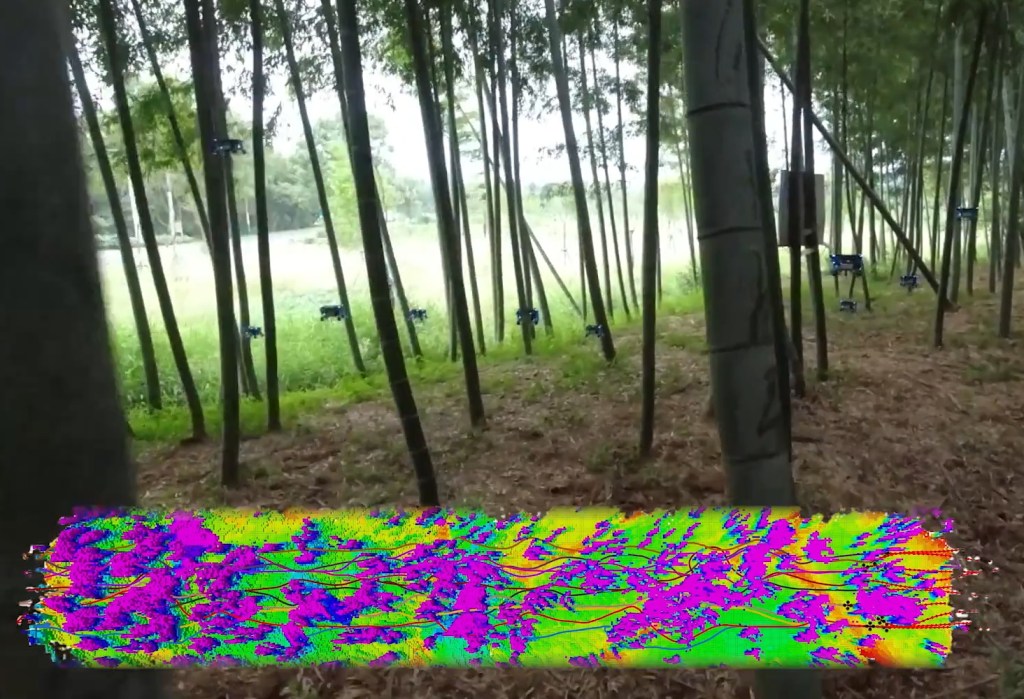
If drones are to take over any of the numerous tasks they are supposed to, they’re going to have to get a lot smarter — and learn to work together. In a demonstration of both of these things, Chinese researchers show off a swarm of drones collectively navigating a dense forest they’ve never encountered.
We’ve seen drone swarms before, going back a long ways in fact, but while they’re often well coordinated, they’re not collectively autonomous. That is, although they fly in an adjustable formation and avoid obstacles, their trajectories are being controlled by a central computer monitoring their positions and issuing commands.
As you can imagine, it would be useful to have drones that can coordinate their movements with each other, absent any central organizing function. But this is difficult to effect, since the bulk of the sensors and computational resources needed to quickly and effectively perceive and react to the environment are detrimental to the very agility needed to do so.
Researchers at Zheijang University in Hangzhou have succeeded, however, with a 10-strong drone swarm smart enough to fly autonomously through a dense, unfamiliar forest, but small and light enough that each one can easily fit in the palm of your hand. It’s a big step toward using swarms like this for things like aerial surveying and disaster response.
Based on an off-the-shelf ultra-compact drone design, the team built a trajectory planner for the group that relies entirely on data from the onboard sensors of the swarm, which they process locally and share with each other. The drones can balance or be directed to pursue various goals, such as maintaining a certain distance from obstacles or each other, or minimizing the total flight time between two points, and so on.
Disrupt 2026: The tech ecosystem, all in one room
Your next round. Your next hire. Your next breakout opportunity. Find it at TechCrunch Disrupt 2026, where 10,000+ founders, investors, and tech leaders gather for three days of 250+ tactical sessions, powerful introductions, and market-defining innovation. Register now to save up to $400.
Save up to $300 or 30% to TechCrunch Founder Summit
1,000+ founders and investors come together at TechCrunch Founder Summit 2026 for a full day focused on growth, execution, and real-world scaling. Learn from founders and investors who have shaped the industry. Connect with peers navigating similar growth stages. Walk away with tactics you can apply immediately
Offer ends March 13.
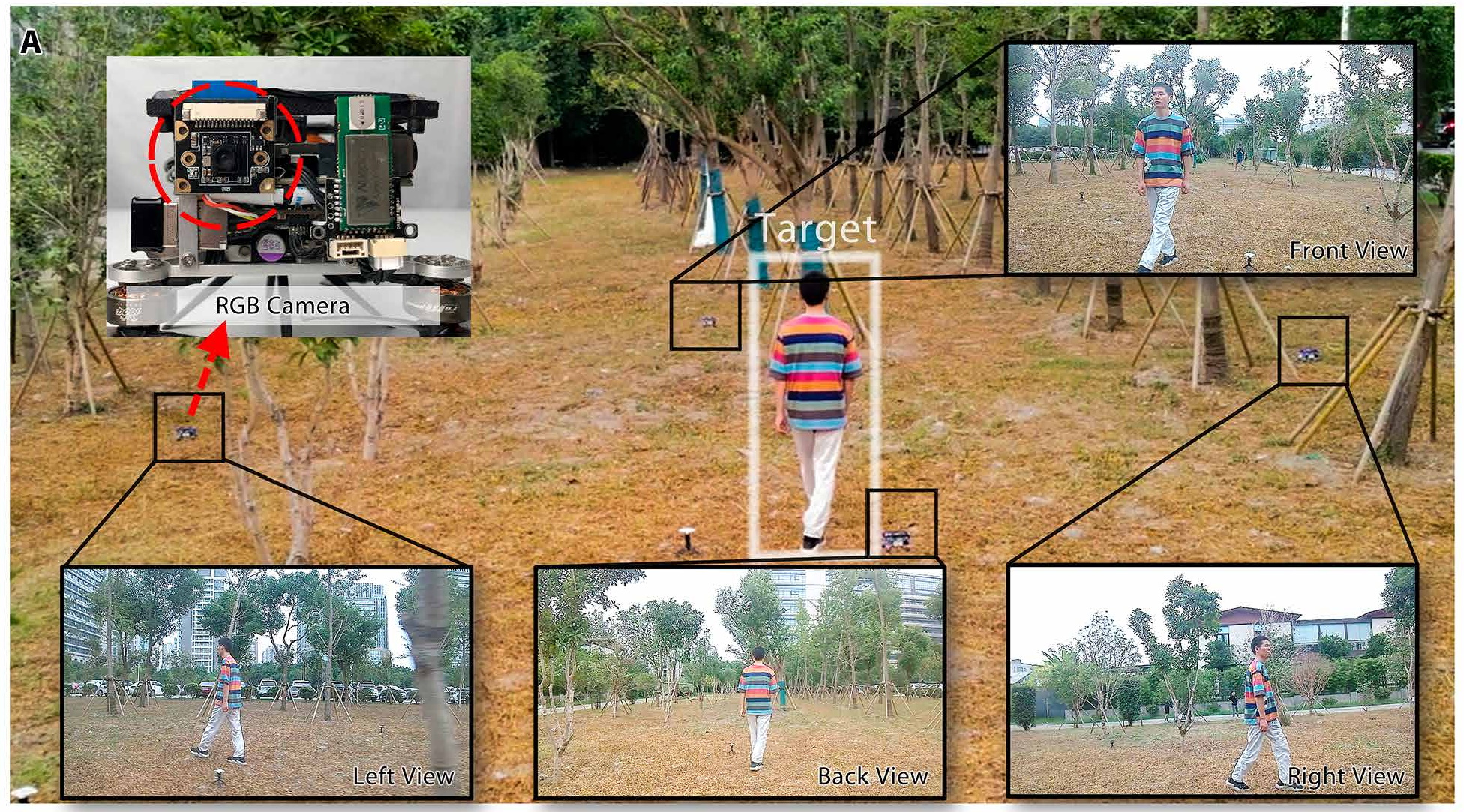
The drones can also, worryingly, be given a task like “follow this human.” We’ve all seen enough movies to know this is how it starts … but of course it could be useful in rescue or combat circumstances as well.
A part of their navigation involves mapping the world around them, of course, and the paper includes some very cool-looking 3D representations of the environments the swarm was sent through. Here’s one:
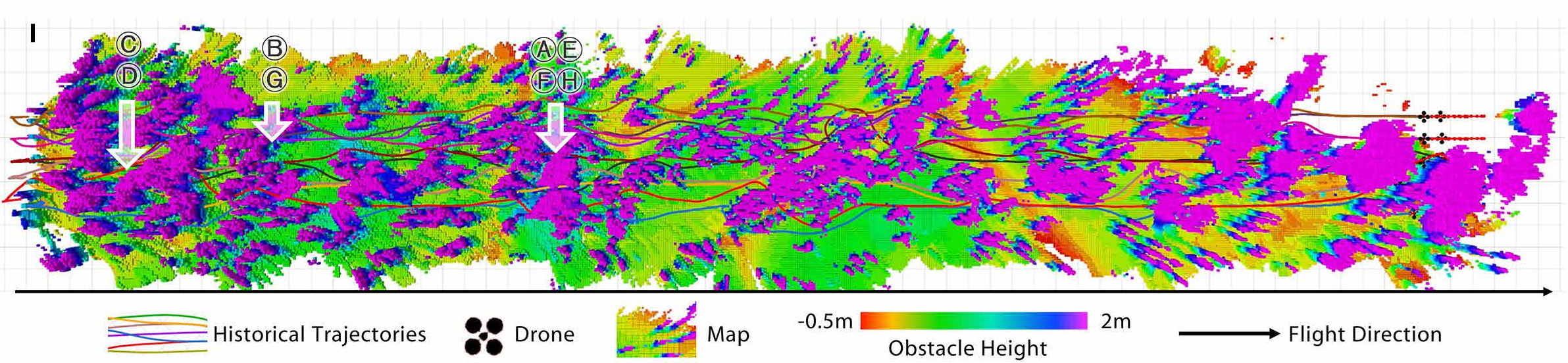
Image Credits: Zhou et alThe study is published in the most recent issue of the journal Science Robotics, which you can read here, along with several videos showing off the drones in action.