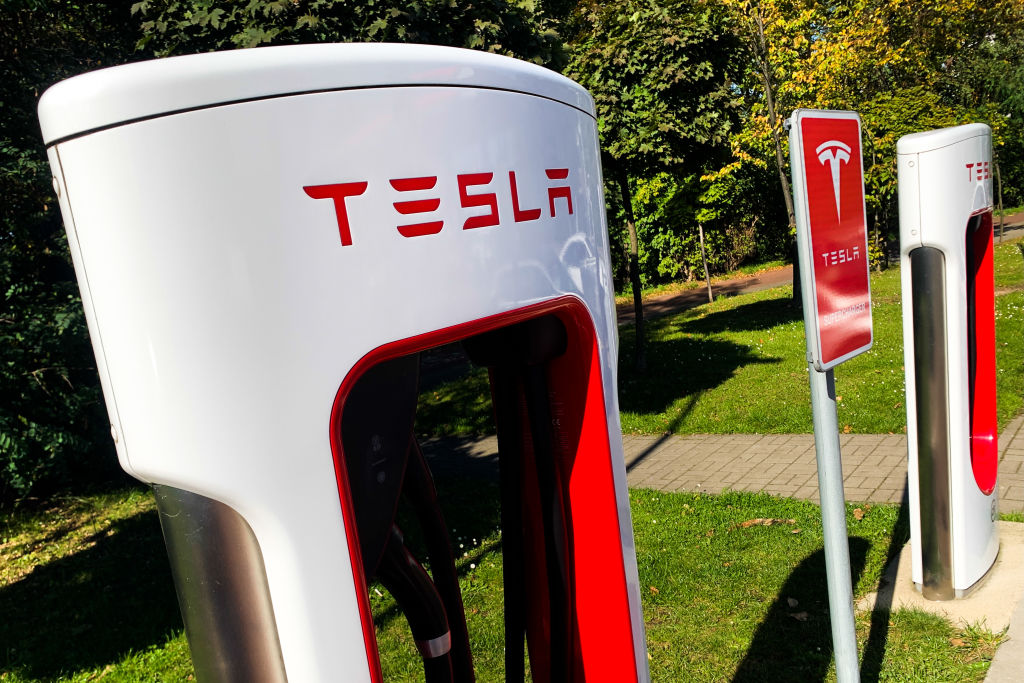
Tesla said Monday that non-Tesla owners can charge their electric vehicles at all Supercharger stations in the Netherlands.
The announcement marks an expansion of a pilot program that kicked off in November 2021 with 10 stations. CEO Elon Musk had initially expressed interest in opening up the Supercharger network to other EVs in the summer of the same year.
Unlike other automakers, Tesla operates an expansive proprietary network that has previously prevented EVs from other automakers from using the chargers. The network, which Tesla began building in 2012, now surpasses 30,000 Superchargers at more than 2,500 stations globally.
Non-Tesla vehicles can now charge at all Superchargers in the Netherlands via the Tesla app. Learn more at https://t.co/hjybH0ROdl pic.twitter.com/zjomySylf9
— Tesla Charging (@TeslaCharging) February 14, 2022
The company’s pilot program lets non-Tesla EV drivers in the Netherlands and some stations in other European countries, including France, Norway and Belgium charge their cars via the Tesla app — the automaker has not yet integrated its stations with other EV station collators like PlugShare.
Disrupt 2026: The tech ecosystem, all in one room
Your next round. Your next hire. Your next breakout opportunity. Find it at TechCrunch Disrupt 2026, where 10,000+ founders, investors, and tech leaders gather for three days of 250+ tactical sessions, powerful introductions, and market-defining innovation. Register now to save up to $400.
Save up to $300 or 30% to TechCrunch Founder Summit
1,000+ founders and investors come together at TechCrunch Founder Summit 2026 for a full day focused on growth, execution, and real-world scaling. Learn from founders and investors who have shaped the industry. Connect with peers navigating similar growth stages. Walk away with tactics you can apply immediately
Offer ends March 13.
Tesla uses a proprietary plug that only fits into Tesla vehicles, so the pilot is only accessible for combined charging system-enabled (CCS) vehicles. Supercharger posts have two cables; non-Tesla cars can use the CCS connector, which may not fit with all cars — if that happens, Tesla says drivers are to report the problem to its customer support center.
Non-Tesla EVs might get charged more for the pleasure of charging at Tesla’s sites, due to the “additional costs incurred to support charging a broad range of vehicles and adjustments to our sites to accommodate these vehicles,” according to Tesla. That said, the per kWh price to charge might be lowered if drivers purchase a charging membership.
Tesla said it is starting with a select number of sites so it can “review the experience, monitor congestion and assess feedback before expanding.” Future sites will only be opened to non-Tesla vehicles if there is available capacity.
The Netherlands has the largest number of EV charging stations in Europe, with 75,000 stations, which gives Tesla a competitive playground to further test this pilot. Tesla has 33 stations in the Netherlands, with 18 new stations “coming soon,” according to Tesla’s website.