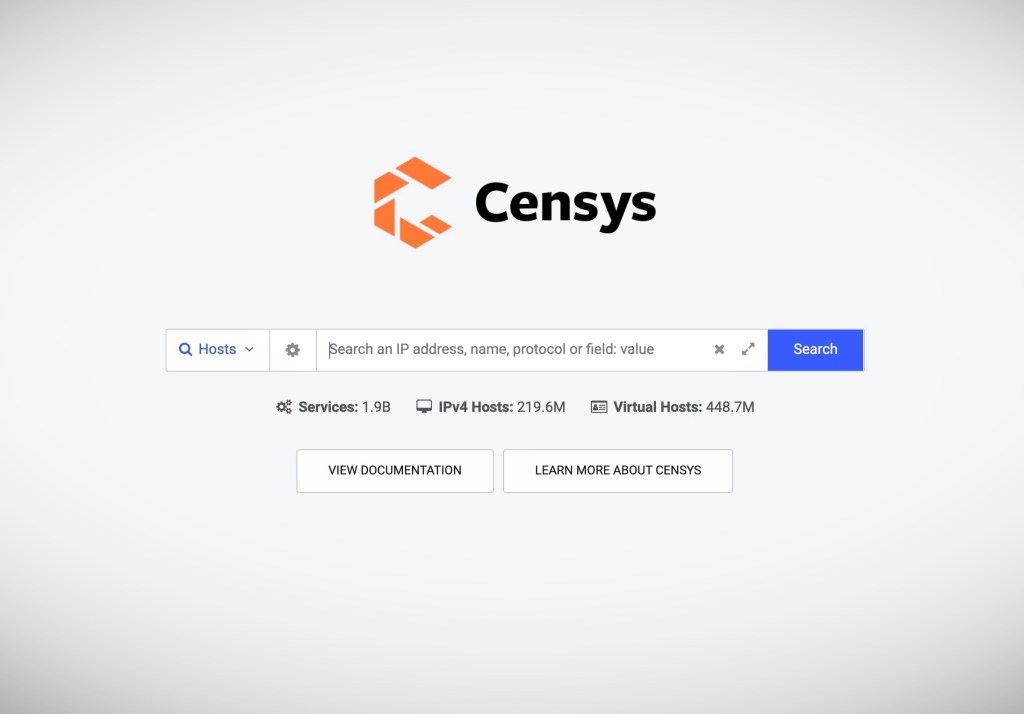
Censys, a search engine for Internet of Things devices and internet assets, has secured $35 million in Series B funding and a new CEO.
The internet security startup, based in Michigan tech hub Ann Arbor, which started as an open source research project at the University of Michigan seven years ago, claims to provide a “complete database” of all devices hooked up to the internet in a bid to help organizations locate poorly protected assets. Censys’ attack surface management platform continuously discovers businesses’ internet assets and monitors them, identifying security issues and preventing oversights from becoming vulnerabilities by ensuring that assets are protected by integrating with existing security solutions.
The company’s Series B investment, which comes after the startup secured $15.5 million in Series A funding in August 2020, was led by Intel Capital. Censys tells TechCrunch that the funds will be used to accelerate the company’s R&D, engineering, product and sales operations, particularly in Western Europe.
In addition, Censys has named Brad Brooks, former CEO of OneLogin, as its new CEO. Brooks, a technology industry veteran who has worked with the likes of DocuSign, Juniper Networks and Microsoft over the past 25 years, replaces interim chief executive Lorne Groe, who returns to his role as CFO and COO.
Brooks tells TechCrunch that he has been brought onboard to help lead the company into its next growth phase, which he says will likely include another round of funding within the next nine to 12 months. “With this round, we go from startup stage to growth stage,” he says.
The startup is already growing rapidly; Brooks tells TechCrunch that it is seeing triple-digit revenue growth year on year, and continues to add big-name customers, including FireEye, Google and the U.S. Department of Homeland Security.
“The company is currently in the classic hyper-growth situation. The biggest problem the company has now is how fast it’s growing,” he says, adding that this has been driven by organizations’ shift to remote and hybrid working models and their accelerated adoption of cloud services.
Disrupt 2026: The tech ecosystem, all in one room
Your next round. Your next hire. Your next breakout opportunity. Find it at TechCrunch Disrupt 2026, where 10,000+ founders, investors, and tech leaders gather for three days of 250+ tactical sessions, powerful introductions, and market-defining innovation. Register now to save up to $400.
Save up to $300 or 30% to TechCrunch Founder Summit
1,000+ founders and investors come together at TechCrunch Founder Summit 2026 for a full day focused on growth, execution, and real-world scaling. Learn from founders and investors who have shaped the industry. Connect with peers navigating similar growth stages. Walk away with tactics you can apply immediately
Offer ends March 13.
“The thing about the cloud is that it’s not getting simpler, it’s getting more complex. As you put more users and more stuff out there, each one is a chance for misconfiguration,” he said. “Having something that is constantly viewing your environment becomes increasingly critical, and that’s what’s driving this growth right now.”