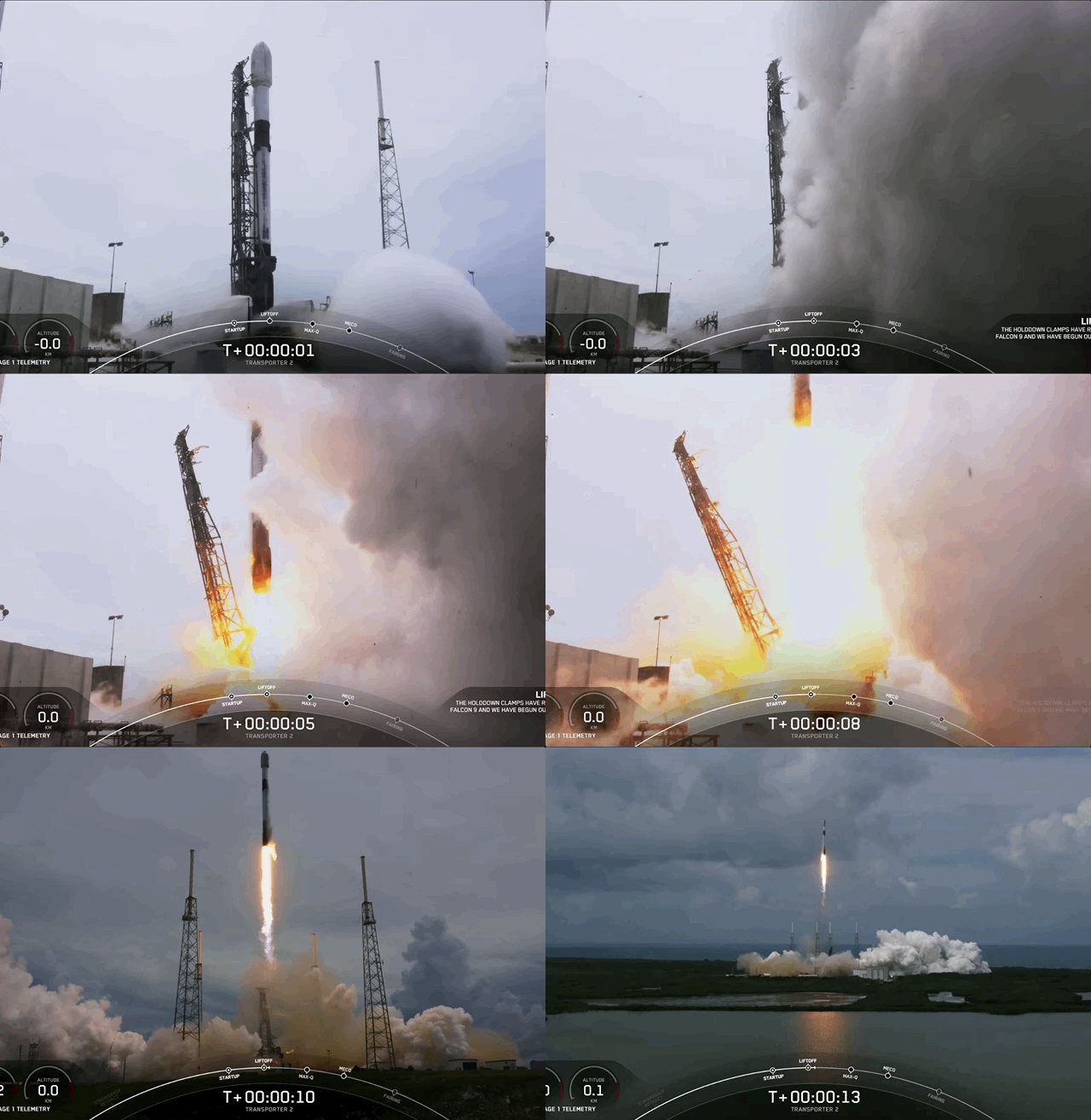
SpaceX launched 85 satellites for external customers, as well as three Starlink satellites, to orbit on Tuesday, marking the second successful launch of the company’s dedicated rideshare missions. While the Transporter-2 mission will deliver fewer objects to space than the first rideshare mission (the Transporter-1 sent up 143 satellites, a new record), it launched more mass to orbit overall.
The Transporter launches are part of the company’s rideshare business model. Announced in 2019, these missions split up the rocket’s payload capacity among multiple customers, resulting in lower costs for each – many of whom are smaller companies that may find the expenses associated with getting to orbit otherwise impossible to pay. SpaceX still ends up with a full launch and the revenue to operate it.
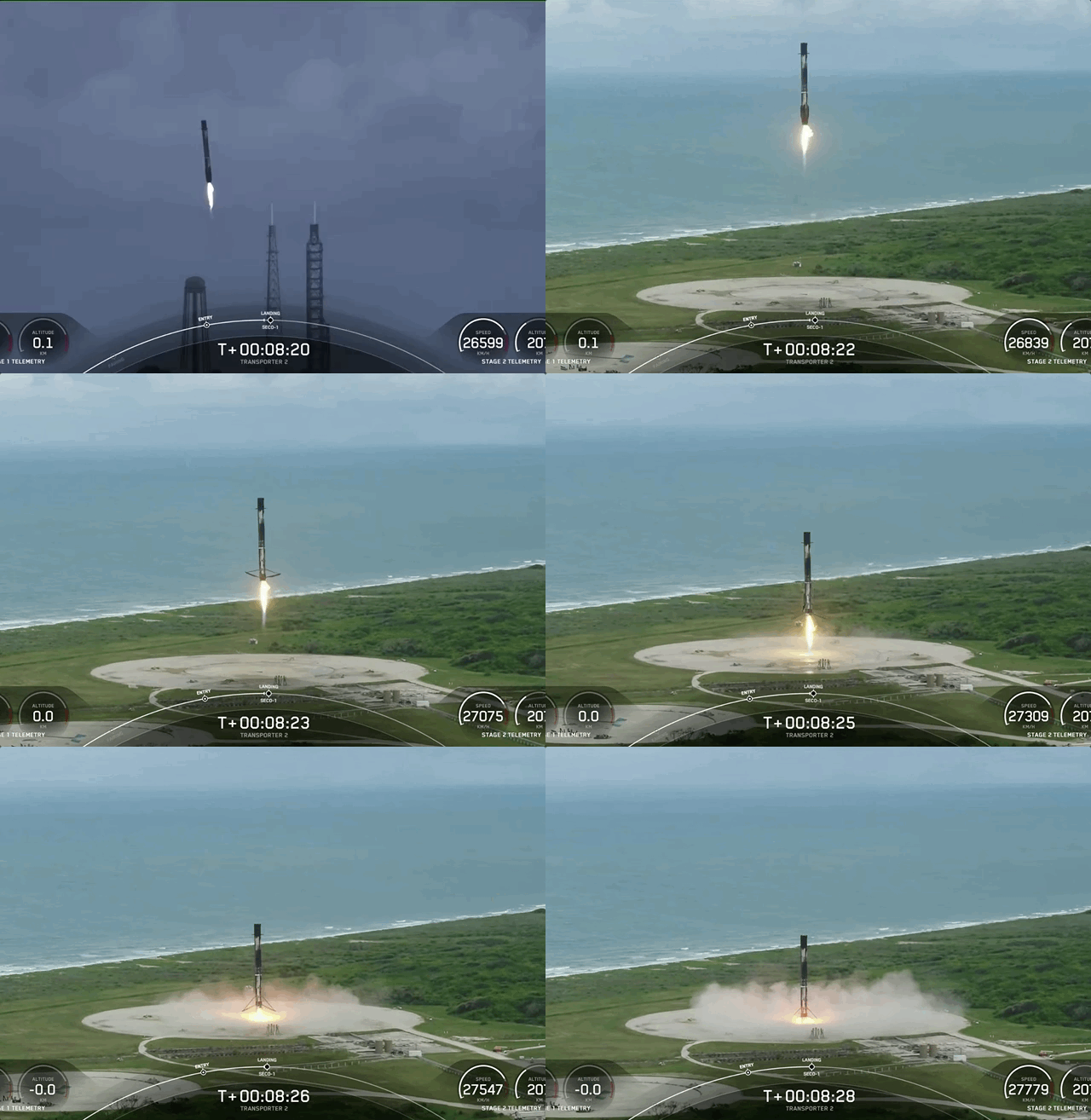
The Falcon 9 rocket took off from Cape Canaveral in Florida at around 3:31 PM Eastern time. It’s the 20th Falcon 9 launch in 2021 and the first launch this year that featured the first stage returning to land onshore, rather than on a drone ship at sea. The first stage booster separated at around 3:34 PM ET and returned to Cape Canaveral and successfully landed around eight minutes after liftoff. This was its eighth flight.
The mission includes nearly 10 customers, some of whom are launch service providers who are themselves organizing customer payloads – like Spaceflight Inc., which is launching 36 small satellites on behalf of 14 customers, as well as its electric propulsion vehicle dubbed Sherpa-LTE. It also includes the first satellite launch for space intelligence company Umbra and Loft Orbital’s “rideshare” satellites, YAM-2 and YAM-3, each of which are equipped with five independent sensors for separate customers.
As this was SpaceX’s 20th launch this year (and 127th mission to date), it’s pretty safe to assume that the company will far surpass last year’s record of 26 launches.
This was the second attempt of the Transporter-2 launch, which was originally scheduled for June 29. That launch was halted at T-11 seconds after a rotary aircraft entered the flight zone. SpaceX CEO Elon Musk called the regulatory system broken in response.
Unfortunately, launch is called off for today, as an aircraft entered the “keep out zone”, which is unreasonably gigantic.
Techcrunch eventDisrupt 2026: The tech ecosystem, all in one room
Your next round. Your next hire. Your next breakout opportunity. Find it at TechCrunch Disrupt 2026, where 10,000+ founders, investors, and tech leaders gather for three days of 250+ tactical sessions, powerful introductions, and market-defining innovation. Register now to save up to $400.
Save up to $300 or 30% to TechCrunch Founder Summit
1,000+ founders and investors come together at TechCrunch Founder Summit 2026 for a full day focused on growth, execution, and real-world scaling. Learn from founders and investors who have shaped the industry. Connect with peers navigating similar growth stages. Walk away with tactics you can apply immediately
Offer ends March 13.San Francisco, CA | October 13-15, 2026There is simply no way that humanity can become a spacefaring civilization without major regulatory reform. The current regulatory system is broken.
— Elon Musk (@elonmusk) June 29, 2021
SpaceX sets new record for most satellites on a single launch with latest Falcon 9 mission