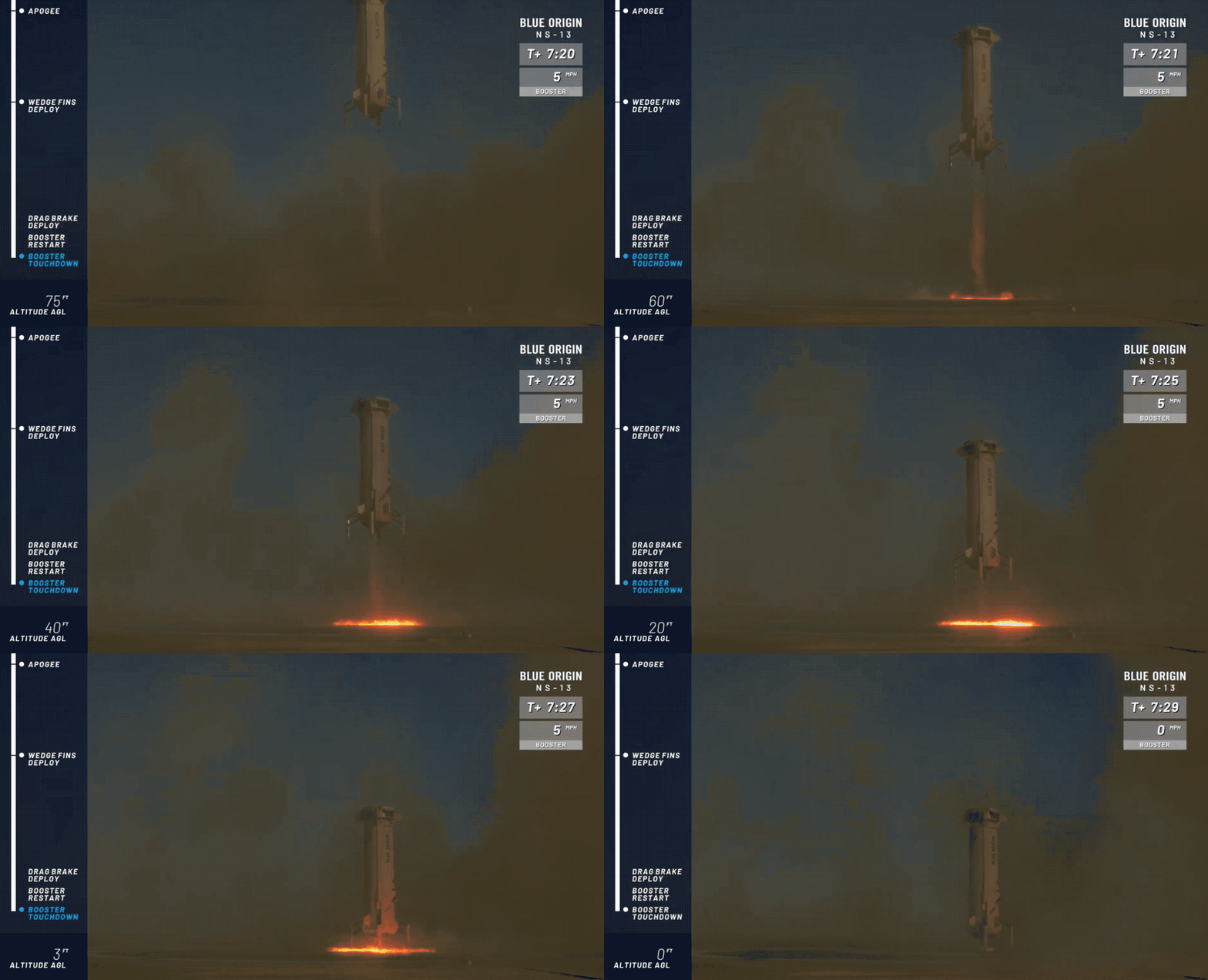
Jeff Bezos’ space company Blue Origin launched its first mission of 2020 today, flying a New Shepard sub-orbital rocket from its West Texas testing facility. This particular rocket has flown a total of seven times (including today), and this is now the 13th flight of a New Shepard vehicle overall. Today’s launch included a test of NASA’s active landing sensor system, which will be used to build an autonomous, precise and flexible landing system for future moon landing vehicles.
The NASA landing system test also marks a first for Blue Origin — the first time it has tested flying a payload on the outside of New Shepard. To date, all New Shepard payloads have traveled inside the capsule atop the booster, but the external test here was necessary in order to perform measurements of the instruments that will be used to provide repeatable, precision landing capabilities to future spacecraft.
Learn how the @NASA lunar landing sensor demo on #NewShepard tests precision landing tech for future missions to the Moon in support of #Artemis. This is the first payload to fly on the exterior of a New Shepard booster. Watch: pic.twitter.com/vrUzLGadgS
— Blue Origin (@blueorigin) October 13, 2020
While NASA was obviously previously able to land on the surface of the moon, it’s looking to upgrade the technology it uses to do so in order to be able to handle the challenging task with full automation, and with much higher precision for hitting very specific targets on the lunar surface — and providing spacecraft the ability to do so over and over again, reliably, since NASA’s goal with its Artemis generation of moon missions is to establish a more permanent human research presence on our large natural satellite.
Disrupt 2026: The tech ecosystem, all in one room
Your next round. Your next hire. Your next breakout opportunity. Find it at TechCrunch Disrupt 2026, where 10,000+ founders, investors, and tech leaders gather for three days of 250+ tactical sessions, powerful introductions, and market-defining innovation. Register now to save up to $400.
Save up to $300 or 30% to TechCrunch Founder Summit
1,000+ founders and investors come together at TechCrunch Founder Summit 2026 for a full day focused on growth, execution, and real-world scaling. Learn from founders and investors who have shaped the industry. Connect with peers navigating similar growth stages. Walk away with tactics you can apply immediately
Offer ends March 13.
A number of experiments are also on board that capsule, which returned to Earth with a soft, parachute-aided landing. This launch also included a new heat shield used on the rocket as part of testing for future New Glenn flights, the next generation of Blue Origin spacecraft that will be able to handle orbital payload launches, adding to Blue Origin’s current suborbital capabilities with New Shepard.