Robotic arms can move fast enough to snatch thrown objects right out of the air… but should they? Not unless you want them to unnerve the humans they’re interacting with, according to work out of Disney Research. Roboticists there found that slowing a robot’s reaction time made it feel more normal to people.
Disney has, of course, been interested in robotics for decades, and the automatons in its theme parks are among the most famous robots in the world. But there are few opportunities for those robots to interact directly with people. Hence a series of research projects at its research division aimed at safe and non-weird robot-human coexistence.
In this case the question was how to make handing over an item to a robot feel natural and non-threatening. Obviously if, when you reached out with a ticket or empty cup, the robot moved like lightning and snapped it out of your hands, that could be seen as potentially dangerous, or at the very least make people nervous.
Researchers Teach A Robot To Catch Flying Objects Like Yogi Berra
So the robot arm in this case (attached to an anthropomorphic cat torso) moves at a normal human speed. But there’s also the question of when it should reach out. After all, it takes us humans a second to realize that someone is handing something to us, then to reach out and grab it. A computer vision system might be able to track an object and send the hand after it more quickly, but it might feel strange.
The researchers set up an experiment where the robot hand reached out to take a ring from a person under three conditions each of speed and delay.
Disrupt 2026: The tech ecosystem, all in one room
Your next round. Your next hire. Your next breakout opportunity. Find it at TechCrunch Disrupt 2026, where 10,000+ founders, investors, and tech leaders gather for three days of 250+ tactical sessions, powerful introductions, and market-defining innovation. Register now to save up to $400.
Save up to $300 or 30% to TechCrunch Founder Summit
1,000+ founders and investors come together at TechCrunch Founder Summit 2026 for a full day focused on growth, execution, and real-world scaling. Learn from founders and investors who have shaped the industry. Connect with peers navigating similar growth stages. Walk away with tactics you can apply immediately
Offer ends March 13.
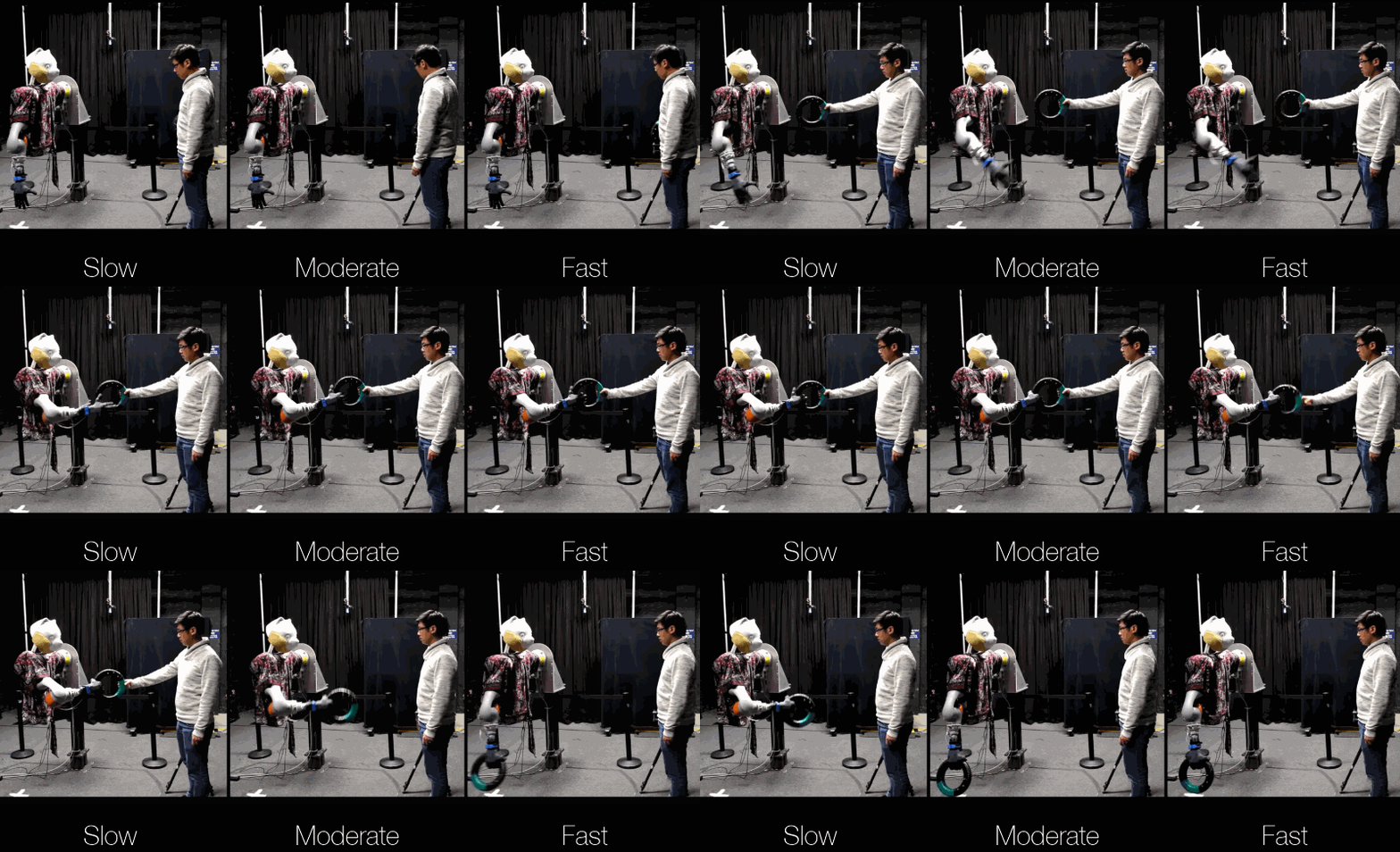
When the hand itself moved quickly, people reported less “warmth” and more “discomfort.” The slow speed performed best on those scores. And when the hand moved with no delay, it left people similarly uneasy. But interestingly, too long a delay had a similar effect.
Turns out there’s a happy medium that matches what people seem to expect from a hand reaching out to take something from them. Slower movement is better, to a certain point one imagines, and a reasonable but not sluggish delay makes it feel more human.
The handover system detailed in a paper published today (and video below) is robust against the usual circumstances: moving targets, unexpected forces and so on. It’ll be a while before an Aristocats bot takes your mug from you at a Disney World cafe, but at least you can be sure it won’t snatch it faster than the eye can follow and scare everyone around you.