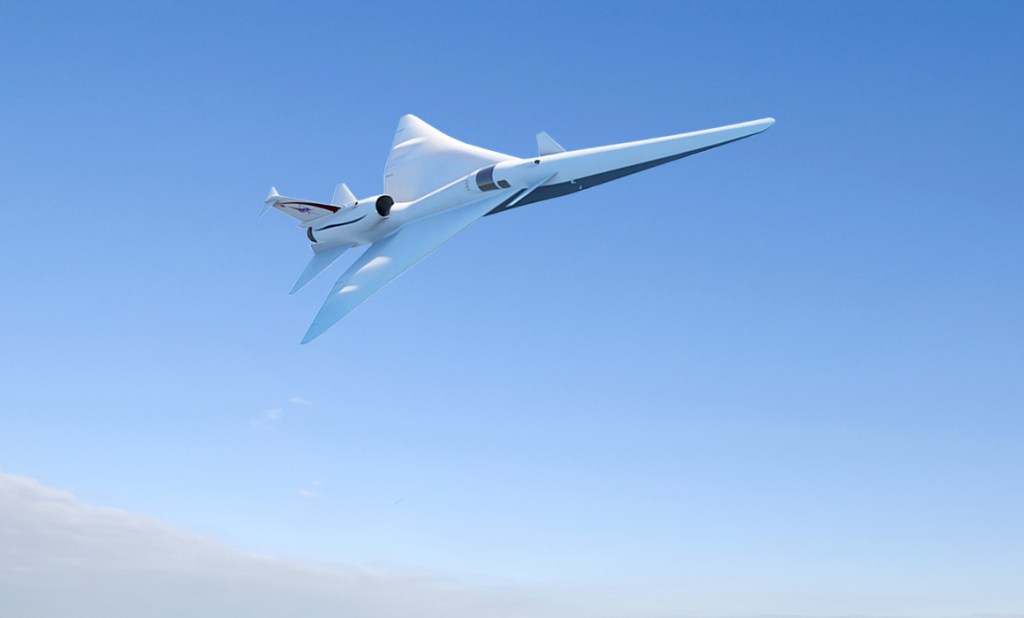
The X-59 supersonic research airplane developed by NASA, which aims to pioneer quiet supersonic flight for eventual use in commercial aviation, is one step closer to reality thanks to testing of a system it will use to provide the aircraft’s pilot with a fully virtual view of the skies. The eXternal Visibility System (or XVS, because NASA loves “X” in their acronyms) includes a front-facing camera and display combo that can provide a view for the pilot enhanced by augmented reality, which will include overlaying information like guidance to destination airports, warnings and alerts when other aircraft enter their airspace, and additional info and key cues upon landing approach and takeoff.
Sensors and a 4K camera feed combine to output the info on a 4K monitor that is inside the aircraft facing the pilot in the cockpit. There’s also an additional retractable camera located underneath the aircraft that can provide a key second view during lower-speed flight, as in approaching an airport for landing.
The tests involved mounting the XVS on a Beechcraft King Air UC-12B test plane, then flying with pilots on board and gauging their ability to spot other aircraft through the display, including in situations where it’s traditionally very difficult for pilots to spot the planes, as in when aircraft are coming at each other but with a slight offset in their relative paths versus being truly head-on.
The reason the XVS is even necessary is that the X-59 will feature a totally new, unique design that emphasizes a much more contoured look versus current commercial aircraft, which is how it aims to achieve its quiet flight and avoid loud sonic booms when it actually goes supersonic. This is a key development target because the whole point of the aircraft is to demonstrate that it’s possible to fly at supersonic speeds without loud booms at ground level, in order to show regulators that it’s possible to fly commercial supersonic aircraft over land and populated areas. The Concorde, which provided supersonic flight commercially from 1976 until 2003, couldn’t operate over land for this reason.
Despite not having a front-facing window, the X-59 will have a transparent canopy, and test pilots say that even if the XVS system were to somehow fail, they could still fly the aircraft using that external view and information from the aircraft’s sensor and avionics system alone.
The X-59 is currently under construction, being built by Lockheed Martin, and aims to take its first flight sometime in 2021.