Upset that the limited edition (PC version) of Medal of Honor will set you back $59.99 when it comes out next week? I am. Well, in an abstract sense; in a very real sense I’ll probably just wait for the annual Steam Thanksgiving and Christmas sales to see if it ends up there. Lord knows I can wait a few weeks to play yet another first-person shooter. But put all of that aside, for Ars Technica (Latin for “we’re quite good, aren’t we?”) has come to a shocking conclusion: complain all you want, but video game prices have never been lower.
There’s a few reasons why that is.
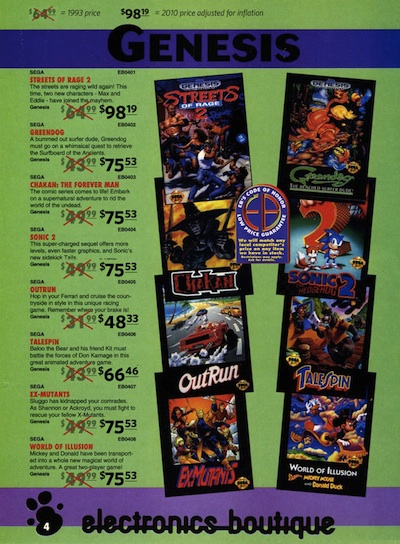
For one, inflation. As I read somewhere once, all fiat currencies inflate. That’s just how it works. So, if you were able to buy Sonic 2 when it first came out in 1993 for $49.99, today you’d be paying some $75.
And I know you can read charts, but Streets of Rage 2, $64.99 in 1993, would set you back nearly $100 in 2010.
Can you imagine paying $100 for a beat-em-up? Not in this lifetime!
Another reason why you’re paying less than ever: there’s more gamers out there.
Disrupt 2026: The tech ecosystem, all in one room
Your next round. Your next hire. Your next breakout opportunity. Find it at TechCrunch Disrupt 2026, where 10,000+ founders, investors, and tech leaders gather for three days of 250+ tactical sessions, powerful introductions, and market-defining innovation. Register now to save up to $400.
Save up to $300 or 30% to TechCrunch Founder Summit
1,000+ founders and investors come together at TechCrunch Founder Summit 2026 for a full day focused on growth, execution, and real-world scaling. Learn from founders and investors who have shaped the industry. Connect with peers navigating similar growth stages. Walk away with tactics you can apply immediately
Offer ends March 13.
Back in the day, there was a sort of stigma attached to playing video games. “What are you, a dork?” (Yes, by the way.) So to recoup costs a game publisher would have to charge a higher price. Now, with gaming far more mainstream (hi, Rihanna!), there’s more people publishers can sell their stuff to. So, they don’t have to charge as much per unit to make their money back, even when you take into account the higher costs of video game development.
So that’s my gross oversimplification of the topic. You might want to take a few minutes reading Ars’ full breakdown.