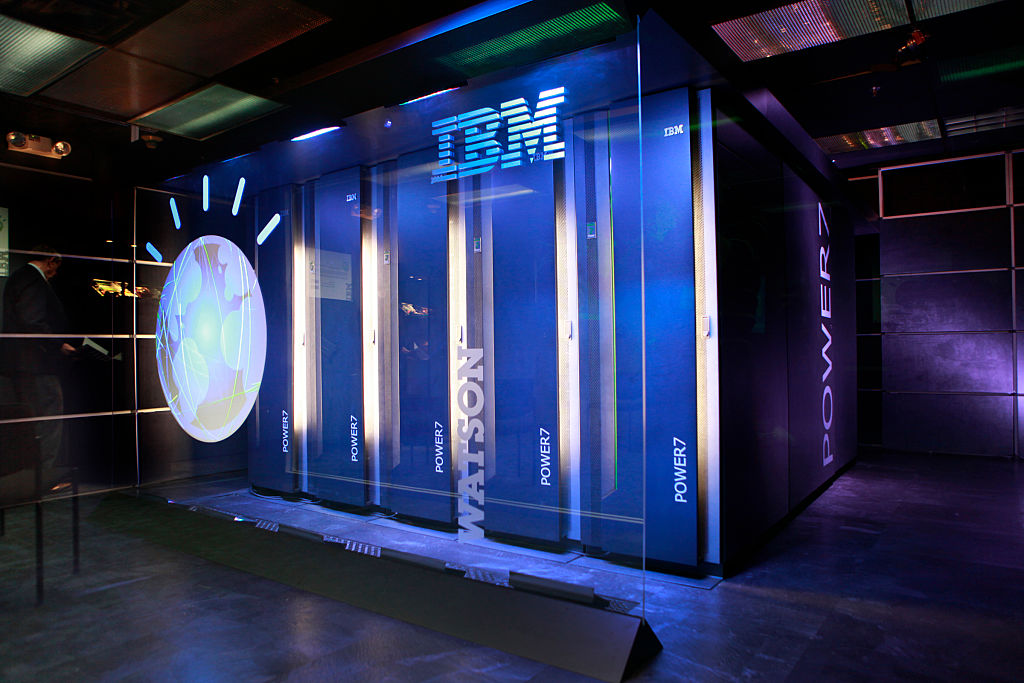
More than seven years after IBM Watson beat a couple of human Jeopardy! champions, the company has continued to make hay with the brand. Watson, at its core, is simply an artificial intelligence engine and while that’s not trivial by any means, neither is it the personified intelligence that their TV commercials would have the less technically savvy believe.
These commercials contribute to this unrealistic idea that humans can talk to machines in this natural fashion. You’ve probably seen some. They show this symbol talking to humans in a robotic voice explaining its capabilities. Some of the humans include Bob Dylan, Serena Williams and Stephen King.
In spite of devices like Alexa and Google Home, we certainly don’t have machines giving us detailed explanations, at least not yet.
IBM would probably be better served aiming its commercials at the enterprises it sells to, rather than the general public, who may be impressed by a talking box having a conversation with a star. However, those of us who have at least some understanding of the capabilities of such tech, and those who buy it, don’t need such bells and whistles. We need much more practical applications. While chatting with Serena Williams about competitiveness may be entertaining, it isn’t really driving home the actual value proposition of this tech for business.
The trouble with using Watson as a catch-all phrase is that it reduces the authenticity of the core technology behind it. It’s not as though IBM is alone in trying to personify its AI though. We’ve seen the same thing from Salesforce with Einstein, Microsoft with Cortana and Adobe with Sensei. It seems that these large companies can’t deliver artificial intelligence without hiding it behind a brand.
The thing is this though, this is not a consumer device like the Amazon Echo or Google Home. It’s a set of technologies like deep learning, computer vision and natural language processing, but that’s hard to sell, so these companies try to put a brand on it like it’s a single entity.
Disrupt 2026: The tech ecosystem, all in one room
Your next round. Your next hire. Your next breakout opportunity. Find it at TechCrunch Disrupt 2026, where 10,000+ founders, investors, and tech leaders gather for three days of 250+ tactical sessions, powerful introductions, and market-defining innovation. Register now to save up to $400.
Save up to $300 or 30% to TechCrunch Founder Summit
1,000+ founders and investors come together at TechCrunch Founder Summit 2026 for a full day focused on growth, execution, and real-world scaling. Learn from founders and investors who have shaped the industry. Connect with peers navigating similar growth stages. Walk away with tactics you can apply immediately
Offer ends March 13.
Just this week, at the IBM Think Conference in Las Vegas, we saw a slew of announcements from IBM that took on the Watson brand. That included Watson Studio, Watson Knowledge Catalog, Watson Data Kits and Watson Assistant. While they were at it, they also announced they were beefing up their partnership Apple with — you guessed it — Watson and Apple Core ML. (Do you have anything without quite so much Watson in it?)
Marketers gonna market and there is little we can do, but when you overplay your brand, you may be doing your company more harm than good. IBM has saturated the Watson brand, and might not be reaching the intended audience as a result.