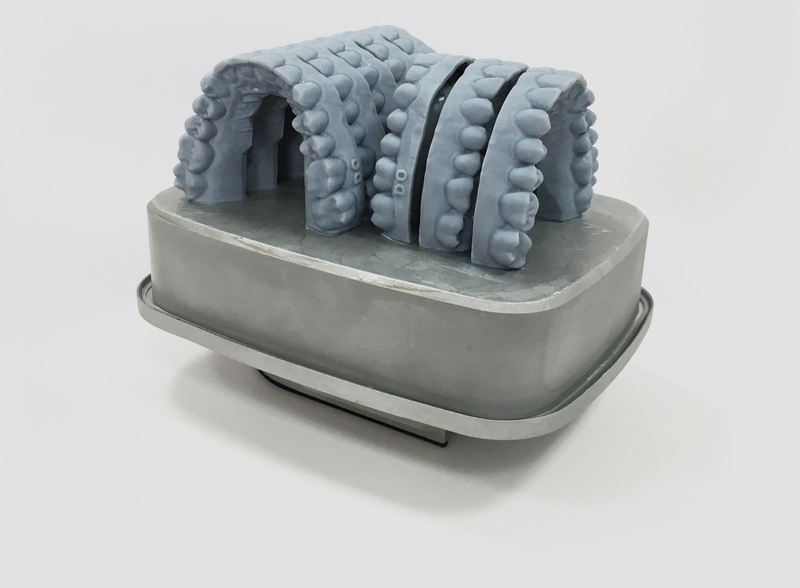
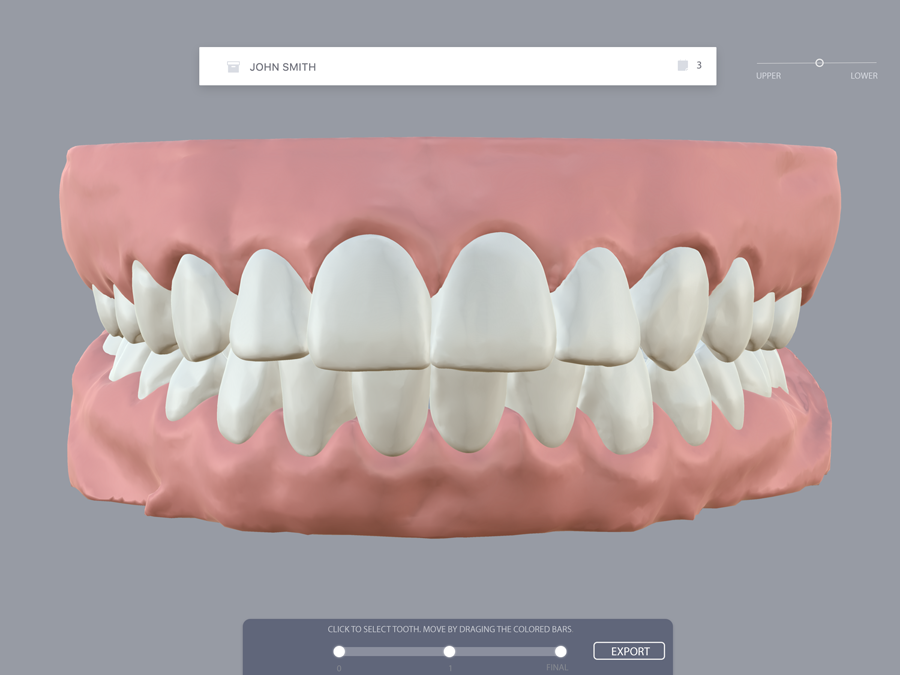
It’s time to welcome another startup to the clear-teeth-aligner market. Meet ArchForm, a Y Combinator-backed teeth-aligner software startup that lets orthodontists create, design and 3D print aligners within their own offices. The idea is to provide orthodontists with a way to better compete against some direct-to-consumer teeth-aligner startups and cut down on the cost of Invisalign.
The cost of braces and invisible aligners — those clear, mouthguard-like pieces of plastic — varies, but treatments can range from $4,685 to $6,500 for adolescents, and adult treatments can cost up to $7,135, according to a 2013 American Dental Association survey. Last year, the orthodontics market saw $11 billion in revenue, according to market research company IBISWorld.
ArchForm is trying to tap into the growing accessibility of the 3D printer market to enable orthodontists to 3D print their own clear aligners in-office. Orthodontists currently pay about $1,700 per patient to Invisalign, the company says. So in order to make money, orthodontists sometimes charge patients upwards of $7,000. ArchForm charges orthodontists just $50 per patient.
“I was inspired to start the company because I worked in my father’s orthodontic office,” ArchForm founder Andrew Martz told TechCrunch in an email. “I saw that 3D printers had advanced far enough to make these devices in dental offices, and knew from experience that easy-to-use software to virtually move the teeth was the missing piece to allow every orthodontist to 3D print their own aligners.”
In the last couple of years, a number of teeth-aligner startups have emerged. The pack includes the likes of SmileDirectClub, Uniform Teeth, Candid and Orthly. None of the startups are exactly the same, but all aim to reduce the cost of clear aligners, as well as the number of visits to the orthodontist — with some even cutting out the in-person orthodontist visit altogether. ArchForm takes a different approach by enabling local orthodontists to simply enhance their existing businesses.
“We believe that orthodontists do a better job of treating most patients when they can physically be there to treat them,” Martz said. “To make clear aligners work, raised buttons/attachments are placed on teeth as a way for the aligner to grip the teeth and make them fully straight. Tele-dentistry companies don’t have these — which are a very fundamental part of orthodontic treatment.”
Disrupt 2026: The tech ecosystem, all in one room
Your next round. Your next hire. Your next breakout opportunity. Find it at TechCrunch Disrupt 2026, where 10,000+ founders, investors, and tech leaders gather for three days of 250+ tactical sessions, powerful introductions, and market-defining innovation. Register now to save up to $400.
Save up to $300 or 30% to TechCrunch Founder Summit
1,000+ founders and investors come together at TechCrunch Founder Summit 2026 for a full day focused on growth, execution, and real-world scaling. Learn from founders and investors who have shaped the industry. Connect with peers navigating similar growth stages. Walk away with tactics you can apply immediately
Offer ends March 13.
In ArchForm’s current customer base, 75 percent of orthodontists who sign up to use the software already have 3D printers.
“If they don’t already have one, the rest are looking into buying a 3D printer, because they only cost $3350 and Invisalign costs $1750/patient,” Martz said.
For the orthodontists who would rather not invest in their own 3D printer, they can send the design to orthodontic laboratories that are equipped with 3D printers and powered by ArchForm’s software.