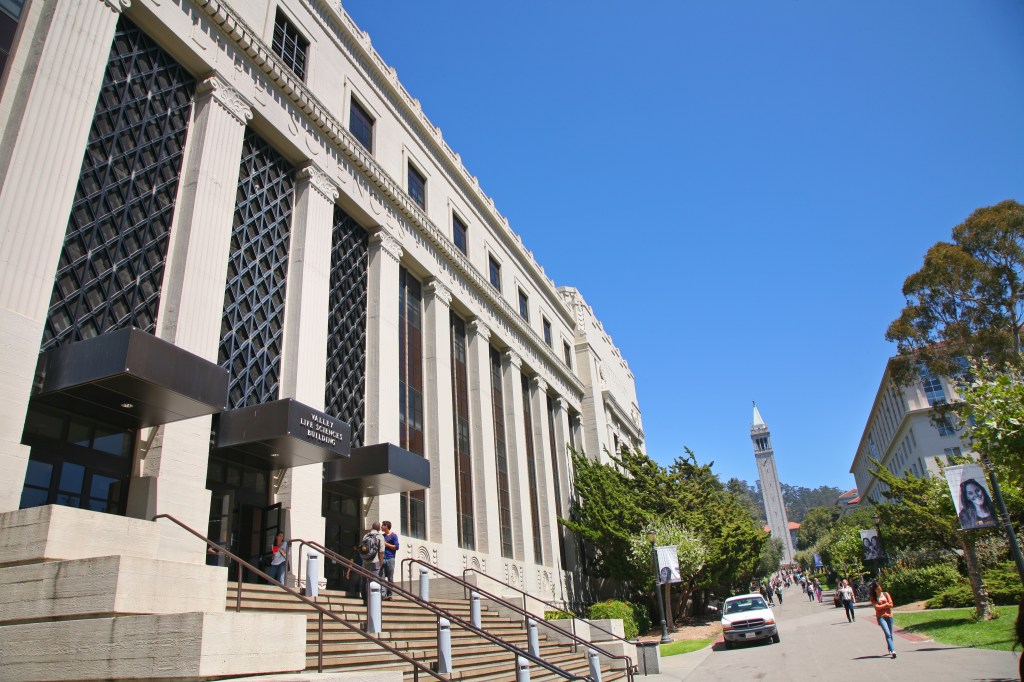
The University of California Berkeley has filed an appeal in a heated CRISPR patent interference case that earlier this year ruled in favor of the Broad Institute of MIT and Harvard.
Last year, the U.S. Patent Office started looking into whether or not the Broad Institute had the right to a separate patent for CRISPR-Cas9, which allowed for human use of the technology. Berkeley countered its patent was broad enough to cover all uses of the technology and that Broad should not have the right to a separately filed patent.
The court ruled no interference in the case, meaning the U.S. Patent Trial and Appeal Board (PTAB) decided co-discoverers of the technology Jennifer Doudna and Emmanuelle Charpentier had first successfully demonstrated the technology. However, the Broad Institute had the right to the patent for human use.
At the time, CRISPR pioneer and Berkeley professor Jennifer Doudna told TechCrunch the ruling was a positive, as it didn’t throw out her claim that her patent should be able to cover all cells.
However, the Broad Institute would have a clear advantage in human use. The patent ruling also left a lot of confusion for companies wanting to apply the technology. It was unclear which institution to get permission from or which to make a deal with for various applications.
UC Berkeley has now filed with the U.S. Court of Appeals for the Federal Circuit in Washington, DC, to appeal the court’s decision that the Broad Institute should have the rights to the separate patent.
According to UC Berkeley, the decision took “a narrow and restrictive approach that ignored certain key evidence,” concluding conventional techniques would not guarantee success. UC Berkeley argues its invention would work in bacterial gene-editing of eukaryotic cells and that this was a natural leap.
Disrupt 2026: The tech ecosystem, all in one room
Your next round. Your next hire. Your next breakout opportunity. Find it at TechCrunch Disrupt 2026, where 10,000+ founders, investors, and tech leaders gather for three days of 250+ tactical sessions, powerful introductions, and market-defining innovation. Register now to save up to $400.
Save up to $300 or 30% to TechCrunch Founder Summit
1,000+ founders and investors come together at TechCrunch Founder Summit 2026 for a full day focused on growth, execution, and real-world scaling. Learn from founders and investors who have shaped the industry. Connect with peers navigating similar growth stages. Walk away with tactics you can apply immediately
Offer ends March 13.
It further argues PTAB had ignored evidence that six other labs had quickly achieved eukaryotic editing using the information provided by a 2012 Science paper using Doudna and Charpentier’s work before the Broad had filed its separate patent.
“The PTAB’s ruling flies in the face of core legal principles that govern the interference-in-fact inquiry, and defies common sense,” the UC brief states. “If uncorrected, that ruling threatens to allow Broad to arrogate to itself much of UC’s transformational invention without Broad demonstrating anything close to the genuine innovation that would justify finding its claims to be separately patentable. This Court should not let such a profoundly erroneous and unjust result stand.”
The Broad Institute has responded to the appeal in a statement saying the claims made by UC Berkeley are “inaccurate.”
“Importantly, to overturn the PTAB decision, the Appellate Court would need to decide that the PTAB committed significant errors of law or lacked substantial evidence to reach its decision,” the statement reads. “Given the careful and extensive factual findings and legal analysis in the PTAB’s decision, the Appellate Court will need to find many errors to return the case to the PTAB for further proceedings.”
The Broad Institute’s opening brief in the case is due October 25th of this year.