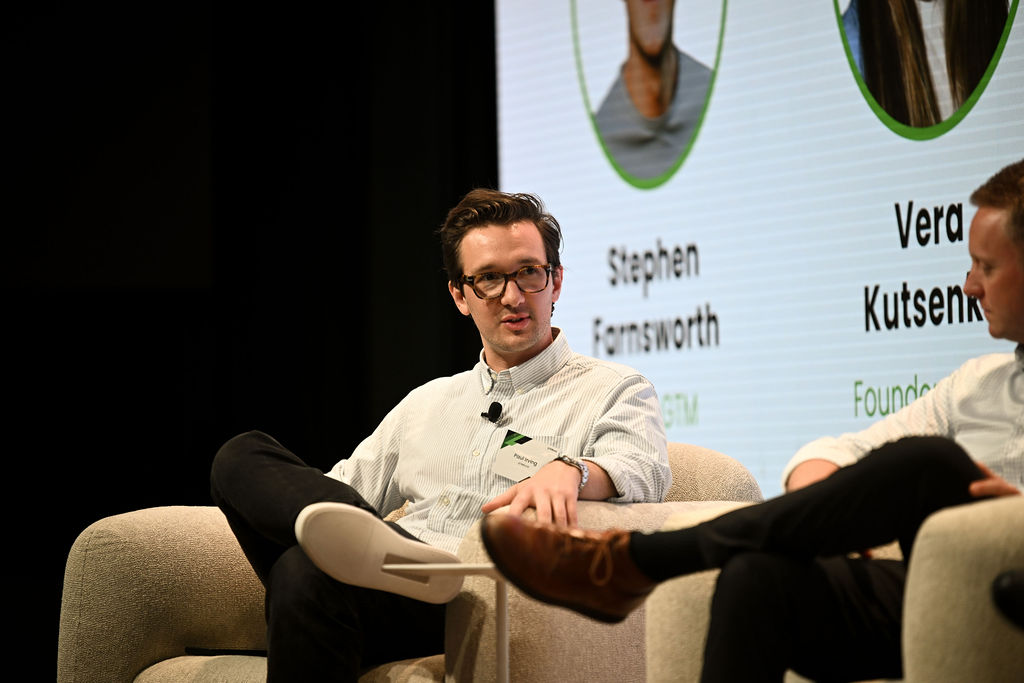
Building software products has never been easier, so why are so many well-funded startups failing to take off no matter how good their product is? In this season finale episode of Build Mode, our guest has an answer: Startups have focused too much on product development and not enough on distribution excellence. Paul Irving is partner and COO at GTMfund, which operates under the thesis that distribution is the final moat in the AI era.
The traditional go-to-market playbook lays out a one-size-fits-all approach to hiring and scaling that may have worked in the days of traditional enterprise SaaS but won’t cut it in the crowded, AI-driven startup era of 2025. Innovation cycles are moving faster than ever, and what used to take several years can now be achieved in just a few months. So Irving and the GTMfund team advise their portfolio companies to differentiate in their distribution rather than their product.
“The aperture for how you build your go-to-market or revenue engine and the decisions you make to get there have never had more unique and specific pathways depending on your company,” Irving said.
In this episode, Irving dove into several specific examples of what he’s seen work for startups. The main takeaways: AI can help small teams hone their data-driven approach and find direct lines to their customer base through creative means; in the early days, founders can’t tackle all distribution channels at once; hiring should be approached thoughtfully without a traditional mindset; and building a team of trusted advisers should be a top priority.
Early-stage investors, at least at GTMfund, aren’t looking for startups that have spent half their budget on paid ads or hired a full sales team. They want to see founders get creative with how they reach their unique customers. Irving laid out an example of one startup that became an active participant in several relevant Facebook groups. “If you think about it in the framework of, okay, it’s a thousand people, but 700 of them are my actual ICP and buyer because of the specific groups that either we started as a company or the ones that we’ve become the most active posters in. It can become a really unique channel if you’re looking to bring on 40, 50, 60 new customers in a given year,” he said.
Irving argues that the aperture for going to market has never been broader, so it’s crucial for founders to carve out a creative approach for reaching their target customer. However, founders can’t and shouldn’t do it alone. A refrain throughout this conversation is the importance of a robust network. GTMfund provides their portfolio companies with a vast network of operators, but they won’t just hand founders a Rolodex — they create bespoke pairings to ensure that there will be value in the meeting for everyone involved.
“I think what’s wonderful about the venture-backed ecosystem more generally is people’s willingness to help. They know how hard it is to build a company. They know how low the likelihood of success is in the grand scheme of things, but people are always willing. If you come and you’re curious, you teach them something as part of that as well. People are usually willing to open up doors,” Irving said.
Disrupt 2026: The tech ecosystem, all in one room
Your next round. Your next hire. Your next breakout opportunity. Find it at TechCrunch Disrupt 2026, where 10,000+ founders, investors, and tech leaders gather for three days of 250+ tactical sessions, powerful introductions, and market-defining innovation. Register now to save up to $400.
Save up to $300 or 30% to TechCrunch Founder Summit
1,000+ founders and investors come together at TechCrunch Founder Summit 2026 for a full day focused on growth, execution, and real-world scaling. Learn from founders and investors who have shaped the industry. Connect with peers navigating similar growth stages. Walk away with tactics you can apply immediately
Offer ends March 13.
Isabelle Johannessen is our host. Build Mode is produced and edited by Maggie Nye. Audience Development is led by Morgan Little. And a special thanks to the Foundry and Cheddar video teams.