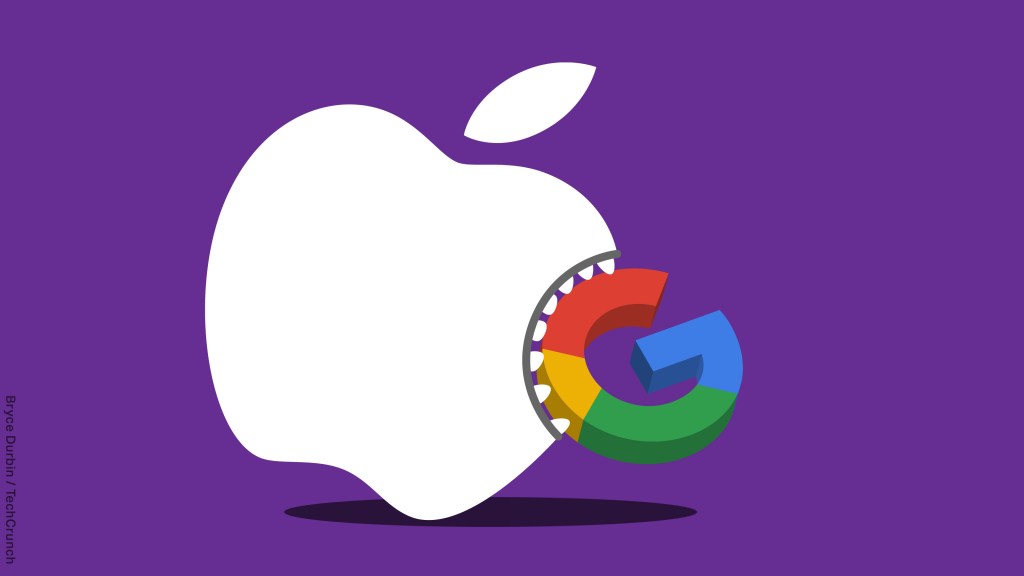
The U.K.’s Competition and Markets Authority (CMA) said on Wednesday that it’s designating Apple and Google with strategic market status in their respective mobile platforms. The decision, which affects the companies’ operating systems, app stores, browsers, and browser engines, will enable the regulator to take targeted actions to enhance competition in the space.
The CMA had launched investigations into Apple and Google in January, and had proposed interventions in July that indicated the tech giants could be designated with strategic market status (SMS). To reach its conclusions, the CMA consulted over 150 stakeholders and had discussions with both Apple and Google. It then arrived at the decision that Apple and Google had “substantial, entrenched market power and a position of strategic significance in their respective mobile platforms.”
Among other findings, the CMA discovered that U.K. mobile device owners are unlikely to switch between Apple and Google’s mobile platforms once they have adopted the ecosystem of their choice. It noted that both platforms require businesses to distribute apps through their app stores to reach consumers.
Notably, it also said that new technologies, like AI, were “unlikely to eliminate Apple or Google’s market power over the five-year designation period.”
“Apple and Google’s mobile platforms are used by thousands of businesses right across the economy to market and sell products and services to millions of customers, but the platforms’ rules may be limiting innovation and competition,” Will Hayter, executive director for digital markets at the CMA, said in a statement.
The CMA added that designating the platforms with SMS was not a finding of wrongdoing, however. Instead, it allows the regulator to consider “proportionate, targeted interventions to ensure that mobile platforms are open to effective competition, and that consumers and businesses that rely on Google and Apple can have confidence that they are treated fairly,” the announcement states.
Apple and Google have pushed back against the decision, with Apple warning that the decision could mean that users in the U.K. would lose access to getting new features in a timely fashion — something that already happened with Apple Intelligence. Google also said it didn’t see the rationale for the decision.
Disrupt 2026: The tech ecosystem, all in one room
Your next round. Your next hire. Your next breakout opportunity. Find it at TechCrunch Disrupt 2026, where 10,000+ founders, investors, and tech leaders gather for three days of 250+ tactical sessions, powerful introductions, and market-defining innovation. Register now to save up to $400.
Save up to $300 or 30% to TechCrunch Founder Summit
1,000+ founders and investors come together at TechCrunch Founder Summit 2026 for a full day focused on growth, execution, and real-world scaling. Learn from founders and investors who have shaped the industry. Connect with peers navigating similar growth stages. Walk away with tactics you can apply immediately
Offer ends March 13.
A statement released by Apple and shared with TechCrunch reads:
“Apple faces fierce competition in every market where we operate, and we work tirelessly to create the best products, services and user experience. The UK’s adoption of EU-style rules would undermine that, leaving users with weaker privacy and security, delayed access to new features, and a fragmented, less seamless experience. We’ve seen the impact of regulation on Apple users in the EU, and we urge the UK not to follow the same path.”
Updated with Apple’s comment.