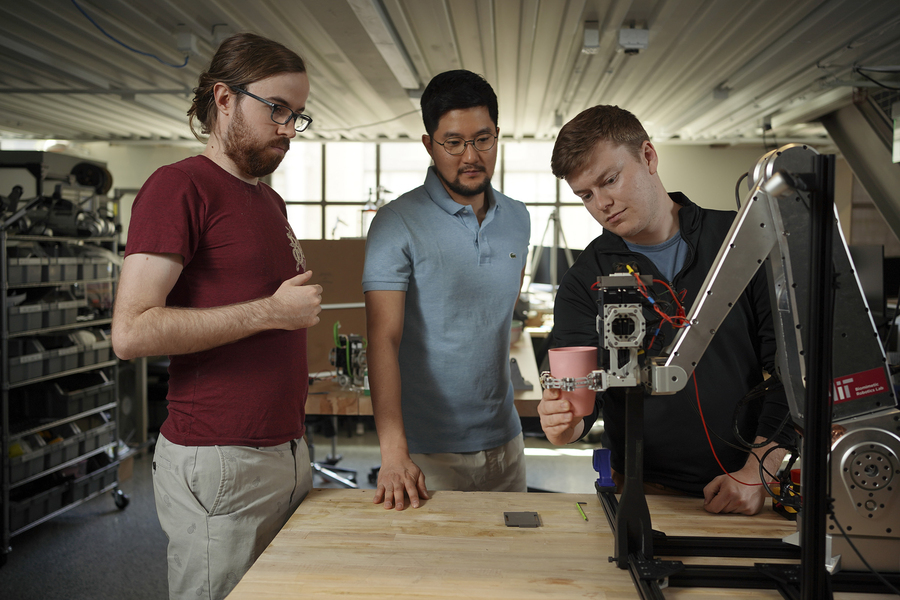
A refrain I hear from a lot of startups is that there’s “no need to rethink the gripper.” It’s something I appreciate from an economic standpoint. It’s expensive, resource intensive and both your time and money are probably best spent elsewhere when there are already so many effectors on the market.
I also recently made an analogy to a claw machine during an interview — and got some pushback. I understand a bit better now why that’s the case — at least in part. Discussing its new approach to robotic gripping, MIT invokes the perennial arcade favorite, noting, “When manipulating an arcade claw, a player can plan all she wants. But once she presses the joystick button, it’s a game of wait-and-see. If the claw misses its target, she’ll have to start from scratch for another chance at a prize.”
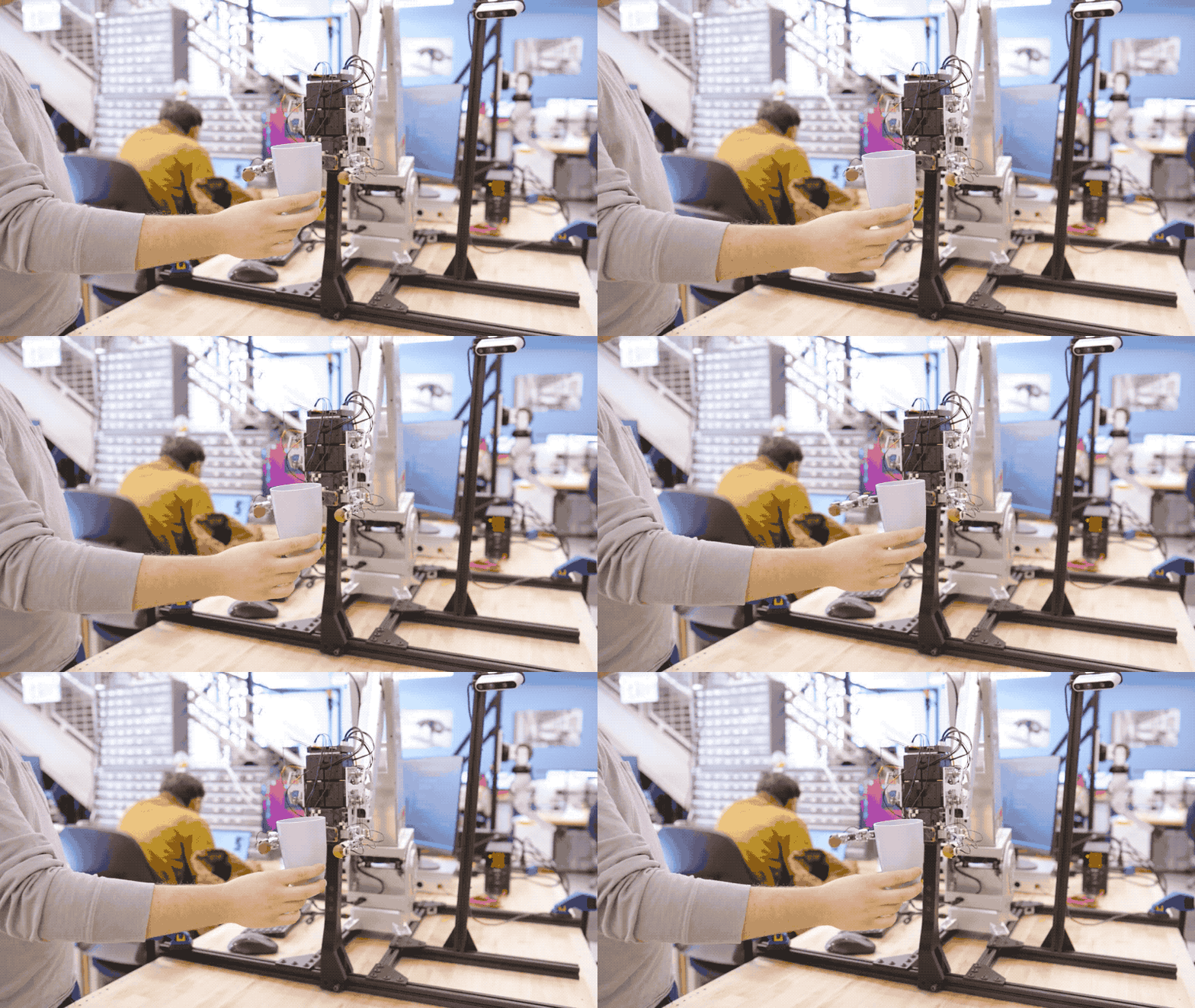
If you think about that for a moment, you realize that you’re suddenly faced with something that comes up over and over again in this field of study: That’s not how humans approach the job — and there’s a reason for that. If you’re say, grabbing an object with a strange or unexpected weight distribution, you generally don’t need to withdraw your hand and try again. You adjust.
The team describes a system that adjusts to an object in real time, using reflexes and feedback. Says MIT:
If the gripper fails to grab hold of the object, rather than back out and start again as most grippers do, the team wrote an algorithm that instructs the robot to quickly act out any of three grasp maneuvers, which they call “reflexes,” in response to real-time measurements at the fingertips. The three reflexes kick in within the last centimeter of the robot approaching an object and enable the fingers to grab, pinch, or drag an object until it has a better hold.
Interestingly, the project builds on actuators developed for the school’s mini cheetah robot, which were designed to help it react to uneven terrain on the fly. The new system is built around an arm with two multi-joint fingers. There’s a camera on the base and sensors on the tips that record feedback. The system uses that data to adjust accordingly.
Disrupt 2026: The tech ecosystem, all in one room
Your next round. Your next hire. Your next breakout opportunity. Find it at TechCrunch Disrupt 2026, where 10,000+ founders, investors, and tech leaders gather for three days of 250+ tactical sessions, powerful introductions, and market-defining innovation. Register now to save up to $400.
Save up to $300 or 30% to TechCrunch Founder Summit
1,000+ founders and investors come together at TechCrunch Founder Summit 2026 for a full day focused on growth, execution, and real-world scaling. Learn from founders and investors who have shaped the industry. Connect with peers navigating similar growth stages. Walk away with tactics you can apply immediately
Offer ends March 13.
Currently the team is using the gripper to clean up around the lab. Says MIT:
They set a variety of household objects on a shelf, including a bowl, a cup, a can, an apple, and a bag of coffee grounds. They showed that the robot was able to quickly adapt its grasp to each object’s particular shape and, in the case of the coffee grounds, squishiness. Out of 117 attempts, the gripper quickly and successfully picked and placed objects more than 90 percent of the time, without having to back out and start over after a failed grasp.