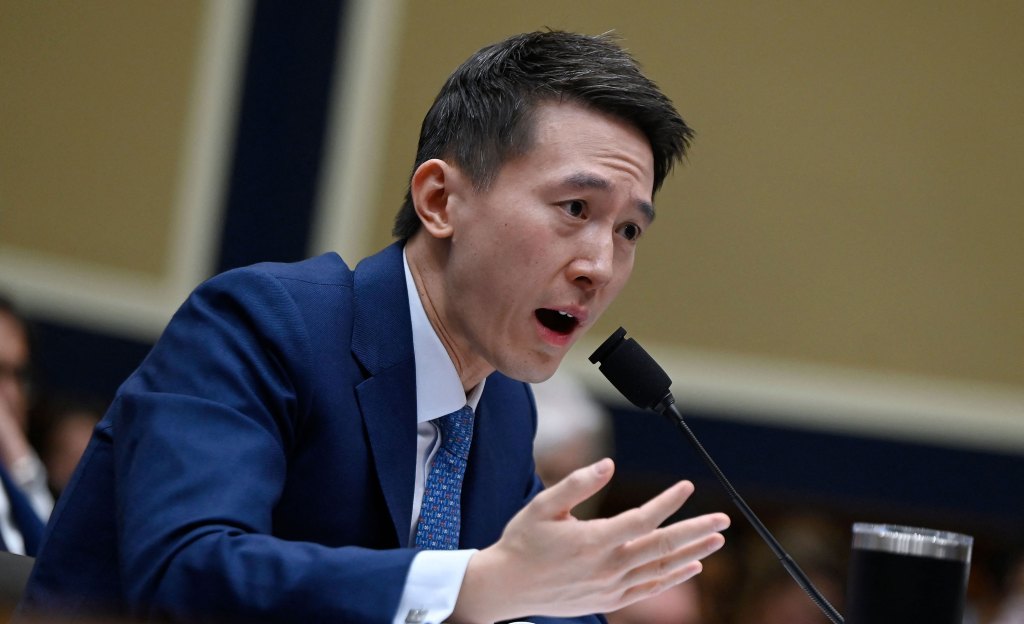
At Thursday’s House hearing, TikTok CEO Shou Zi Chew faced a barrage of questions over concerns that data collected on U.S. users might be vulnerable to surveillance by China.
Chew’s response to one of those questions in particular likely dug the company’s hole even deeper when it comes to building trust with Washington.
Citing reporting from Forbes, later confirmed by the company itself, Florida Rep. Neal Dunn asked Chew if TikTok parent company ByteDance has spied on American citizens. Chew responded “I don’t think that spying is the right way to describe it.”
.@DrNealDunnFL2: "Has ByteDance spied on American citizens?"
TikTok CEO Shou Zi Chew: "I don't think that spying is the right way to describe it." pic.twitter.com/23nvsd7bEG
— CSPAN (@cspan) March 23, 2023
Disrupt 2026: The tech ecosystem, all in one room
Your next round. Your next hire. Your next breakout opportunity. Find it at TechCrunch Disrupt 2026, where 10,000+ founders, investors, and tech leaders gather for three days of 250+ tactical sessions, powerful introductions, and market-defining innovation. Register now to save up to $400.
Save up to $300 or 30% to TechCrunch Founder Summit
1,000+ founders and investors come together at TechCrunch Founder Summit 2026 for a full day focused on growth, execution, and real-world scaling. Learn from founders and investors who have shaped the industry. Connect with peers navigating similar growth stages. Walk away with tactics you can apply immediately
Offer ends March 13.
In December, TikTok admitted that ByteDance employees used the app to track the location of journalists reporting critically on the company through their IP addresses. Four ByteDance employees, both U.S. and China-based, were fired for accessing the data in an apparent effort to identify sources leaking internal company information to reporters.
“The public trust that we have spent huge efforts building is going to be significantly undermined by the misconduct of a few individuals,” ByteDance’s chief executive Liang Rubo said in an internal email published by Emily Baker-White, one of the surveilled reporters. “I believe this situation will serve as a lesson to us all.”
The short exchange is likely to be one moment among many that further undermines trust in TikTok in spite of the company’s sweeping campaign to portray itself as transparent and accountable. That effort, known as Project Texas, is a massive $1.5 billion corporate reorganization that will ultimately move U.S. user data to domestic servers overseen by American software giant Oracle by the end of the year.
TikTok is also waging a parallel public relations campaign, recruiting influencers, courting journalists and spreading its message through its own app in the run up to Thursday’s hearing.
Whether those measures will have any impact on TikTok’s strained relationship with the U.S. government remains to be seen, but it doesn’t look likely. Now, with the FBI and DOJ reportedly investigating the incident of ByteDance surveilling American journalists, the company is in for an even steeper climb to improve its image.