Drone delivery is one of those ideas that’s been sold as “the next big thing” forever. Regardless of how bullish you happen to be on the technology, there’s undeniably a lot that has to be figured out before we can start having serious conversation about mainstream adoption. Regulator issues are a big box to be ticked, as are some big logistical questions.
Alphabet X-graduated Wing today showcased its work on the latter, in the form of a “delivery network.” The company compares the idea to rideshare, bucking the sort of back and forth model we’ve come to recognize by players in the category. In existing configurations, a drone is launched from a business, arrives at its destination and then returns to its origin.
It’s a simple path, and it makes sense that most have used it as a starting point. Wing notes in a blog post published this morning:
Up to this point, the industry has been fixated on drones themselves — designing, testing, and iterating on aircraft, rather than finding the best way to harness an entire fleet for efficient delivery. Wing’s approach to delivery is different. We see drone delivery at scale looking more like an efficient data network than a traditional transportation system. As with many other areas of technology, from data centers to smartphones, the physical hardware is only as useful as the software and logistics networks that make it meaningful for organizations and their customers.
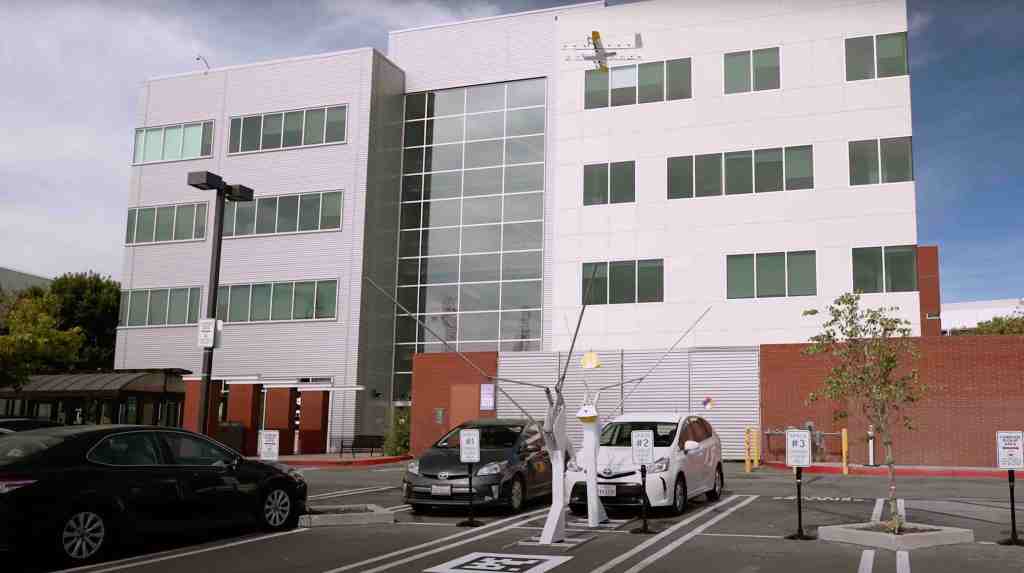
In the new configuration, the Autoloader hardware is installed in a retailer’s curbside pickup area (these began to proliferate during the pandemic, to save people from going into the store to pick up online goods). Once the cargo is ready to pick up, an employee walks it out to the area and latches it to the device.
The idea here is that the easily installed loaders allow flexibility for pickup, so the drones can travel from a pickup to drop off to another pickup, with the system determining the most effective/efficient path. In that sense, it operates similarly to an Uber or Lyft, which matches drivers and riders based on the proximity to an upcoming drop-off.
Disrupt 2026: The tech ecosystem, all in one room
Your next round. Your next hire. Your next breakout opportunity. Find it at TechCrunch Disrupt 2026, where 10,000+ founders, investors, and tech leaders gather for three days of 250+ tactical sessions, powerful introductions, and market-defining innovation. Register now to save up to $400.
Save up to $300 or 30% to TechCrunch Founder Summit
1,000+ founders and investors come together at TechCrunch Founder Summit 2026 for a full day focused on growth, execution, and real-world scaling. Learn from founders and investors who have shaped the industry. Connect with peers navigating similar growth stages. Walk away with tactics you can apply immediately
Offer ends March 13.
“Drones within the Wing Delivery Network can pick up, drop off, travel, and charge in whatever pattern makes the most sense for the entire system,” writes Wing CEO Adam Woodworth. “For example, with multiple charging spots, they’ll have the flexibility to meet peaks in consumer demand across entire cities. Pad locations can be added simply, with the aircraft themselves used as the surveying tools to update and expand the network.”
Wing says the system will be rolling out over the next year. The company says it expects “our system to be capable of handling millions of deliveries for millions of consumers at a lower cost per delivery than ground transportation can achieve for fast delivery of small packages” by mid-2024.