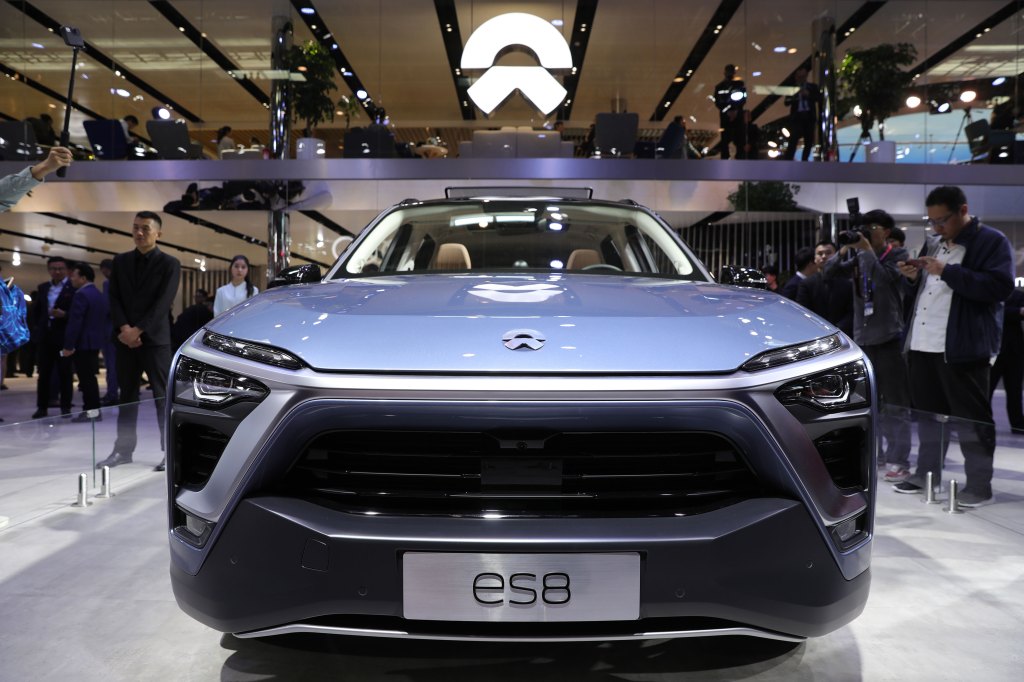
China’s electric vehicle upstart Nio has joined Tesla in sourcing raw materials directly from mines rather than its own battery suppliers as soaring prices of lithium, a critical component of EV batteries, hurt manufacturers’ supply chain stability and bottom lines.
Lithium carbonate prices in China hit a record 501,500 yuan/tonne in September, tripling the number from a year ago. The surge is so dramatic that regulators summoned key industry players for a meeting in March and called for a return to rational pricing.
Nio, an eight-year-old premium EV maker, has agreed to pay $12 million for a 12.16% stake in Greenwing Resources, an Australian lithium mining company, Greenwing said in a filing with the Australian Stock Exchange.
As part of the deal, Nio obtains the right to one nominee on Greenwing’s board and a call option to acquire between 20% and 40% of the issued capital of Andes Litio SA. Bought by Greenwing last year, Andes Litio holds options rights over the San Jorge Lithium Project located in the prolific Lithium Triangle, which spans Argentina, Chile, and Bolivia and contains most of the world’s lithium resources.
The approach puts Nio in rivalry with battery makers that have been on an investment spree to secure the critical mineral. China’s Contemporary Amperex Technology, the world’s largest EV battery provider by usage and a supplier to Tesla and Nio, has been particularly aggressive. Last year, CATL paid nearly $300 million to buy out Vancouver-based Millennial Lithium — which makes Nio’s check for Greenwing look humble.
Nio’s move comes as no surprise as the EV maker is gearing up to make its own battery packs starting in 2024. CEO William Li said on its June earnings call that the firm was stepping up battery-related investments to gain more bargaining power over upstream costs. Together, Nio had over 400 employees working on battery technologies by June.
The CEO detailed the challenges facing the EV firm and the industry at large:
Disrupt 2026: The tech ecosystem, all in one room
Your next round. Your next hire. Your next breakout opportunity. Find it at TechCrunch Disrupt 2026, where 10,000+ founders, investors, and tech leaders gather for three days of 250+ tactical sessions, powerful introductions, and market-defining innovation. Register now to save up to $400.
Save up to $300 or 30% to TechCrunch Founder Summit
1,000+ founders and investors come together at TechCrunch Founder Summit 2026 for a full day focused on growth, execution, and real-world scaling. Learn from founders and investors who have shaped the industry. Connect with peers navigating similar growth stages. Walk away with tactics you can apply immediately
Offer ends March 13.
In terms of vehicle gross margin, the whole industry is faced with the rising cost of batteries, raw materials and chips which has also affected our vehicle margin. In the first quarter, our vehicle margin stood at 18.1%. As the battery cost continued to surge and peaked in April, the vehicle margin in the second quarter will be under even higher pressure. To mitigate the impact of the rising material costs, we have taken a series of countermeasures such as adjusting product prices.
BYD, the Warren Buffett–backed Chinese manufacturer that is closing in on Tesla by producing a mix of hybrid and electric vehicles, has also been getting its hand on the global lithium supply. In January, the firm said that it won a contract from Chile’s mining ministry to produce 80,000 metric tons of lithium over 20 years with an offer of $61 million, but the auction was subsequently suspended by a local court under political pressure.
China roundup: Tesla supplier CATL to buy Canada’s Millennial Lithium