Over the past year, the coronavirus crisis has spurred app usage in the United States as people stay indoors to limit contact with others. Mobile games particularly have enjoyed a boom, and among them, games from Chinese studios are gaining popularity.
Games released on the U.S. App Store and Google Play Store raked in a total of $5.8 billion in revenue during the fourth quarter, jumping 34.3% from a year before and accounting for over a quarter of the world’s mobile gaming revenues, according to a new report from market research firm Sensor Tower.
In the quarter, Chinese titles contributed as much as 20% of the mobile gaming revenues in the U.S. That effectively made China the largest importer of mobile games in the U.S., thanks to a few blockbuster titles. Chinese publishers claimed 21 spots among the 100 top-grossing games in the period and collectively generated $780 million in revenues in the U.S., the world’s largest mobile gaming market, more than triple the amount from two years before.
Occupying the top rank are familiar Chinese titles such as the first-person shooter game Call of Duty, a collaboration between Tencent and Activision, as well as Tencent’s PlayerUnknown’s Battlegrounds. But smaller Chinese studios are also quickly infiltrating the U.S. market.
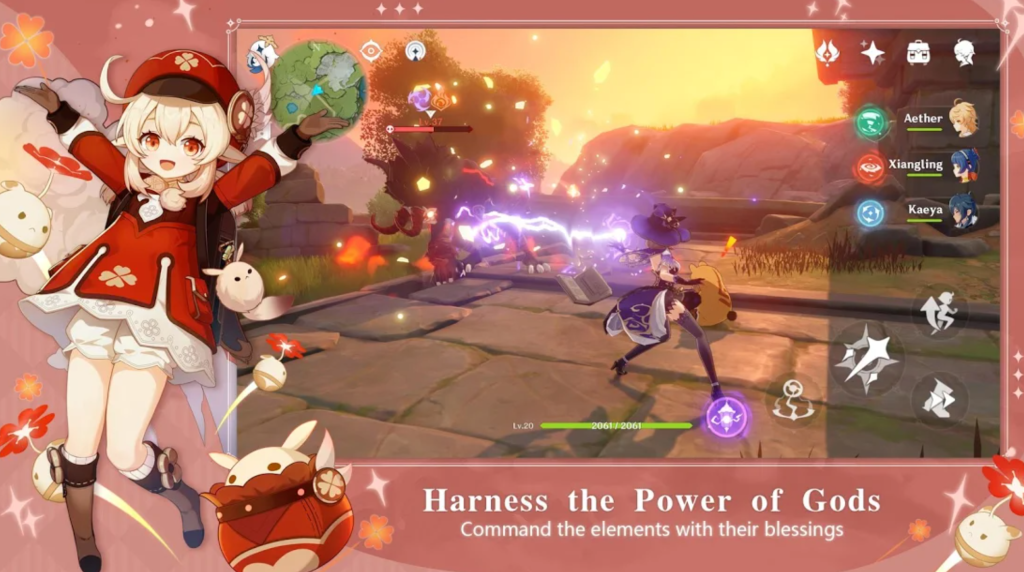
Mihoyo, a little-known studio outside China, has been turning heads in the domestic gaming industry with its hit game Genshin Impact, a role-playing action game featuring anime-style characters. It was the sixth-most highest-grossing mobile game in the U.S. during Q4, racking up over $100 million in revenues in the period.
Most notable is that Mihoyo has been an independent studio since its inception in 2011. Unlike many gaming startups that covet fundings from industry titans like Tencent, Mihoyo has so far raised only a modest amount from its early days. It also stirred up controversy for skipping major distributors like Tencent and phone vendors Huawei and Xiaomi, releasing Genshin Impact on Bilibili, a popular video site amongst Chinese youngsters, and games downloading platform Taptap.
Tencent takes minority stake in French casual games maker Voodoo
Disrupt 2026: The tech ecosystem, all in one room
Your next round. Your next hire. Your next breakout opportunity. Find it at TechCrunch Disrupt 2026, where 10,000+ founders, investors, and tech leaders gather for three days of 250+ tactical sessions, powerful introductions, and market-defining innovation. Register now to save up to $400.
Save up to $300 or 30% to TechCrunch Founder Summit
1,000+ founders and investors come together at TechCrunch Founder Summit 2026 for a full day focused on growth, execution, and real-world scaling. Learn from founders and investors who have shaped the industry. Connect with peers navigating similar growth stages. Walk away with tactics you can apply immediately
Offer ends March 13.
Magic Tavern, the developer behind the puzzle game Project Makeover, one of the most installed mobile games in the U.S. since late last year, is another lesser-known studio. Founded by a team of Tsinghua graduates with offices around the world, Magic Tavern is celebrated as one of the first studios with roots in China to have gained ground in the American casual gaming market. KKR-backed gaming company AppLovin is a strategic investor in Magic Tavern.
Other popular games in the U.S. also have links to China, if not directly owned by a Chinese company. Shortcut Run and Roof Nails are works from the French casual game maker Voodoo, which received a minority investment from Tencent last year. Tencent is also a strategic investor in Roblox, the gaming platform oriented to young gamers and slated for an IPO in the coming weeks.