The path to deploying commercial aircraft that can handle all aspects of flight without a pilot is long, winding, expensive and riddled with regulatory and technical hurdles. Marc Piette, the founder of autonomous aviation startup Xwing, aims to make that path to pilotless flight shorter and more cost-effective.
Instead of building autonomous helicopters and planes from the ground up, Xwing is focused on the software stack that will enable pilotless flight of existing aircraft. Now, the company is sharing details of its go-to-market strategy several months after raising $10 million in new funding and following successful autonomous test flights in a Cessna 208B Grand Caravan. Xwing said it has completed since July more than 70 hours of engine time for ground and flight tests, and more than 40 hours of automated flight time.
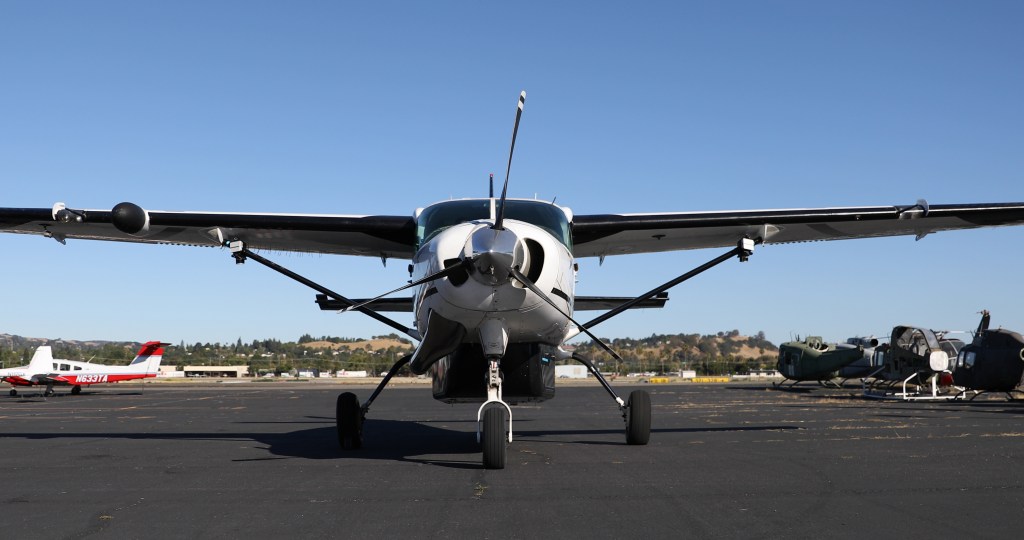
The Cessna 208B Grand Caravan, a utility aircraft that has historically been used for cargo, flight training and humanitarian missions, will be the initial centerpiece of its plan to operate commercial cargo flights. The plan is to have a regional focus and operate within a 500-mile range with flight paths over unpopulated areas.
Xwing will operate the fleet. However, Piette said the company is also open to partnerships and licensing the technology to other operators.
Xwing’s so-called Autoflight System is designed to be aircraft agnostic. And it still is, Piette said in a recent phone interview. The Cessna 208B Grand Caravan is just the beginning.
“It’s still in production, it’s a safe aircraft and it’s a good platform for us to convert to an unmanned aircraft here,” Piette said.
Piette believes that retrofitting existing aircraft with its Autoflight System will speed up deployment, while maintaining safety and keeping costs in check. The Autoflight System is integrated with onboard flight control systems that allow the plane to navigate, take off and land autonomously. The system is designed to be supervised by remote operators who work with air traffic controllers, according to Xwing.
Disrupt 2026: The tech ecosystem, all in one room
Your next round. Your next hire. Your next breakout opportunity. Find it at TechCrunch Disrupt 2026, where 10,000+ founders, investors, and tech leaders gather for three days of 250+ tactical sessions, powerful introductions, and market-defining innovation. Register now to save up to $400.
Save up to $300 or 30% to TechCrunch Founder Summit
1,000+ founders and investors come together at TechCrunch Founder Summit 2026 for a full day focused on growth, execution, and real-world scaling. Learn from founders and investors who have shaped the industry. Connect with peers navigating similar growth stages. Walk away with tactics you can apply immediately
Offer ends March 13.
Before commercial operations can start, Xwing will need regulatory approval.
Xwing has the necessary Part 135 Air Carrier certificate required to launch its commercial business, which was obtained when it acquired a company running commuter operations. Xwing is now updating the certificate for cargo operations and 208B Cessna Caravans. Xwing still needs the FAA to provide flight certification for unmanned Cessna 208B Grand Caravan aircraft with cargo capacity of over 4,000 pounds. Xwing has been working with the FAA and has also been involved for more than a year with NASA’s Unmanned Aircraft Systems (UAS in the NAS) program, an initiative meant to mature the key remaining technologies that are needed to integrate unmanned aircraft in U.S. airspace.
“I’m not going to minimize the challenge here because this is quite novel for the regulator and it’s also complex in nature from a safety perspective,” Piette said. “I’d love to be able to start these commercial cargo operations unmanned in the U.S, in the very early 2022 time frame. We’ll have to see if we can make that happen.”