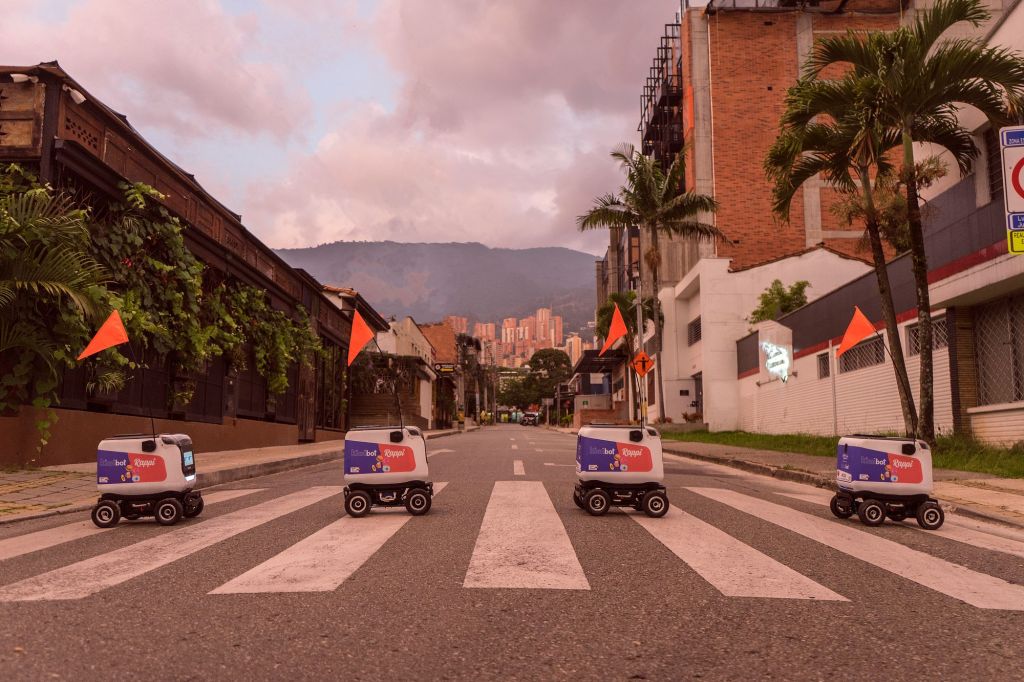
Kiwibot, the delivery robot startup that got its start shuttling burritos and snacks to students on the University of California-Berkeley campus, is expanding to San Jose with a new business model and partners Shopify and Ordermark.
About 25 Kiwibots will today begin delivering food and goods to customers in downtown San Jose and Buena Vista, a predominantly Latino neighborhood located southwest of the city center. Kiwibot will charge $3.99 per delivery, a fee that restaurants and other businesses can choose to absorb or pass on to consumers.
The launch in San Jose isn’t just about a geographic expansion. The announcement also marks the public launch of Kiwibot’s new B2B strategy.
“We started thinking instead of building the robot infrastructure and the marketplace, let’s focus on just building the robot infrastructure and partner with companies that already have that in mind,” said co-founder and CEO Felipe Chavez.
Kiwibot made the transition in January and started to build out a business-to-business API so that any business could connect to its platform. Shopify and Ordermark are the first partners for Kiwibot under this new direction.
What this means is that any business using the Shopfiy platform to manage their online stores can add the Kiwibot API so their products and be delivered directly to customers. Meanwhile, Ordermark, which sells an online ordering platform to businesses, has integrated the Kiwibot API into its product. Now Kiwibot shows up, alongside a variety of other services, on the Ordermark dashboard.
Kiwibot is also working closely with the city of San Jose, according to Chavez. The city’s transit agency will be able to locate and monitor each robot in real time via the Mobility Data Specification (MDS). A growing number of cities are using the MDS tool to track shared mobility vehicles such as scooters. But Chavez contends that San Jose is the first city to be integrated with a robotic company API. The data is anonymized to keep customer’s personal information private, Chavez added.
Disrupt 2026: The tech ecosystem, all in one room
Your next round. Your next hire. Your next breakout opportunity. Find it at TechCrunch Disrupt 2026, where 10,000+ founders, investors, and tech leaders gather for three days of 250+ tactical sessions, powerful introductions, and market-defining innovation. Register now to save up to $400.
Save up to $300 or 30% to TechCrunch Founder Summit
1,000+ founders and investors come together at TechCrunch Founder Summit 2026 for a full day focused on growth, execution, and real-world scaling. Learn from founders and investors who have shaped the industry. Connect with peers navigating similar growth stages. Walk away with tactics you can apply immediately
Offer ends March 13.
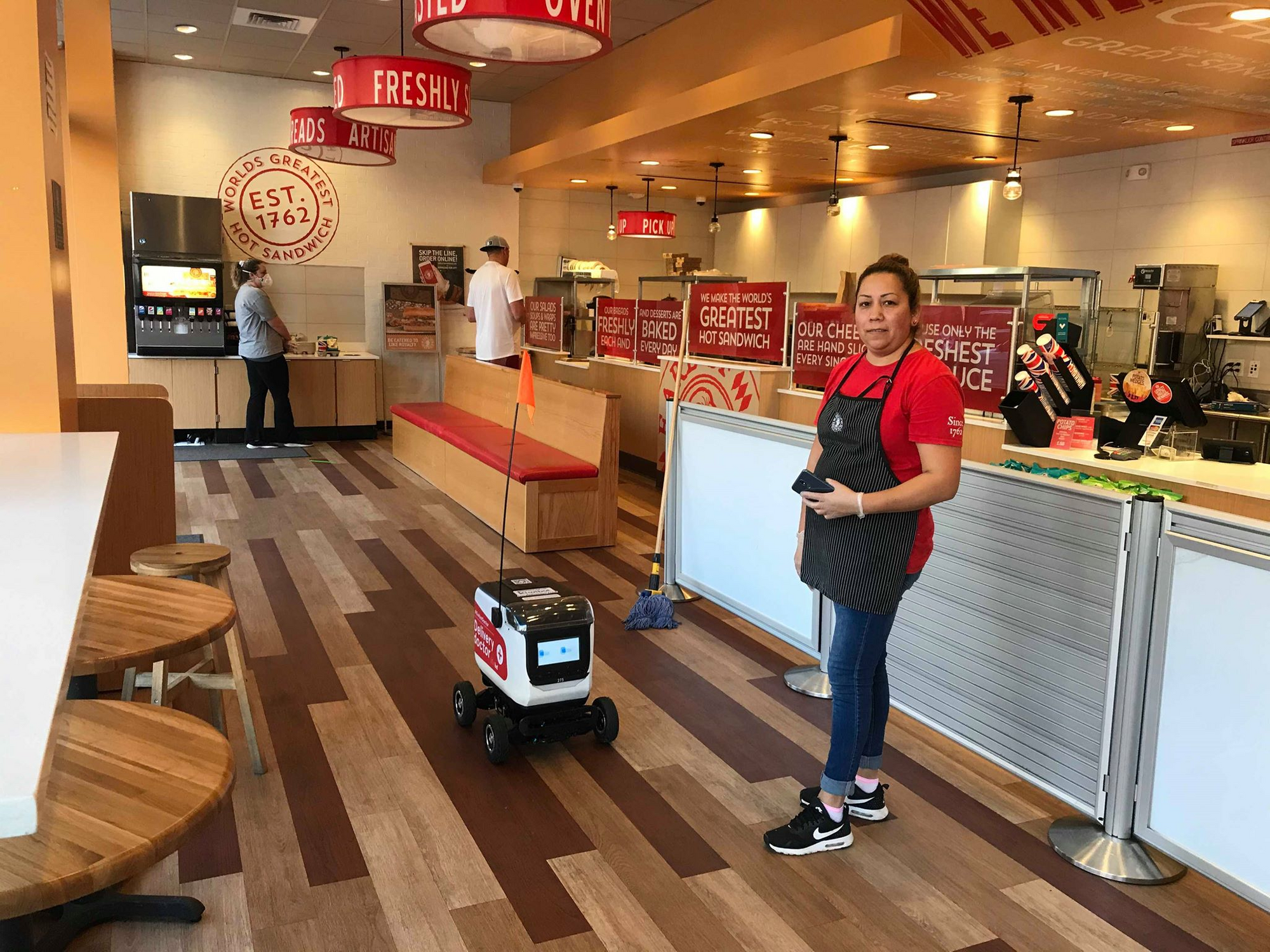
Kiwibots are not fully autonomous. At least not quite yet. Chavez uses the term “semi autonomous” to describe the bots. Here’s what that actually means. The delivery bots are equipped with a camera and are capable of detecting objects and navigating around them. However, the bots are also supported and controlled remotely by humans in certain scenarios, who can monitor up to three robots remotely. These teleoperators, or supervisors as Kiwibot calls them, provide path planning, a method of setting and adjusting way points along a route. They can also step in and take direct control of the bot when problems arise. The supervisors, many of which are located in Colombia, from where Chavez and his co-founder Sergio Pachón originally hail, also control the bot on all traffic crossings, according to the company.
The aim is for these bots to become less reliant on humans over time. Kiwi’s next generation, known as Kiwibot 4.0, will be noticeably larger. What the public might not notice is the additional sensors, including more cameras and even lidar. The Kiwibot 4.0 is expected to come out at the end of the year.