As robots and gadgets continue to pervade our everyday lives, they increasingly need to see in 3D — but as evidenced by the notch in your iPhone, depth-sensing cameras are still pretty bulky. A new approach inspired by how some spiders sense the distance to their prey could change that.
Jumping spiders don’t have room in their tiny, hairy heads for structured light projectors and all that kind of thing. Yet they have to see where they’re going and what they’re grabbing in order to be effective predators. How do they do it? As is usually the case with arthropods, in a super weird but interesting way.
Instead of having multiple eyes capturing a slightly different image and taking stereo cues from that, as we do, each of the spider’s eyes is in itself a depth-sensing system. Each eye is multi-layered, with transparent retinas seeing the image with different amounts of blur depending on distance. The differing blurs from different eyes and layers are compared in the spider’s small nervous system and produce an accurate distance measurement — using incredibly little in the way of “hardware.”
Researchers at Harvard have created a high-tech lens system that uses a similar approach, producing the ability to sense depth without traditional optical elements.
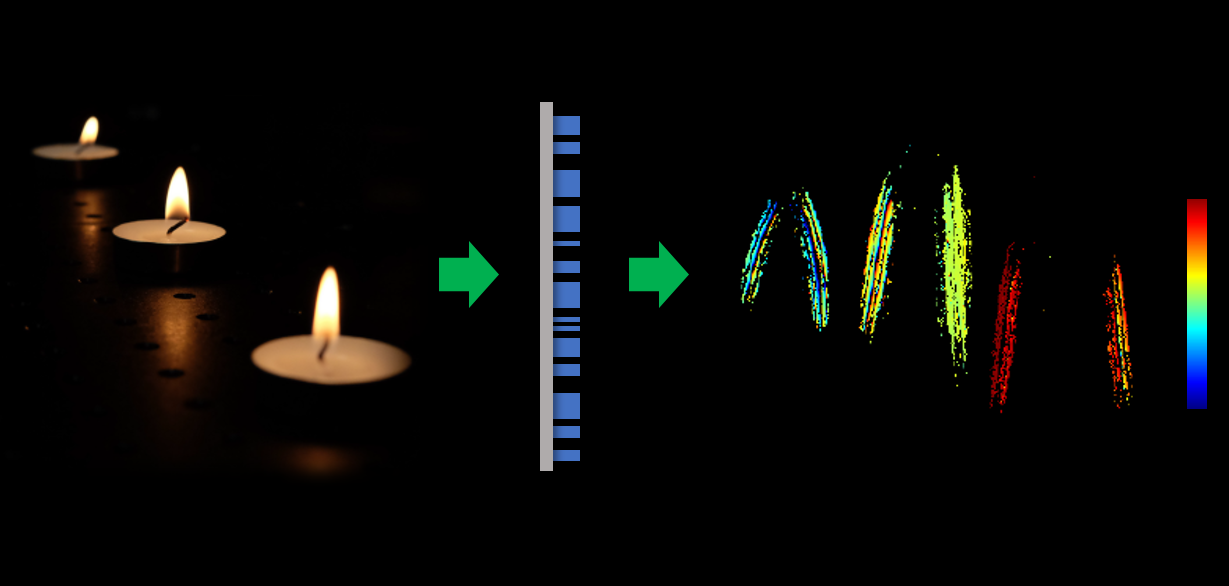
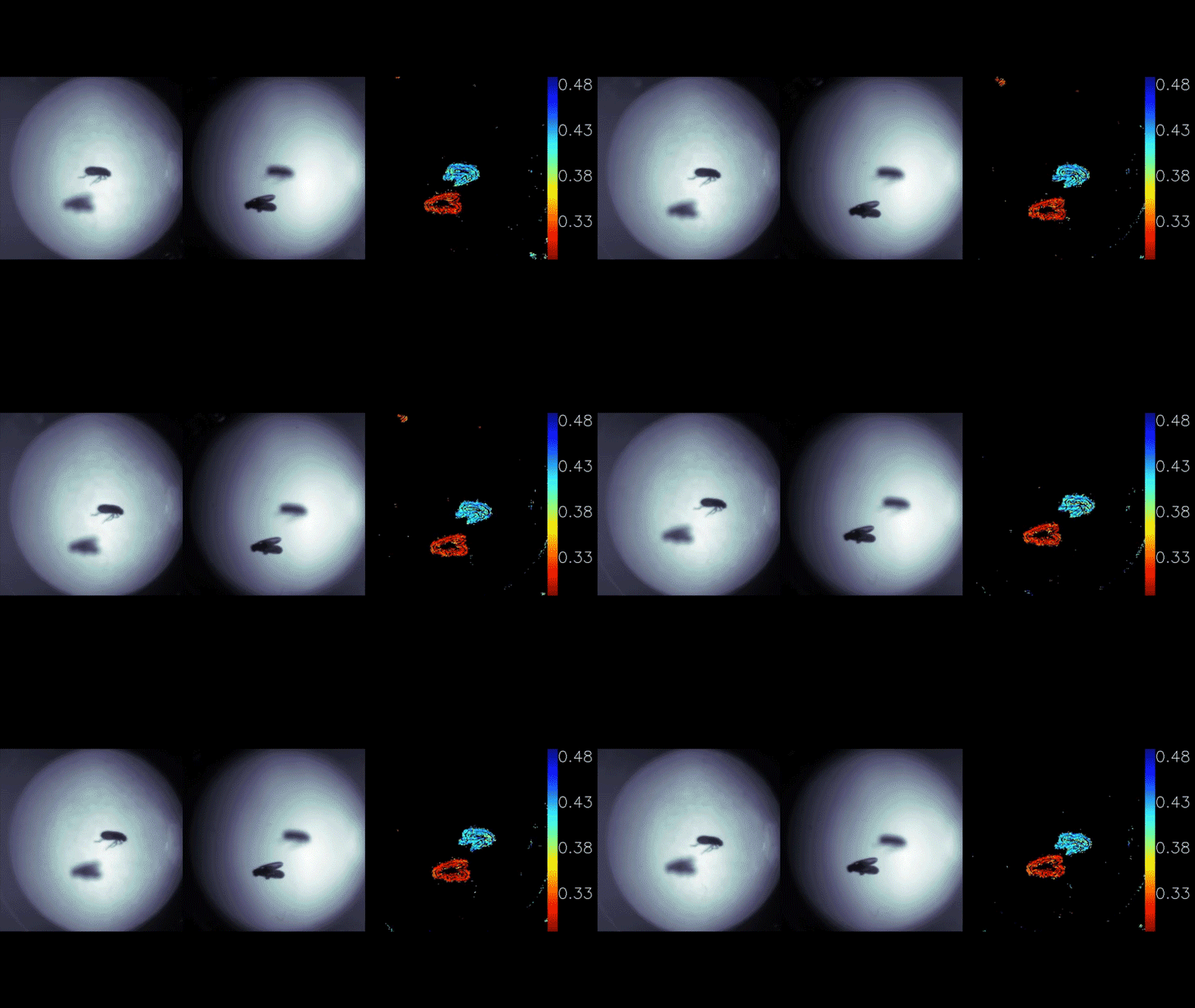
The “metalens” created by electrical engineering professor Federico Capasso and his team detects an incoming image as two similar ones with different amounts of blur, like the spider’s eye does. These images are compared using an algorithm also like the spider’s — at least in that it is very quick and efficient — and the result is a lovely little real-time, whole-image depth calculation.
Disrupt 2026: The tech ecosystem, all in one room
Your next round. Your next hire. Your next breakout opportunity. Find it at TechCrunch Disrupt 2026, where 10,000+ founders, investors, and tech leaders gather for three days of 250+ tactical sessions, powerful introductions, and market-defining innovation. Register now to save up to $400.
Save up to $300 or 30% to TechCrunch Founder Summit
1,000+ founders and investors come together at TechCrunch Founder Summit 2026 for a full day focused on growth, execution, and real-world scaling. Learn from founders and investors who have shaped the industry. Connect with peers navigating similar growth stages. Walk away with tactics you can apply immediately
Offer ends March 13.
The process is not only efficient, meaning it can be done with very little computing hardware and power, but it can be extremely compact: the one used for this experiment was only 3 millimeters across.
This means it could be included not just on self-driving cars and industrial robots but on small gadgets, smart home items and, of course, phones — it probably won’t replace Face ID, but it’s a start.
The paper describing the metalens system will be published today in the Proceedings of the National Academy of Sciences.