A collision at sea that claimed the lives of 10 sailors has led to the Navy deciding to replace an unpopular touchscreen interface in some ships with more traditional mechanical controls. “Just because you can doesn’t mean you should,” a Navy official said of the outgoing technology.
The crash in question involved the U.S.S. John S. McCain and an oil tanker in August of 2017. The sailors at the helm lost control of the ship and put it in the path of the tanker, resulting in the collision that killed 10 and injured 58 more.
A National Transportation Safety Board investigation was issued recently and found that essentially, the sailors didn’t know how to control the ship properly due to a lack of proper training and documentation. The Northrop-Grumman designed “integrated bridge and navigation system,” or IBNS, is a pair of touchscreens that incorporate a number of functions — not so different from the dash touchscreen in a new car taking over the temperature and radio knobs and buttons. (To be clear, the top image doesn’t show the exact system, but one like it.)
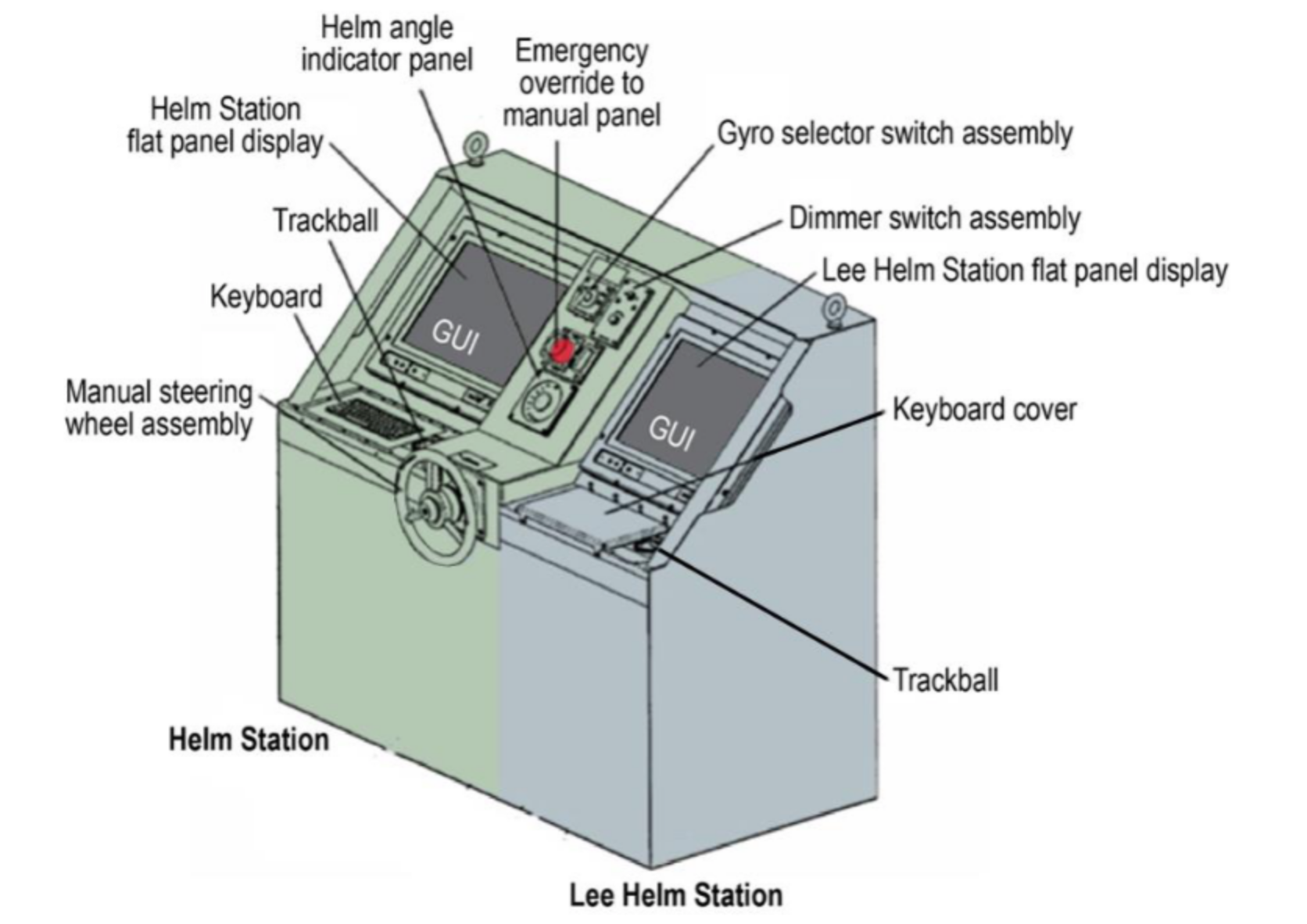
But the complexity of the system led to one sailor thinking he was controlling the ship’s entire throttle, while only in fact controlling one side. This led to the John S. McCain making a sharp turn directly into the path of the oncoming tanker.
“Their misunderstandings expressed during the post-accident interviews and the misunderstandings of other crewmembers who were permanently assigned to the John S McCain point to a more fundamental issue with the qualification process and training with the IBNS,” concluded the report.
Turns out no one really knew how these systems, which were installed only a year ago, really worked, and in a crisis situation were unable to quickly perform the maneuvers necessary. So the Navy is pulling the systems out of the destroyers they have been installed in.
Disrupt 2026: The tech ecosystem, all in one room
Your next round. Your next hire. Your next breakout opportunity. Find it at TechCrunch Disrupt 2026, where 10,000+ founders, investors, and tech leaders gather for three days of 250+ tactical sessions, powerful introductions, and market-defining innovation. Register now to save up to $400.
Save up to $300 or 30% to TechCrunch Founder Summit
1,000+ founders and investors come together at TechCrunch Founder Summit 2026 for a full day focused on growth, execution, and real-world scaling. Learn from founders and investors who have shaped the industry. Connect with peers navigating similar growth stages. Walk away with tactics you can apply immediately
Offer ends March 13.
Speaking at an event hosted by the American Society of Naval Engineers, Navy Rear Admiral Bill Galinis explained (as reported by USNI News) that the whole thing was unadvised:
When we started getting the feedback from the fleet from the Comprehensive Review effort… it was really eye-opening. And it goes into the, in my mind, ‘just because you can doesn’t mean you should’ category. We really made the helm control system, specifically on the 51 class [destroyers], just overly complex, with the touch screens under glass and all this kind of stuff. We got away from the physical throttles, and that was probably the number-one feedback from the fleet – they said, just give us the throttles that we can use.
And throttles they can use is exactly what they’ll get, at least on the destroyer classes featuring this particular interface. The contracting process is well underway already and the replacement procedure is quite straightforward, so the ships should get real mechanical controls starting next year. Whether this will lead to a broader questioning of computer-based and touchscreen controls in the Navy and military is anyone’s guess, but at least a few ships should be easier to control going forward.