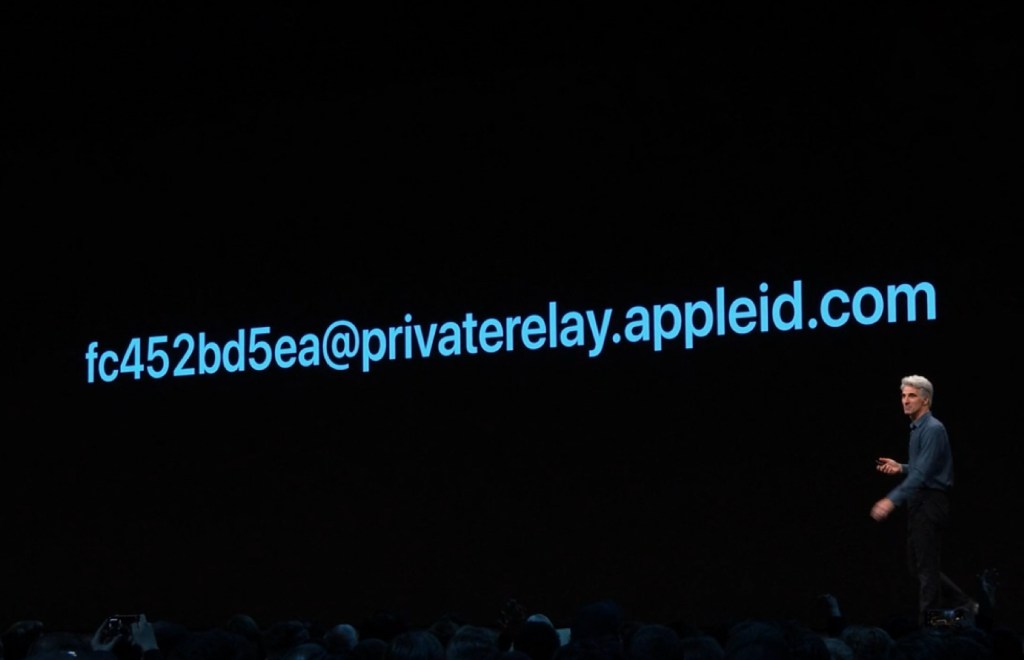
Apple has a new way to stop third-party sites and services from getting your information when you sign up to an app.
All too often, developers give users the chance to sign in with one-click — using data fed in from Facebook, Google or Twitter.
“Now this can be convenient, but it also can come at the cost of your privacy — your personal information sometimes gets shared behind the scenes and these logins can be used to track you,” said Apple software engineering chief Craig Federighi at the company’s annual developer conference.
Apple thinks it can do one better by allowing developers to add a “Sign in with Apple” button instead.
What’s the difference? Apple says it can authenticate a user using Face ID on their iPhone without turning over any of their personal data to a third-party company.
Federighi said users can create a new account on an app using its own one-click button “without revealing any new personal information.”
Federighi also noted that when apps ask for names and email addresses — typically auto-populated from a one-click login from a social networking site — you can still provide them if they wish. But when you don’t want to provide your real email address to protect your privacy, Apple will auto-generate a random “relay” email address that hides your real email address.
Disrupt 2026: The tech ecosystem, all in one room
Your next round. Your next hire. Your next breakout opportunity. Find it at TechCrunch Disrupt 2026, where 10,000+ founders, investors, and tech leaders gather for three days of 250+ tactical sessions, powerful introductions, and market-defining innovation. Register now to save up to $400.
Save up to $300 or 30% to TechCrunch Founder Summit
1,000+ founders and investors come together at TechCrunch Founder Summit 2026 for a full day focused on growth, execution, and real-world scaling. Learn from founders and investors who have shaped the industry. Connect with peers navigating similar growth stages. Walk away with tactics you can apply immediately
Offer ends March 13.
“That’s good news because we each get a unique random address, and this means you can disable any one of them at anytime when you’re tired of hearing from that app,” said Federighi.
Some have already questioned how Apple will entice developers into using its privacy-minded sign-in service — given they would be missing out on potential marketing data. Instead, Apple said it the option would be “required” to be included for apps that support third-party sign-ins.
Beta testing opens later this year.
Updated with information from Apple’s documentation.