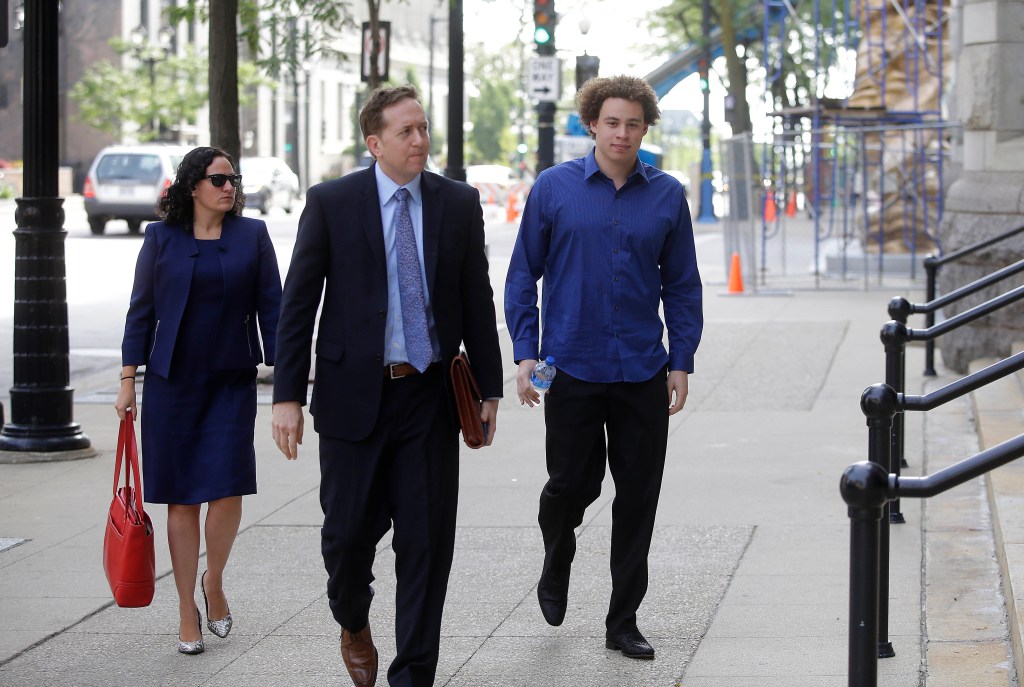
Malware researcher Marcus Hutchins has pleaded guilty to two counts of creating and selling a powerful banking malware, ending a long and protracted battle with U.S. prosecutors.
Hutchins, a British national who goes by the online handle MalwareTech, was arrested in August 2017 as he was due to fly back to the U.K. following the Def Con security conference in Las Vegas. Prosecutors charged Hutchins with his involvement with creating the Kronos banking malware, dating back to 2014. He was later freed on bail.
A plea agreement was filed with the Eastern District of Wisconsin, where the case was being heard on Friday. His trial was set to begin later this year.
Hutchins agreed to plead guilty to distributing Kronos, a trojan that can be used to steal passwords and credentials from banking websites. In recent years, the trojan has continued to spread. He also agreed to plead guilty to a second count of conspiracy.
Hutchins faces up to 10 years in prison. Prosecutors have dropped the remaining charges.
In a brief statement on his website, Hutchins said: “I regret these actions and accept full responsibility for my mistakes.”
“Having grown up, I’ve since been using the same skills that I misused several years ago for constructive purposes,” he said. “I will continue to devote my time to keeping people safe from malware attacks.”
Disrupt 2026: The tech ecosystem, all in one room
Your next round. Your next hire. Your next breakout opportunity. Find it at TechCrunch Disrupt 2026, where 10,000+ founders, investors, and tech leaders gather for three days of 250+ tactical sessions, powerful introductions, and market-defining innovation. Register now to save up to $400.
Save up to $300 or 30% to TechCrunch Founder Summit
1,000+ founders and investors come together at TechCrunch Founder Summit 2026 for a full day focused on growth, execution, and real-world scaling. Learn from founders and investors who have shaped the industry. Connect with peers navigating similar growth stages. Walk away with tactics you can apply immediately
Offer ends March 13.
His attorney Marcia Hofmann did not immediately return a request for comment.
Hutchins rose to prominence after he stopped the spread of the WannaCry ransomware attack in May 2017, months before his arrest. The attack used powerful hacking tools developed by the National Security Agency, which were later leaked, to backdoor thousands of Windows computers and install ransomware. The attack was later attributed to hackers backed by North Korea, knocking U.K. hospitals offline and crippling major companies around the world.
By registering a domain name found in the malware’s code, Hutchins stemmed the spread of the infection. He was hailed a hero for stopping the attack.
Prior to his release and after, Hutchins gained further praise and respect from the security community for his contributions to the malware-reversing field, and demonstrating his findings so others can learn from his findings.
Justice Department spokesperson Nicole Navas declined to comment.
WannaCry hero heads into Tuesday hearing as the security community crowdfunds his defense