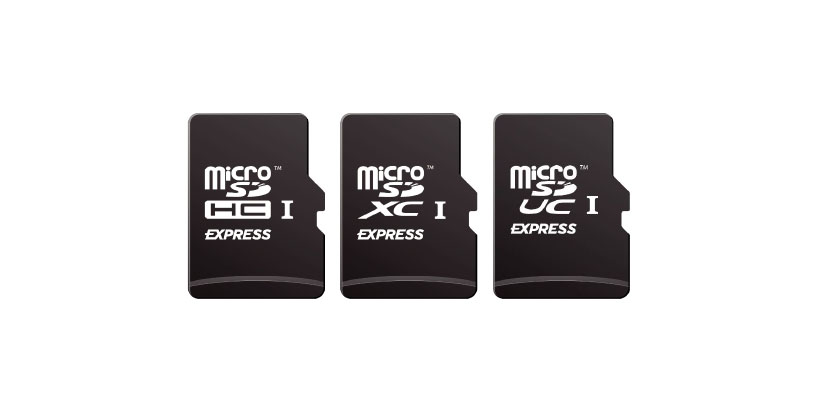
Today at MWC Barcelona the SD Association unveiled microSD Express, which will allow future mobile devices to consume and create content at even faster speeds. This new microSD card platform boosts incredible transfer speeds while consuming less energy used by previous formats.
The new format will be available in the flavors of microSDHC Express, microSDXC Express and microSDUC Express.
Like SD Express, microSD Express taps the PCIe interface to hit a maximum data transfer rate of 985 megabytes per second (MB/s). This is possible through the PCIe 3.1 and NVMe v1.3 specifications that live on a second row of pins. The SD Association expects the faster cards to consume less energy than traditional memory cards while still being backward compatible.
The fast data speeds could lead mobile device makers to rethink how they equip devices. Read and write speeds have long been a limiting factor for expandable memory, but with this new format, which is backward compatible, the data transfer happens nearly as quickly as built-in memory. With 5G data and cameras pumping out huge files, expandable memory could make a comeback.
Want more technical information about #microSDExpress? Learn more in our newest whitepaper: https://t.co/SyVdzdwGbN pic.twitter.com/3kmsdvjJhh
— SD Association (@SD_Association) February 25, 2019
Disrupt 2026: The tech ecosystem, all in one room
Your next round. Your next hire. Your next breakout opportunity. Find it at TechCrunch Disrupt 2026, where 10,000+ founders, investors, and tech leaders gather for three days of 250+ tactical sessions, powerful introductions, and market-defining innovation. Register now to save up to $400.
Save up to $300 or 30% to TechCrunch Founder Summit
1,000+ founders and investors come together at TechCrunch Founder Summit 2026 for a full day focused on growth, execution, and real-world scaling. Learn from founders and investors who have shaped the industry. Connect with peers navigating similar growth stages. Walk away with tactics you can apply immediately
Offer ends March 13.