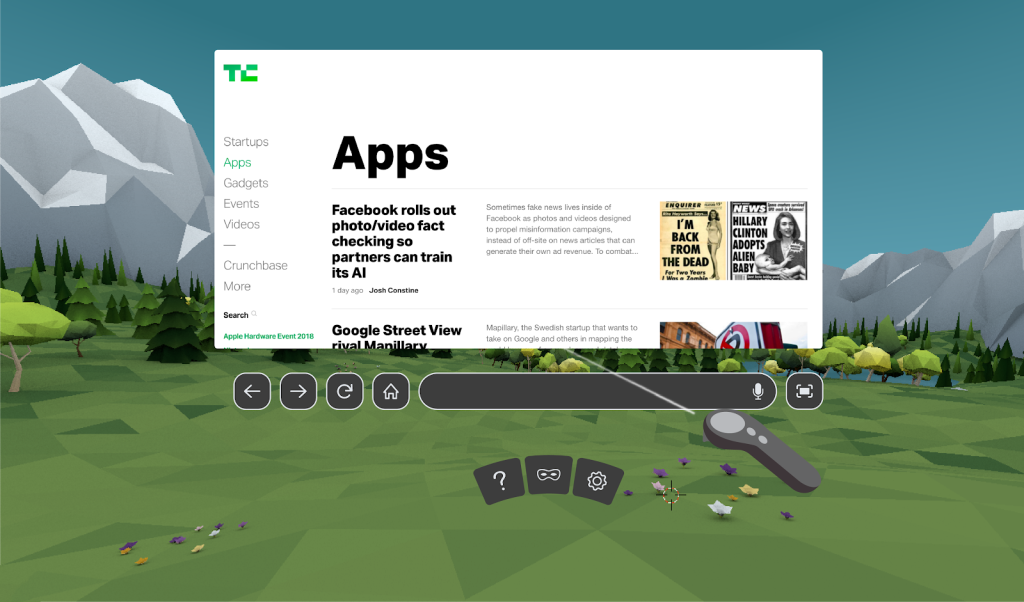
Mozilla’s vision of a VR-first web browser is ready for consumers to download and judge.
Firefox Reality is a browser built entirely for virtual reality. While you may have read about desktop Firefox or Chrome adding WebVR support, Firefox Reality is a web browser that you actually use entirely inside a VR headset. You can visit URLs, search things and otherwise browse the 2D and 3D internet within the new browser all without moving a mouse, just your VR hand controller.
Mozilla shows off a Firefox ‘mixed reality’ browser for headsets
Firefox Reality is available on the Oculus, Viveport and Daydream platforms and is optimized to run on the latest standalone mobile headsets like the Oculus Go and Lenovo Mirage Solo.
This is version 1.0 and the company is still finding its way through some usage questions and issues. It’s VR after all, so perfection is hardly the standard to chase. Being experimental may mean some wonkiness in the UX, but it also could mean giving users upon something that works in a really unique way.
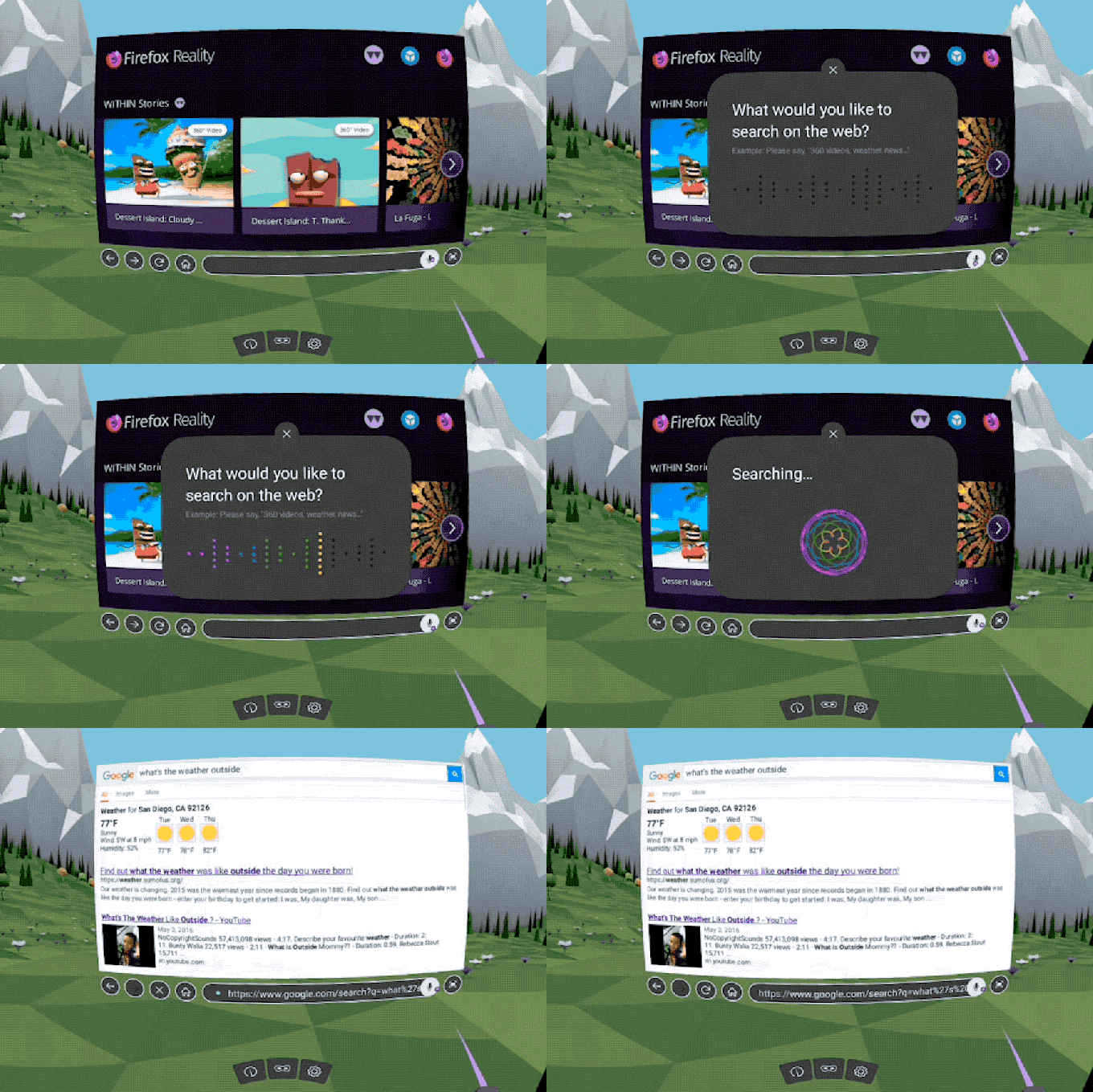
The browser’s first iteration seems to have some cool features like voice search to help users avoid punching in text on a controller character-by-character.
Disrupt 2026: The tech ecosystem, all in one room
Your next round. Your next hire. Your next breakout opportunity. Find it at TechCrunch Disrupt 2026, where 10,000+ founders, investors, and tech leaders gather for three days of 250+ tactical sessions, powerful introductions, and market-defining innovation. Register now to save up to $400.
Save up to $300 or 30% to TechCrunch Founder Summit
1,000+ founders and investors come together at TechCrunch Founder Summit 2026 for a full day focused on growth, execution, and real-world scaling. Learn from founders and investors who have shaped the industry. Connect with peers navigating similar growth stages. Walk away with tactics you can apply immediately
Offer ends March 13.
Mozilla has put a lot of effort into the WebVR standard that a good deal of VR developers have grown familiar with.
The web is a pretty natural fit for VR. It’s understandable but unfortunate that so much of the content available in virtual reality has gotten organized in these big stores across each platform that requires you to sign-in, download and launch from your library. While this model certainly has plenty of advantages to the stakeholders and developers, users might have an easier go if some of the simpler content built for today’s VR headsets were built for WebVR.
It’s clear that plenty of things need to be rethought for the web inside VR. There’s obviously far more 2D web content available right now, but it’ll be interesting to see how much 3D models or live rendered virtual environments grow to become a part of the way sites operate as browser owners like Mozilla, Google and Apple begin heavily pushing their AR/VR plays.