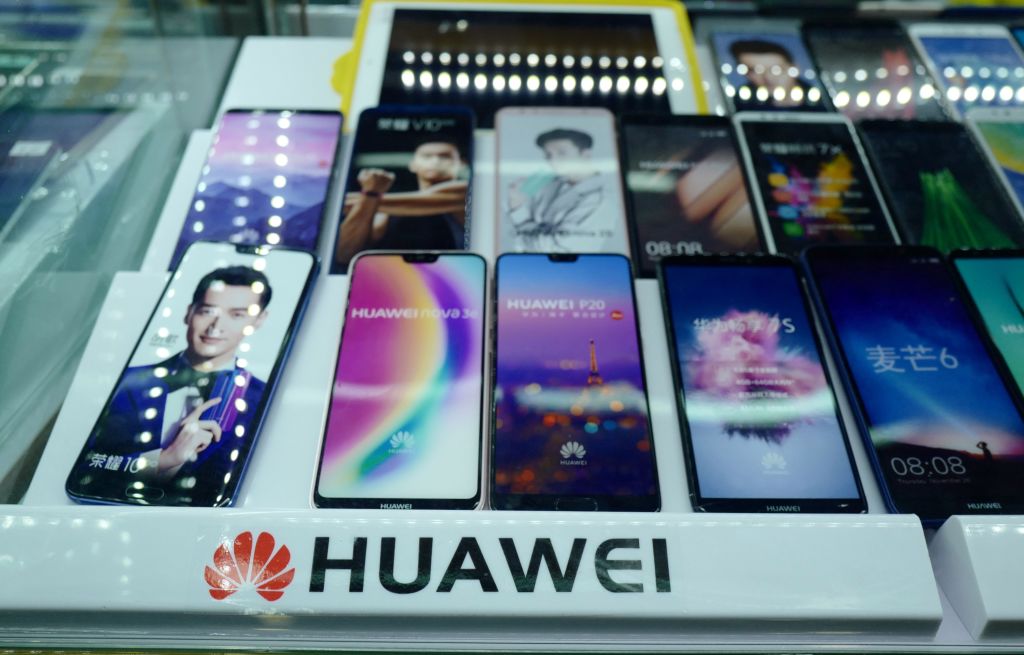
Concerns around Facebook’s recently revealed data sharing relationship with some device makers just took a turn for the worse. The practice, first revealed over the weekend, is now confirmed to have included relationships with Chinese companies Huawei, Lenovo, Oppo and TCL, according to The New York Times. Given that the U.S. government has longstanding national security concerns over Huawei, Facebook’s newly revealed data deal with the Chinese company has raised some eyebrows in Congress.
“Concerns about Huawei aren’t new – they were widely publicized beginning in 2012, when the House Permanent Select Committee on Intelligence released a well-read report on the close relationships between the Chinese Communist Party and equipment makers like Huawei,” U.S. Senator Mark Warner said of the revelation. Warner serves as the vice chairman of the Senate Select Committee on Intelligence.
“The news that Facebook provided privileged access to Facebook’s API to Chinese device makers like Huawei and TCL raises legitimate concerns, and I look forward to learning more about how Facebook ensured that information about their users was not sent to Chinese servers.”
In that report, the House Intelligence Committee wrote that “Huawei did not fully cooperate with the investigation and was unwilling to explain its relationship with the Chinese government or Chinese Communist Party, while credible evidence exists that it fails to comply with U.S. laws” and that Huawei’s history indicated that it likely had ties to the Chinese military.
Earlier in the day, the Senate Commerce Committee addressed a letter to Facebook over the broader issue of these manufacturer relationships and questioning Facebook’s assertion that the shared data was not abused. As The New York Times reports, these relationships date back to “at least 2010” — the relative dark ages of Facebook’s mobile strategy. It does not appear that ZTE had a similar agreement with Facebook.
[scribd id=381106039 key=key-IOB7XD8nBjFvvhsnQo4q mode=scroll]
Facebook has disputed the characterization of these relationships as a privacy scandal, emphasizing that it imposed tight restrictions on this class of device integration.
Disrupt 2026: The tech ecosystem, all in one room
Your next round. Your next hire. Your next breakout opportunity. Find it at TechCrunch Disrupt 2026, where 10,000+ founders, investors, and tech leaders gather for three days of 250+ tactical sessions, powerful introductions, and market-defining innovation. Register now to save up to $400.
Save up to $300 or 30% to TechCrunch Founder Summit
1,000+ founders and investors come together at TechCrunch Founder Summit 2026 for a full day focused on growth, execution, and real-world scaling. Learn from founders and investors who have shaped the industry. Connect with peers navigating similar growth stages. Walk away with tactics you can apply immediately
Offer ends March 13.
These integrations are very different from our public APIs — the goal was to recreate Facebook-like experiences on these devices, and they were tightly controlled.
— Meta (@Meta) June 5, 2018
Facebook told The New York Times that while the partnerships have been ongoing for years, the company would end its relationship with Huawei by the week’s end.
Huawei provided the following statement to TechCrunch: “Like all leading smartphone providers, Huawei worked with Facebook to make Facebook’s services more convenient for users. Huawei has never collected or stored any Facebook user data.”