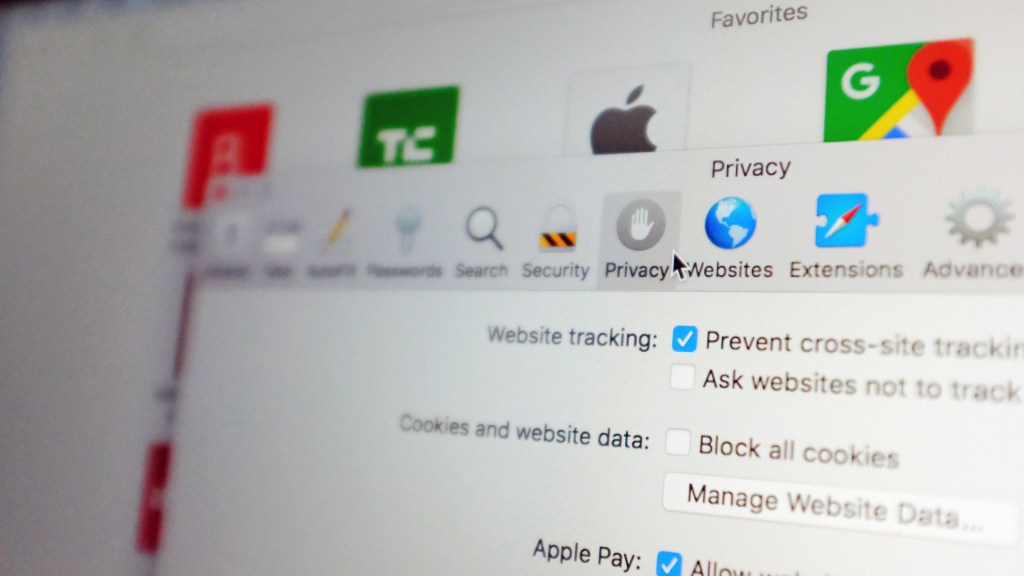
Today’s public release of macOS High Sierra brings with it some key updates to Safari — including the ability to disable cross-site cookie tracking and turn off autoplaying ads. Arriving alongside those features is a less publicized new addition to Apple’s proprietary browser: data collection. The company is using its newly implemented differential privacy technology to gather information from user habits that will help it identify problematic websites.
This form of data collection is the first of its kind for Safari, aimed at identifying sites that use excessive power and crash the browser by monopolizing too much memory. Apple is also documenting the popularity of these problematic domains, in order to prioritize which sites it addresses first.
Differential privacy is a method for collecting large swaths of information without grabbing any personally identifying data in the process, so none of the information can be traced back to the user. The concept dates back to academic research, algorithmically obscuring user data, while bulk collecting information, in order to identify larger trends.
As SVP Craig Federighi put it in a WWDC keynote, “[O]ne of the important tools in making software more intelligent is to spot patterns in how multiple users are using their devices.”
Apple has already used differential privacy for some relatively low-level applications, including predictive text in keyboards, emoji usage and search predictions. As such, the technology is already part of the company’s Device Analytics program.
It’s an opt-in box that you can choose to tick, depending on whether you want to send that information to Apple, much like you would with the company’s crash reporting. As such, Apple won’t be prompting users with an additional sign up or notification marking the new data collection in Safari.
The new implementation is already covered by the Device Analytics program that Apple offers up when users sign into their new macOS or iOS device. Though the company will be offering up more information on the system in future documentation.
Disrupt 2026: The tech ecosystem, all in one room
Your next round. Your next hire. Your next breakout opportunity. Find it at TechCrunch Disrupt 2026, where 10,000+ founders, investors, and tech leaders gather for three days of 250+ tactical sessions, powerful introductions, and market-defining innovation. Register now to save up to $400.
Save up to $300 or 30% to TechCrunch Founder Summit
1,000+ founders and investors come together at TechCrunch Founder Summit 2026 for a full day focused on growth, execution, and real-world scaling. Learn from founders and investors who have shaped the industry. Connect with peers navigating similar growth stages. Walk away with tactics you can apply immediately
Offer ends March 13.
The use of differential privacy appears to have given Apple the confidence that it could collect this kind of information without risking the sorts of privacy breaches we’ve seen in the past — and by all accounts, the technology is a secure one. But irony of the fact that the company is collecting more browsing data in order to make its browser more secure won’t be lost on some.