New work out of Georgia Tech promises to lend a sense of permanence to shape-shifting 3D printing. The technology, commonly referred to as 4D printing by those in the know, aims to add another dimension to the 3D printing process by creating an object designed to change shape after it leaves the print bed.
Most models from research institutes like Harvard and MIT have relied on hydrogels to execute the process. The soft materials execute the functionality slowly and don’t retain their shape after the process is completed.
Videos out of Georgia Tech’s team show a real-time transformation that takes around five seconds to complete, once the polymer object has come into contact with a heat source, like a blow drier or hot water.
“Normally the time is pretty long,” Georgia Tech professor H. Jerry Qi told TechCrunch. “You have to wait hours for it to change shape. And also they’re very soft, because hydrogels are soft. They’re typically softer than skin. With our new approach, the responsive time is very fast. The videos are real-time. The shape change happens almost instantly.”

The videos highlight a number of different objects to show the diversity of the process, from a lattice work that unfolds to eight times its size, to a complex and colorful flower that appears to wilt when dipped in hot water. The researchers were also able to determine the object’s final shape to some degree during the printing process.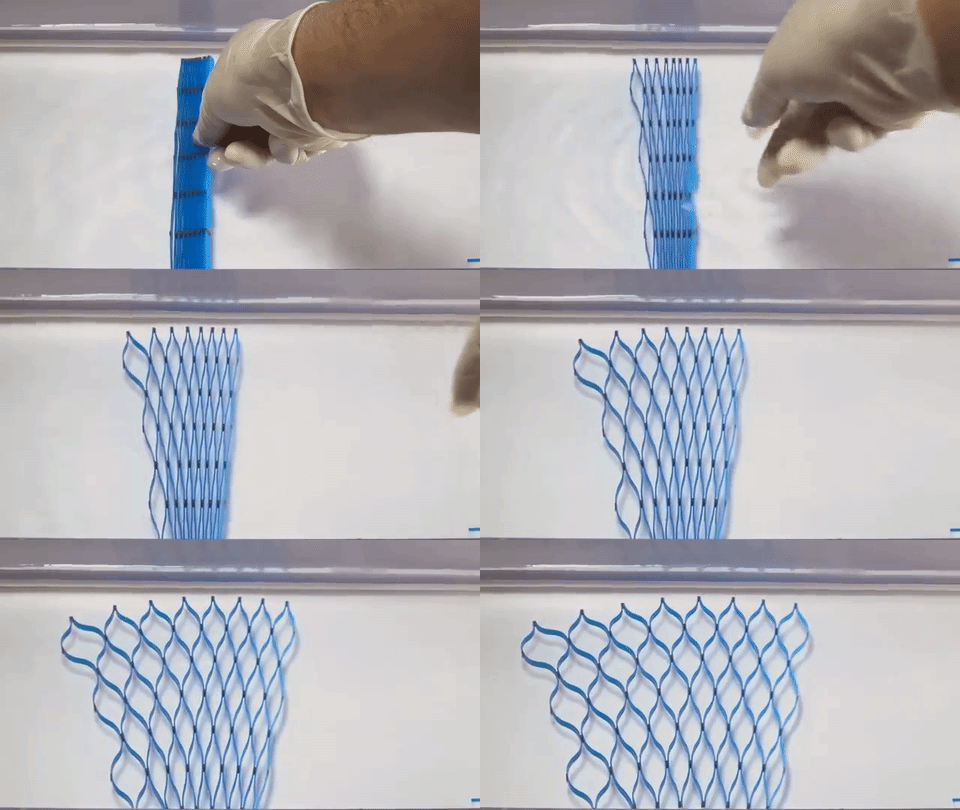
Disrupt 2026: The tech ecosystem, all in one room
Your next round. Your next hire. Your next breakout opportunity. Find it at TechCrunch Disrupt 2026, where 10,000+ founders, investors, and tech leaders gather for three days of 250+ tactical sessions, powerful introductions, and market-defining innovation. Register now to save up to $400.
Save up to $300 or 30% to TechCrunch Founder Summit
1,000+ founders and investors come together at TechCrunch Founder Summit 2026 for a full day focused on growth, execution, and real-world scaling. Learn from founders and investors who have shaped the industry. Connect with peers navigating similar growth stages. Walk away with tactics you can apply immediately
Offer ends March 13.
“The shape change is all controlled by printing parameters and how you arrange the print structures and the different materials in the structures,” said Qi. “It’s an advance from what we’ve done before, because it simplifies the process significantly. “
For now, the research is the stuff of cool lab videos and grant fodder, but in the future, such shape shifting objects could have potentially wide ranging device. Biomedical devices are one that immediately spring to mind for the team, like implants that change shape ones they come into contact with body heat.
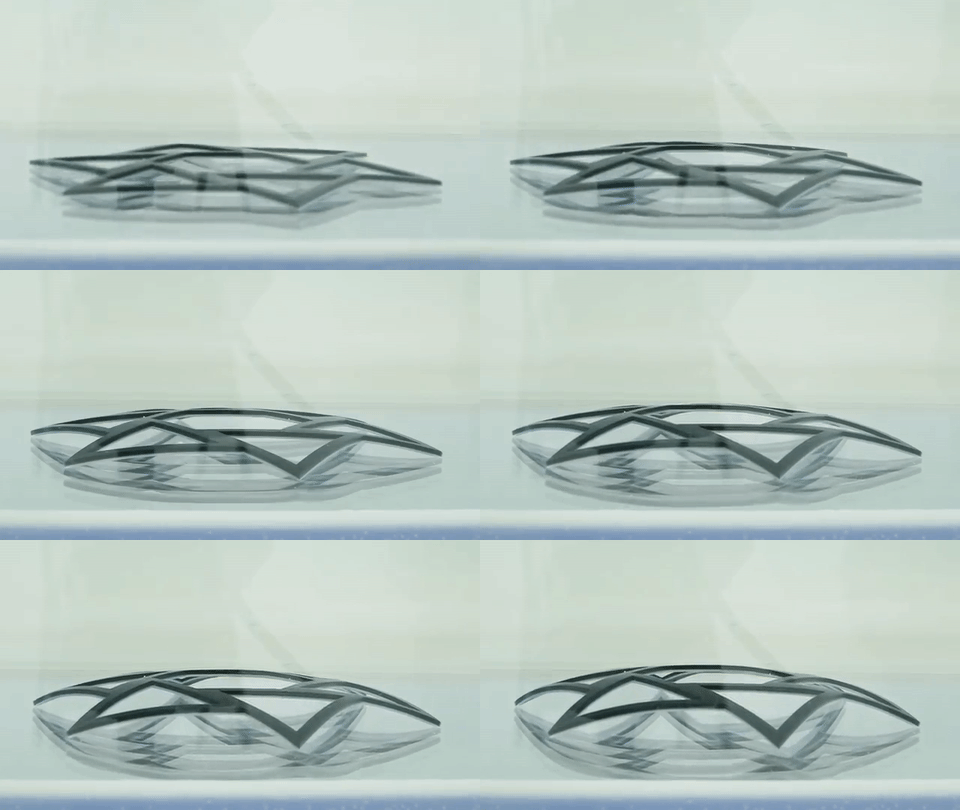
The permanence of the new structure post transformation could also broaden the product’s appeal in the consumer field