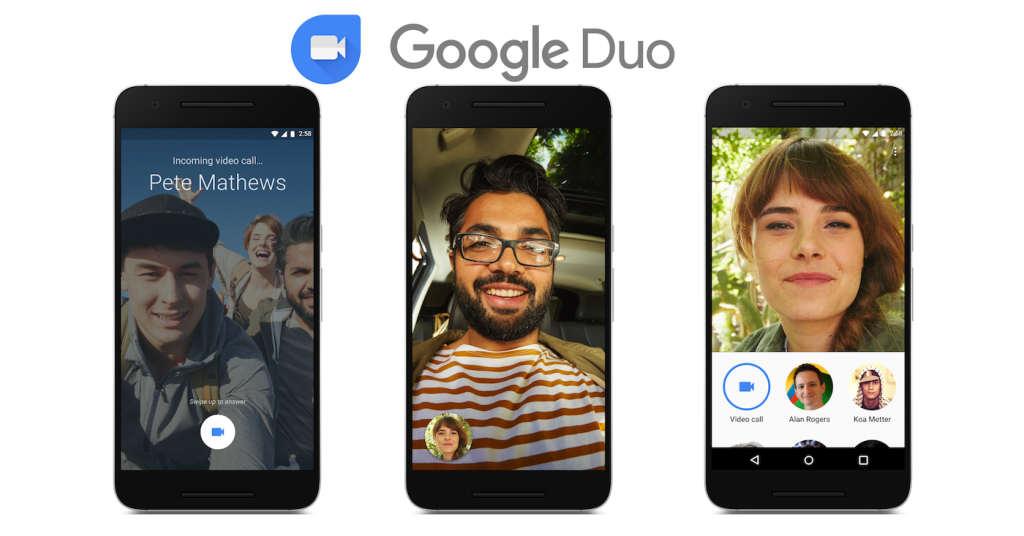
In March, Google announced it was beginning to roll out support for audio-only calling in its FaceTime and Whatsapp competitor, Duo, which had previously focused on video calls. Initially, support for audio calls was available in Brazil, but the feature is now live for all users worldwide, a Google engineer and technical lead for Duo announced on Twitter late on Sunday evening.
If you’re having trouble keeping track of Google’s numerous communications products, Duo was the video calling app announced in May 2016 at the Google I/O developer conference. It launched last summer as a Google-powered alternative to other popular video calling apps.
📞🌎 Google Duo's new audio calling feature now available worldwide! pic.twitter.com/gFQxQTcu2S
— Justin Uberti (@juberti) April 10, 2017
What’s not clear from a strategy perspective is why Google decided to keep calling – video and audio alike – housed in a separate app, while keeping messaging contained in Allo. If it’s aim is to carve out a space for itself in a market dominated by Whatsapp and Facebook Messenger, it seems that it may have made more sense to get users to install one universal communications app that supported everything – text, voice, video, etc. – instead of two.
And if it’s trying to take on FaceTime, it’s made a misstep – FaceTime is popular because it’s integrated with Apple’s computing platform across platforms, from Mac to iOS, and is the default, built-in option for video calling on iPhone. Users don’t have to go to the App Store to acquire it, as they do with the iOS version of Duo.
Disrupt 2026: The tech ecosystem, all in one room
Your next round. Your next hire. Your next breakout opportunity. Find it at TechCrunch Disrupt 2026, where 10,000+ founders, investors, and tech leaders gather for three days of 250+ tactical sessions, powerful introductions, and market-defining innovation. Register now to save up to $400.
Save up to $300 or 30% to TechCrunch Founder Summit
1,000+ founders and investors come together at TechCrunch Founder Summit 2026 for a full day focused on growth, execution, and real-world scaling. Learn from founders and investors who have shaped the industry. Connect with peers navigating similar growth stages. Walk away with tactics you can apply immediately
Offer ends March 13.
Of course, Google’s messaging strategy has never really made sense. Instead, it often feels like the company is trying the “throw a bunch of spaghetti at the wall and see what sticks” method of rolling out apps.
Today, Google still has its legacy Hangouts app, though it has split the service into two new apps, Chat and Meet (basically, the enterprise versions of Allo and Duo.). It also operates a newly refreshed Google Voice; its iMessage rival, Messenger, which has been adding support for RCS – an upgrade from SMS. Plus, it has two email apps, Gmail and Inbox, and it built in a messaging service into YouTube.
Thankfully, Google has been trying to pare things down a bit, by closing Google Talk and killing a failed social experiment called Spaces.
Duo, meanwhile, has not achieved much traction. The app is today is ranked only #225 Overall on Google Play, and #641 on iOS, according to App Annie. The app has seen around 27 million downloads in total since launch, with India accounting for 32 percent, according to data from Sensor Tower. This figure doesn’t count direct APK downloads or pre-installs, however.