

There are more plug-in vehicles available now than there were a decade ago, and the sales of those vehicles are growing. Sales of electric vehicles are up about a third this year over last year, and November 2016 marked 14 consecutive months of record-setting EV sales in the U.S.
And yet the grand total of all plug-in vehicles sold in the U.S. in 2016 (not counting December) was just shy of 134,000. The total number of light-duty vehicles (cars, pickup trucks, SUVs, etc.) sold in November 2016 alone was 1.38 million — 10 times the EVs sold over a period of 11 months.
One reason EVs aren’t selling might be that they’re not being advertised. The Sierra Club commissioned a study that tracked automotive advertising in 2015. The result in a nutshell: manufacturers advertise for their gasoline-powered vehicles far more than for their electric-powered cars.
In a stark example, in 2015, Ford advertised the gas-powered Focus about 4,750 times to a national audience on tier-1 cable and broadcast TV channels. It advertised the electric-powered Focus about 200 times to a national TV audience. The Mercedes-Benz C-Class small gas-powered sedan was advertised about 1,400 times nationally, while the B-class EV got no national advertising time at all that year.
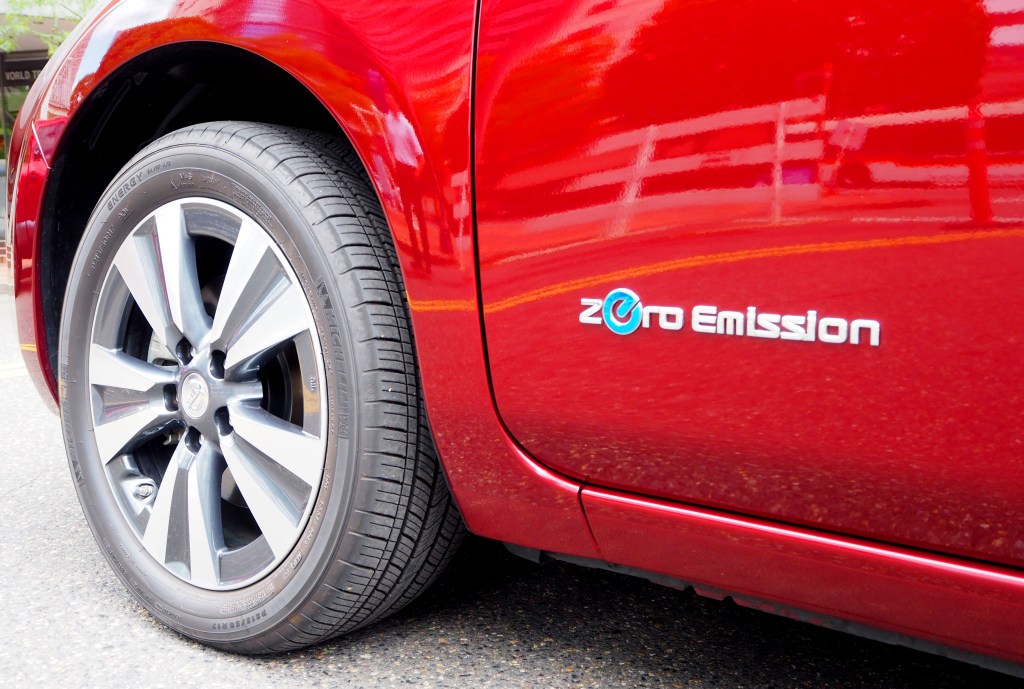
Nissan fared a little better in the results. Sort of. The gasoline-only Sentra was advertised 3,500 times nationally over the year, while the electric-only LEAF was advertised about 1,700 times — but only in California. But the Sentra was only advertised in California markets a couple hundred times, so markets matter.
In California, there are 22 electric models at dealerships, but in other states the pickings are far slimmer. The next best markets for EVs offer 14 different models; a half dozen states have zero EV models available at dealerships.
In some cases, it hardly matters if car makers advertise for these cars. Another Sierra Club project found that even if there are EVs at dealerships, they sometimes weren’t even charged up enough to test drive.
Disrupt 2026: The tech ecosystem, all in one room
Your next round. Your next hire. Your next breakout opportunity. Find it at TechCrunch Disrupt 2026, where 10,000+ founders, investors, and tech leaders gather for three days of 250+ tactical sessions, powerful introductions, and market-defining innovation. Register now to save up to $400.
Save up to $300 or 30% to TechCrunch Founder Summit
1,000+ founders and investors come together at TechCrunch Founder Summit 2026 for a full day focused on growth, execution, and real-world scaling. Learn from founders and investors who have shaped the industry. Connect with peers navigating similar growth stages. Walk away with tactics you can apply immediately
Offer ends March 13.
Tesla is at the top of this heap, as you’d expect. It only sells electric cars, it sells the most electric cars and its salespeople are knowledgeable about EVs. Also, they have charged cars to test drive.
Maybe the introduction of the Chevy Bolt and Chrysler Pacifica plug-in hybrid minivan will change the advertising landscape next year. Maybe the nine states following California’s zero-emissions vehicles (ZEV) standards will convince auto manufacturers to advertise their plug-in cars. Electric vehicles don’t work everywhere for everyone, but they work in a lot of places for a lot of people. Maybe that’s all the ads have to say to convince skeptical buyers to test drive a charged EV.

