

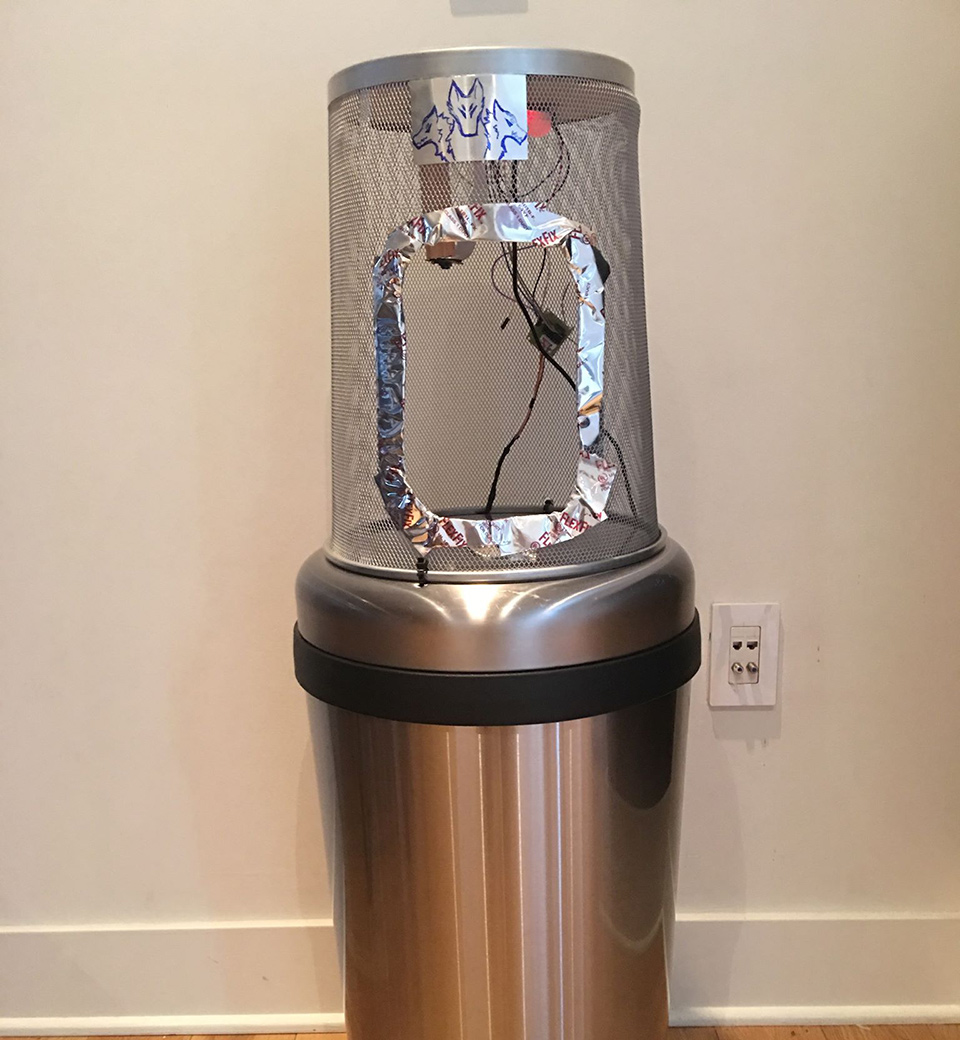
No, Auto-Trash does not mean wrappers and french fries lingering on the floor of your car. Auto-Trash is a Raspberry Pi-powered trashcan that can automatically sort items by type.
It works by using a Raspberry Pi module equipped with a camera to “see” each item placed on top of the can’s rotating top. Using image recognition—powered by their own custom software model built on top of Google’s TensorFlow AI engine—the smart trash can is able to distinguish items and rotate the top accordingly to drop them into the correct areas of a partitioned can.
Keep in mind, this was just a hackathon proof of concept, but it seems to work as seen in a demo video below.
[youtube=https://www.youtube.com/watch?v=sOGk2Y5vQdc&feature=player_embedded]
In this demo, the can only sorts between compostable items and recyclable items. However, the team imagines this as a product that could sort between any number of categories (landfill, compost, recyclable, etc).
While Industrial technologies exist for this task, the Auto-Trash team envisions this as a low-cost, consumer product..
Additionally, multiple cans would be connected to the TensorFlow neural network and each individual can would be learning from the contents put into all cans. Over time the network of cans would become smarter and smarter and get better at sorting.
Disrupt 2026: The tech ecosystem, all in one room
Your next round. Your next hire. Your next breakout opportunity. Find it at TechCrunch Disrupt 2026, where 10,000+ founders, investors, and tech leaders gather for three days of 250+ tactical sessions, powerful introductions, and market-defining innovation. Register now to save up to $400.
Save up to $300 or 30% to TechCrunch Founder Summit
1,000+ founders and investors come together at TechCrunch Founder Summit 2026 for a full day focused on growth, execution, and real-world scaling. Learn from founders and investors who have shaped the industry. Connect with peers navigating similar growth stages. Walk away with tactics you can apply immediately
Offer ends March 13.
The team’s objective is to reduce human error and offload any effort we spend sorting items.

