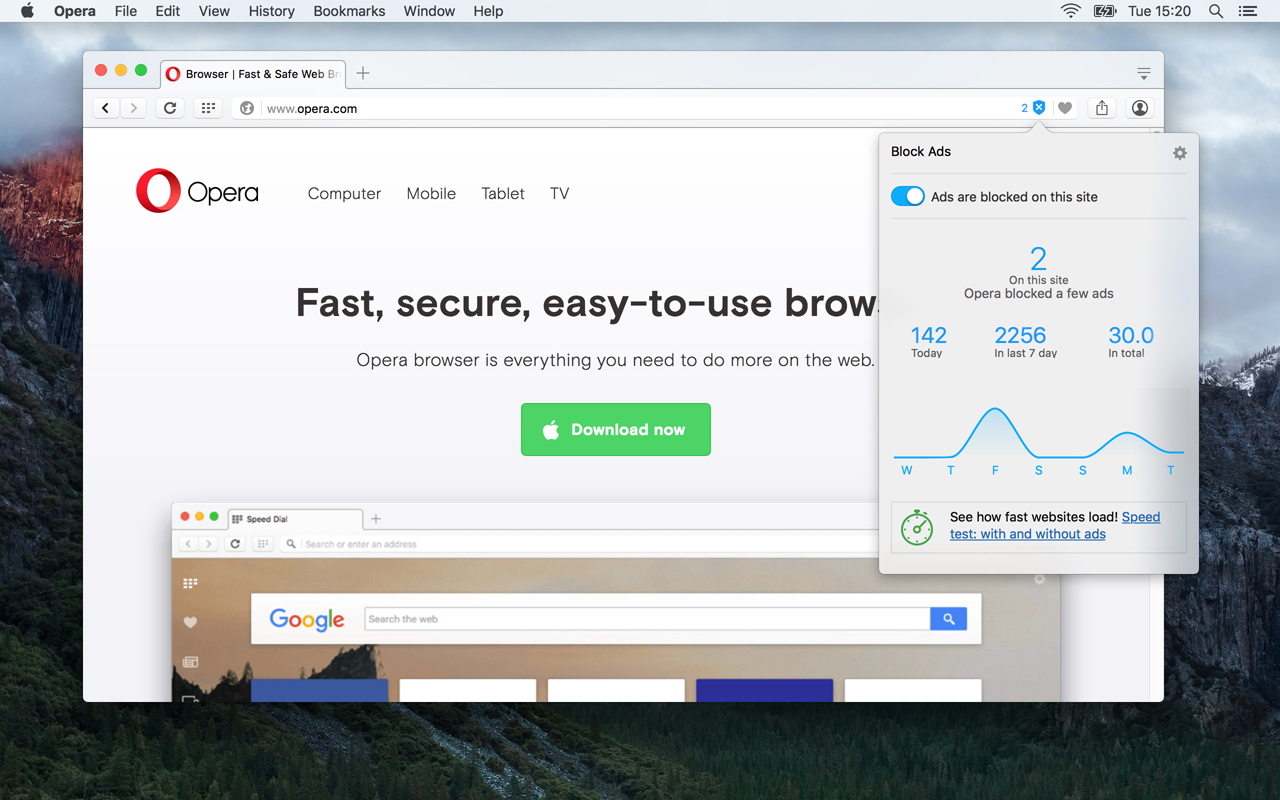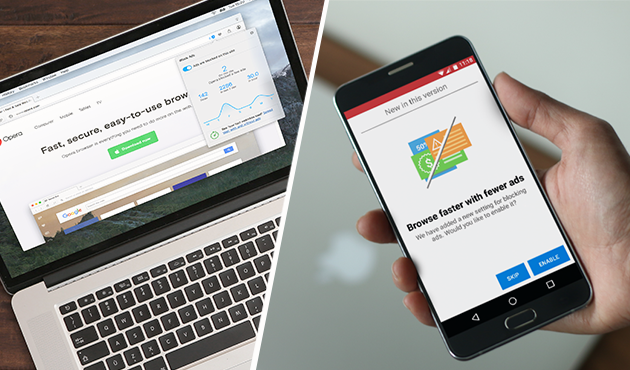
Opera today announced that its built-in ad blocker, which was previously only available in the experimental developer release channel, is now coming to all of its desktop users. In addition, it is now also bringing this same feature to mobile, starting with Opera Mini for Android.
While ad blocking isn’t exactly without controversy, there can be little doubt that it makes for a faster browsing experience — especially on mobile.
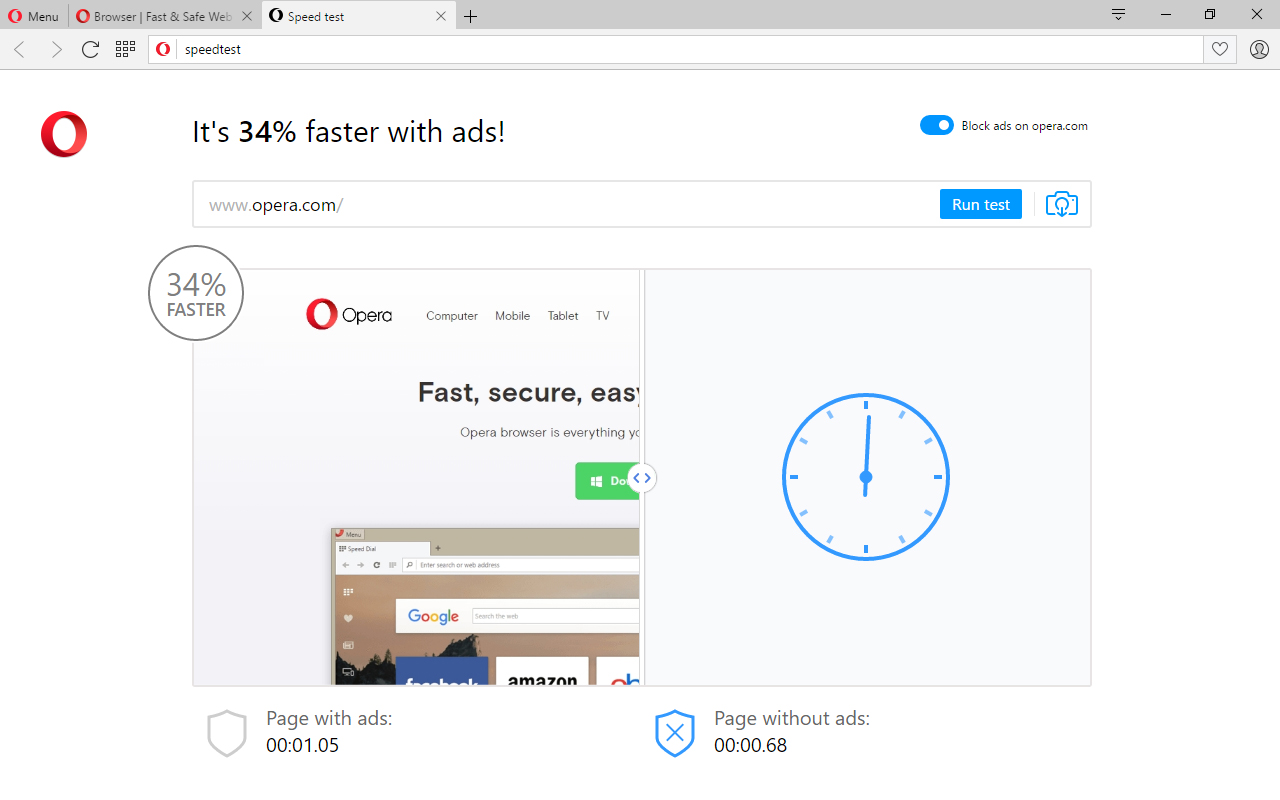
Opera argues that its built-in ad blocker is also faster than using Chrome or another browser with a third-party ad-blocking add-on. Indeed, the company argues that its solution is about 45 percent faster than using Chrome with AdBlock Plus.
On mobile, Opera says Opera Mini for Android with this new feature enabled loads sites about 40 percent faster than without it (and can save quite a bit of download data, too).
In addition, Opera argues that its solution also uses significantly less memory than comparable tools.
On Android, Opera offers both its regular fully featured Opera browser and Opera Mini. For now, Mini — which unlike its slightly more full-sized brethren features an always-on compression service — is the only mobile browser in the company’s lineup that offers the built-in ad blocker, but I would be surprised if the company didn’t bring this tool to the non-Mini version soon, too. Opera Max, the company’s system-wide compression proxy, is also a likely candidate for integrating ad blocking.
Disrupt 2026: The tech ecosystem, all in one room
Your next round. Your next hire. Your next breakout opportunity. Find it at TechCrunch Disrupt 2026, where 10,000+ founders, investors, and tech leaders gather for three days of 250+ tactical sessions, powerful introductions, and market-defining innovation. Register now to save up to $400.
Save up to $300 or 30% to TechCrunch Founder Summit
1,000+ founders and investors come together at TechCrunch Founder Summit 2026 for a full day focused on growth, execution, and real-world scaling. Learn from founders and investors who have shaped the industry. Connect with peers navigating similar growth stages. Walk away with tactics you can apply immediately
Offer ends March 13.
All of this activity around Opera’s browsers comes at a time of uncertainty for Opera, given that its proposed $1.2 billion acquisition by a consortium of Chinese companies (many of which are in the advertising business) still hasn’t closed. At MWC, Opera CEO Lars Boilesen told me this acquisition wasn’t really his decision and that the company would be just fine if the deal never closed. It’s hard not to look at the company’s current decisions, which also include building a VPN right into its browser, without thinking that they are almost meant to provoke the company’s potential acquirers (and maybe sabotage this deal).
Update: Opera sent me a statement about it relationship with the Chinese consortium that is in the process of acquiring the company. Opera tells me that it is “actually very positive” about the acquisition and the possibility of “potentially becoming part of a bigger ecosystem in a very ambitious and fast growing company.” In addition, a spokesperson told me that the company is “in close sync with the Chinese consortium and they are supportive of our latest product development.”