
Azure Container Service, Microsoft’s container scheduling and orchestration service for its Azure cloud computing service, is now generally available.
The service, which allows its users to choose either Mesosphere’s Data Center Operating System (DC/OS) or Docker’s Swarm and Compose to deploy and orchestrate their containers, was first announced in September 2015 and hit public preview this February.
As Microsoft’s CTO for Azure (and occasional novelist) Mark Russinovich told me, he believes this ability to use both Docker Swarm/Compose and the open-source components of DC/OS — both of which are based on open-source projects — makes the Azure Container Service stand out from some of its competitors.
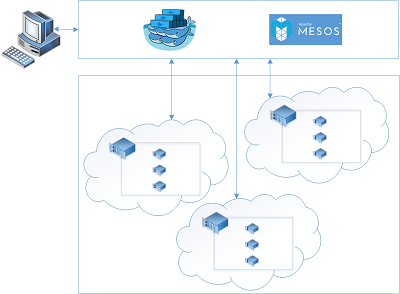 As Russinovich told me, the company doesn’t want to tell its customers which of these two services to use. “It’s our job to make sure our customers can use either one or both on our cloud and have a great experience,” he said.
Microsoft’s history with Mesosphere goes back quite a bit, of course. At first, the company worked with Mesosphere to allow its users to run its DC/OS on Azure; the two companies are also partnering to bring DC/OS support to Windows and Hyper-V containers, as well. In addition, Microsoft made a strategic investment in the company (and Microsoft reportedly tried to buy Mesosphere at one point last year, something Russinovich didn’t want to comment on, of course).
 Microsoft also believes that using these open-source solutions means its users can easily take their workloads and move them on-premise when they want (or move their existing on-premise solutions to Azure, too, of course).
The one service missing from Microsoft’s line-up here, though, is Google’s Kubernetes, which is also an open-source project. Russinovich argued that the company is focusing on the open-source technologies its customers are requesting — and with that, he obviously implied that its customers aren’t currently asking for Kubernetes (though he also left the possibility open that Azure Container Serviceswould one day support it).
Disrupt 2026: The tech ecosystem, all in one room
Your next round. Your next hire. Your next breakout opportunity. Find it at TechCrunch Disrupt 2026, where 10,000+ founders, investors, and tech leaders gather for three days of 250+ tactical sessions, powerful introductions, and market-defining innovation. Register now to save up to $400.
Save up to $300 or 30% to TechCrunch Founder Summit
1,000+ founders and investors come together at TechCrunch Founder Summit 2026 for a full day focused on growth, execution, and real-world scaling. Learn from founders and investors who have shaped the industry. Connect with peers navigating similar growth stages. Walk away with tactics you can apply immediately
Offer ends March 13.
As Russinovich noted, the company is seeing lots of companies that are now moving their workload to containers. “A few years ago, it was very much dev test, but now whole companies are adopting it in production,” he said.
Russinovich told me that Microsoft doesn’t currently have any plans to offer support through a similar arrangement it currently has with Red Hat, for example, where Red Hat and Microsoft staff are co-located. Microsoft will offer basic Mesosphere support, though, and Mesosphere will handle tier 2/3 support for advanced topics.