

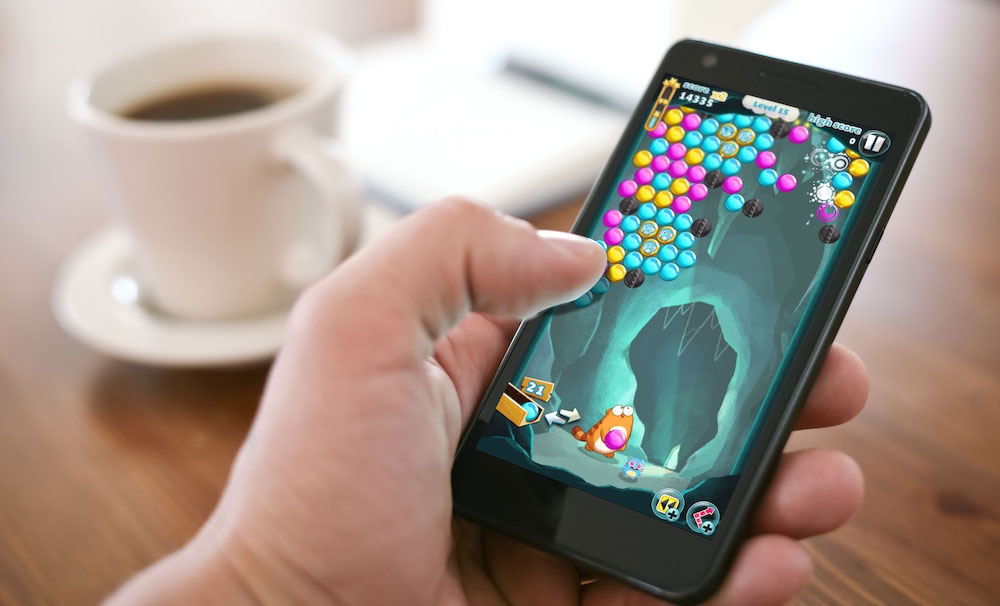
Messaging app Viber has quietly made its games service available for all users worldwide following a two month pilot in five countries.
The company, which was bought by Rakuten for $900 million a year ago, initially launched three games for users in Belarus, Malaysia, Israel, Singapore and Ukraine in December 2014. The titles — Viber Candy Mania, Wild Luck Casino and Viber Pop, links to which popped up in my app today — are standalone apps that link up to Viber to let users share scores, battle and generally interact with friends on the service.
The theory is that they can increase some users’ engagement with the service, and — most importantly for Viber — make money via in-app purchases for power-ups, additional lives, etc.
Viber CEO Talmon Marco told TechCrunch that he is excited to bring the titles to more of Viber’s international userbase, which currently stands at 236 million active monthly users. Marco declined to provide specific details about the pilot, but he did say that initial engagement data was “encouraging”.
Marco added that Viber users can expect to see new games arrive soon, but for now the company isn’t giving away precise details of its plans.

Viber will be hoping that games can become a significant revenue stream in the same way that they have for other messaging app companies. In-app purchases from games account for more than half of Line’s revenue, while Tencent has seen its mobile revenues surge thanks to WeChat’s games catalog. Games have also helped Kakao Talk, which is dominant in Korea but has a weak global footprint, turn in profit since 2013.
Disrupt 2026: The tech ecosystem, all in one room
Your next round. Your next hire. Your next breakout opportunity. Find it at TechCrunch Disrupt 2026, where 10,000+ founders, investors, and tech leaders gather for three days of 250+ tactical sessions, powerful introductions, and market-defining innovation. Register now to save up to $400.
Save up to $300 or 30% to TechCrunch Founder Summit
1,000+ founders and investors come together at TechCrunch Founder Summit 2026 for a full day focused on growth, execution, and real-world scaling. Learn from founders and investors who have shaped the industry. Connect with peers navigating similar growth stages. Walk away with tactics you can apply immediately
Offer ends March 13.
Gaming harbors much promise for messaging app services, but there is some caution to be noted. Naver, Line’s parent company, missed its most recent earnings expectations after several key games on the Line platform underperformed. Line has since spread its focus and doubled down on its online-to-offline services with a new investment fund, and a series of initiatives including a Tokyo taxi service, a grocery delivery pilot and a TV service.
Viber currently draws revenue from games, sticker sales and its Skype-like international calling plans. Last year, it introduced a social network-like platform for public figures which could potentially make money further down the line.
One more certain expectation is that it will introduce commerce services, powered by Rakuten’s business, sometime this year. Viber’s userbase has grown steadily — it added 17 million monthly active users over the last quarter — but the service continues to run at a deficit.

