

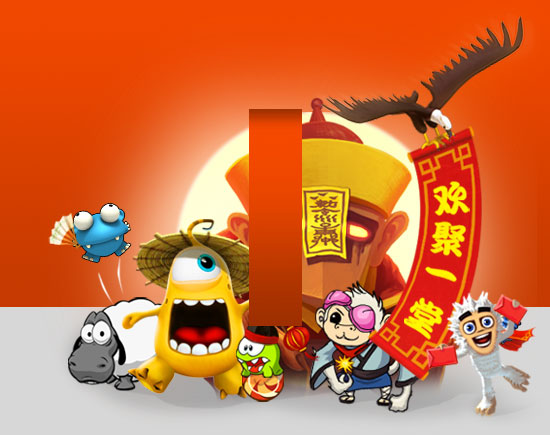
Yodo1, a Beijing-based mobile games publisher that has gradually built a business that helps take games from the West to Asia and vice versa, has raised $11 million in funding led by GGV Capital.
This is the company’s second round and brings its total funding to $18 million. Other new investors, including Pavillion Capital and Iris Capital, participated. The previous round was led by Singtel Innov8.
Henry Fong, Yodo1’s CEO, said that GGV made sense as a fit because of their cross-border strategy with investments in both China and the U.S.
“They were the ones that were the most passionate, proactive and they literally moved the quickest,” he said.
GGV’s Jenny Lee, who has seen at least four exits over the last two years, including the IPO of China’s video-based social network YY, is the one joining Yodo1’s board.
Yodo1 started out by helping Western developers break into the Chinese market by co-producing localized games that had art and music tailored to local tastes.
Their belief is that you can’t just translate copy inside games if you want to succeed in China. They take a more hands-on approach where they access the game’s underlying code and may change the art or characters to fit local tastes.
Disrupt 2026: The tech ecosystem, all in one room
Your next round. Your next hire. Your next breakout opportunity. Find it at TechCrunch Disrupt 2026, where 10,000+ founders, investors, and tech leaders gather for three days of 250+ tactical sessions, powerful introductions, and market-defining innovation. Register now to save up to $400.
Save up to $300 or 30% to TechCrunch Founder Summit
1,000+ founders and investors come together at TechCrunch Founder Summit 2026 for a full day focused on growth, execution, and real-world scaling. Learn from founders and investors who have shaped the industry. Connect with peers navigating similar growth stages. Walk away with tactics you can apply immediately
Offer ends March 13.
Through their 30 published games, they reach about 90 million monthly actives in China and are adding about 10 million users per month. After signing deals with developers like Cut The Rope-maker Zeptolab and Germany’s HandyGames, they started to take their model to South Korea, with a local studio in Seoul that just opened up.
The company will use the funding to expand its model to Japan and Korea, which are the biggest markets in the world by revenue for Google Play developers.
“Android is definitely where the money is in the foreseeable future,” Fong said.
The round comes just as China’s mobile gaming market is heating up. There are more than a half-billion Android and iOS devices circulating in China, according to the country’s leading mobile app analytics company Umeng. That number is expected to swell to more than 800 million next year.
Those rising adoption numbers are fueling growing revenues for game makers in the country. Top-grossing Android games in China can make anywhere from $5 to $10 million per month when you add up all their revenues from the top app stores there, Fong said. (Unlike in the U.S. where there are the two official iOS and Google Play app stores, China has scores of independent, third-party app stores.)
