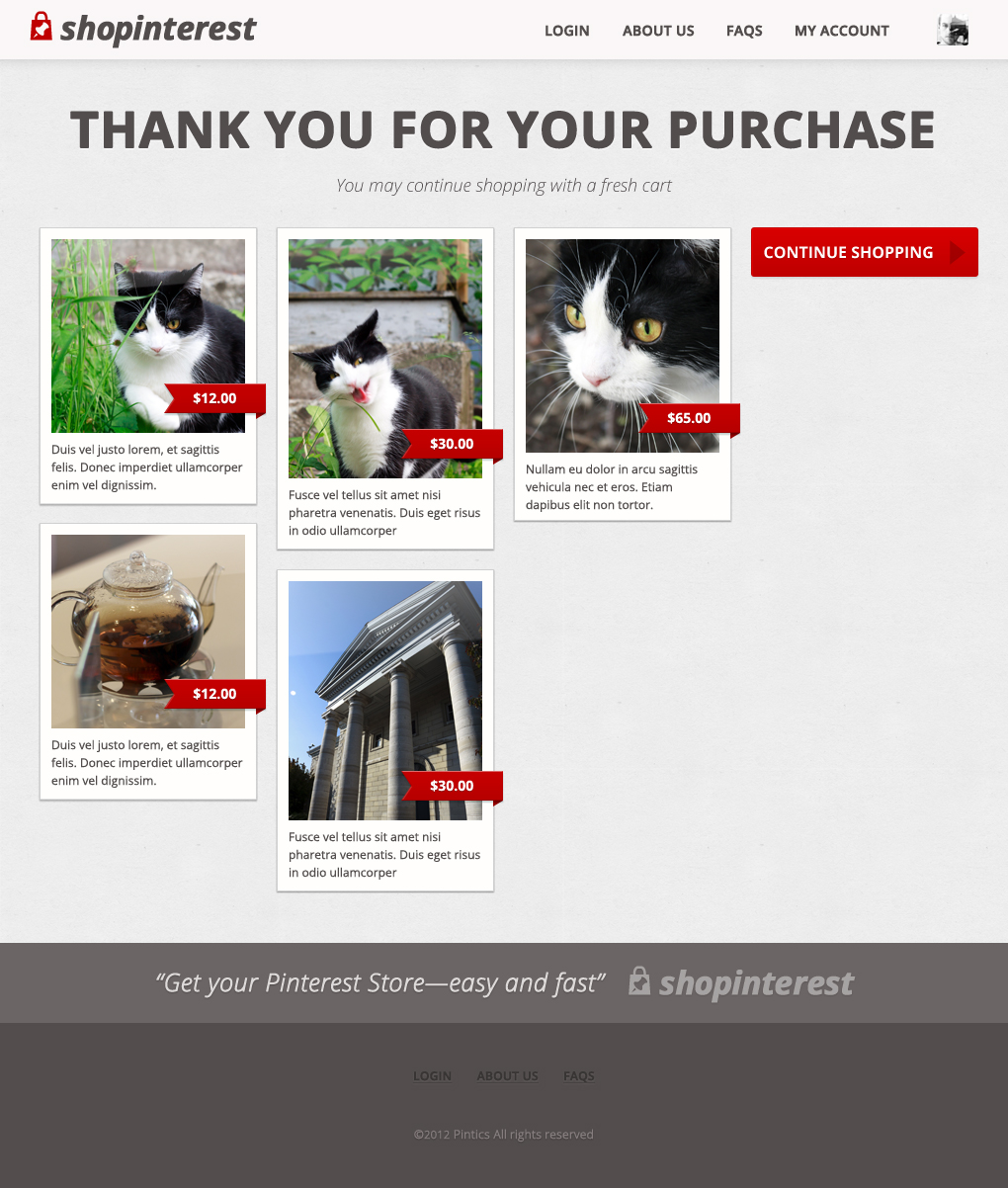
The same guys who built the Pinterest analytics service Pintics spent the weekend at the AngelHack Hackathon in Palo Alto working on another Pinterest-related project. This time around, the result is ShopInterest, a DIY service that lets anyone turn their Pinterest boards into an online store. Inspired by the burgeoning social shopping trend found on sites like Fab.com, for example, ShopInterest turns your curated pin collections into web shops that include an integrated shopping cart experience. It’s “Shopify for Pinterest,” the company explains.
According to Francisco Guerrero, Pintics’ CEO, ShopInterest isn’t a “pivot” for Pintics – that other service is still doing well, he says, and is now tracking the analytics associated with 750,000 pins. Instead, the two services, Pintics and ShopInterest, are aimed at different audiences. “Our Pinterest analytics service targets large e-commerce companies,” Guerrero says, “but after we saw the large volume of sales generated via Pinterest, we decided to help regular users join in the fun and profits.”
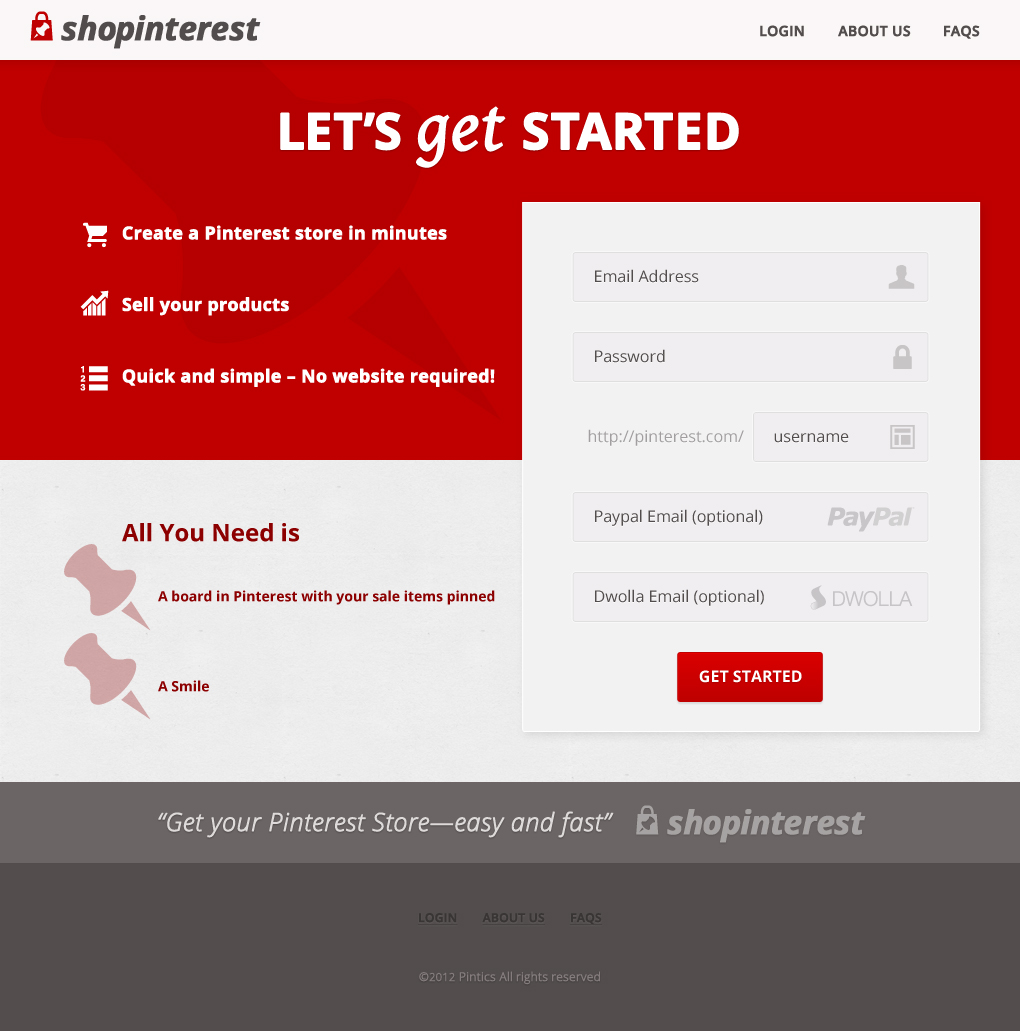
To get started, users will just sign in, select the boards where their products are shown, add a description, price and shipping charges, and then select how they want to get paid (PayPal or Dwolla). The rest of the setup is handled by ShopInterest itself. And it doesn’t look too shabby, either – especially considering how quickly it was built. “We’re tired, we’re hungry, we haven’t slept in the last 36 hours, but we are very happy that this side project came out looking really well,” Guerrero said on Sunday.
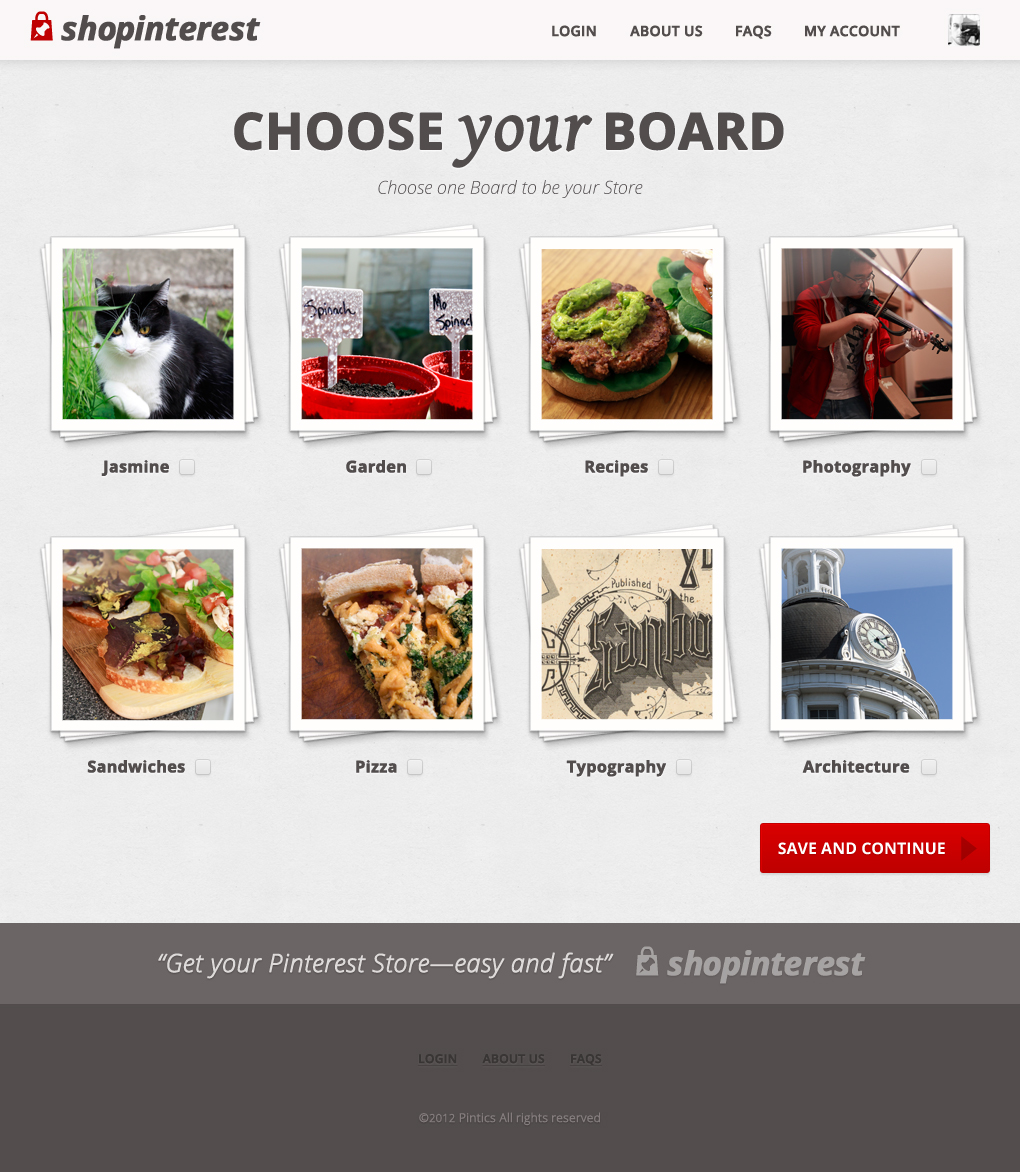
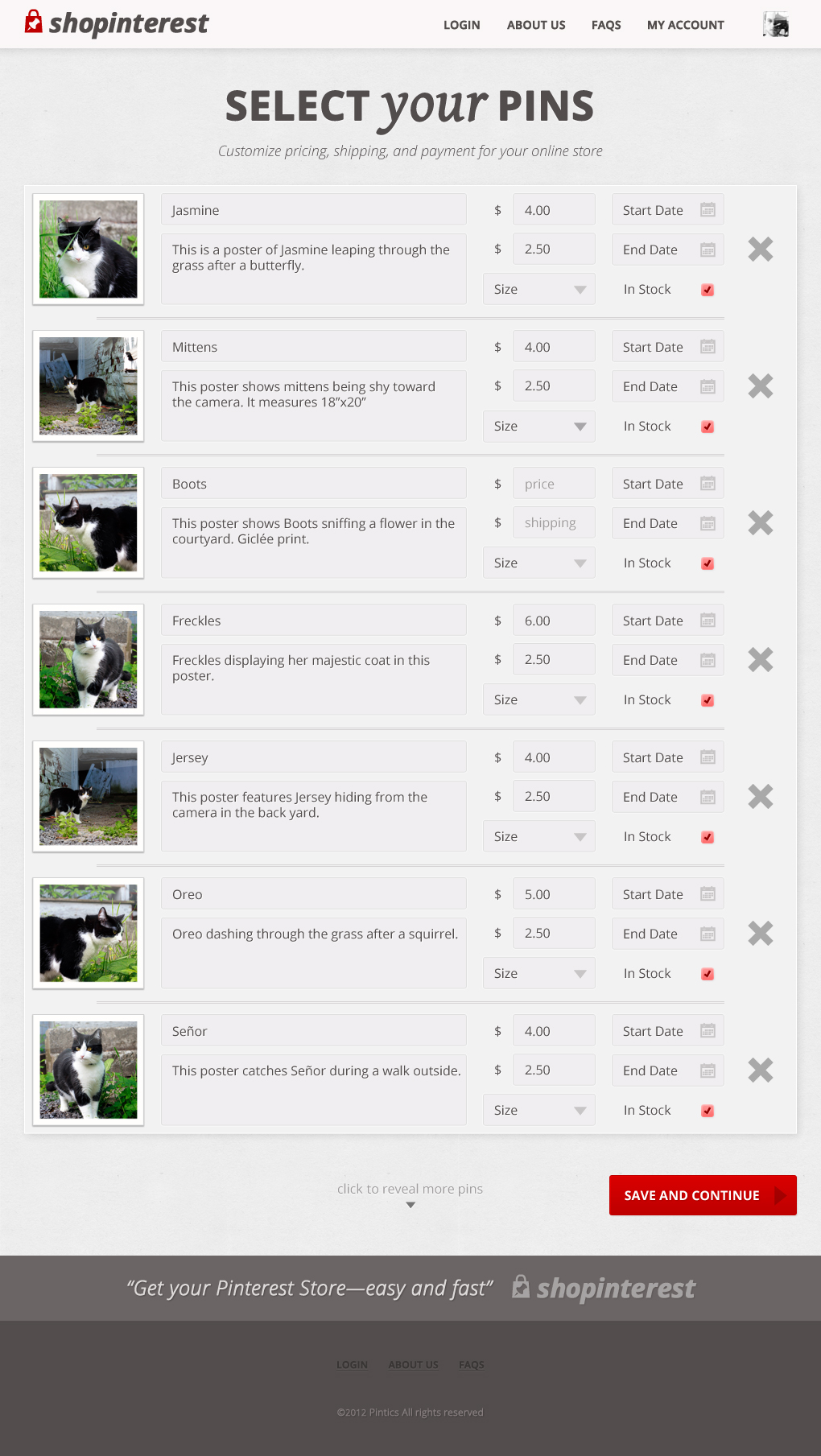
The project, a team effort between Pintics’ co-founders Francisco Guerrero and Liang Huang, along with designer Tom Hodgins, Yisha Peng and Jianqing Sun, is not the first time a third-party has been used in an attempt to extract dollars from all the social image sharing on the site, now the third most popular social network behind Facebook and Twitter. Most notably, in February of this year, it was revealed that Pinterest itself had experimented with SkimLinks’s content monetization platform for web publishers, pulling in maybe $10,000-$20,000 per year. But word was Pinterest was less interested in the income than it was in the analytics SkimLinks provided.
Disrupt 2026: The tech ecosystem, all in one room
Your next round. Your next hire. Your next breakout opportunity. Find it at TechCrunch Disrupt 2026, where 10,000+ founders, investors, and tech leaders gather for three days of 250+ tactical sessions, powerful introductions, and market-defining innovation. Register now to save up to $400.
Save up to $300 or 30% to TechCrunch Founder Summit
1,000+ founders and investors come together at TechCrunch Founder Summit 2026 for a full day focused on growth, execution, and real-world scaling. Learn from founders and investors who have shaped the industry. Connect with peers navigating similar growth stages. Walk away with tactics you can apply immediately
Offer ends March 13.
But the fact that Pinterest hasn’t spawned a million other efforts like this one via ShopInterest has more to do with the fact that the service still lacks a public API. (The documentation was briefly published online – details are archived here – so we know one exists, however.) To work around this issue, the Pintics team had to get a little creative. “The RSS feed is parsable and contains the basic info we need,” Guerrero notes, referring to one of the hacks involved. But, he adds, “just like everyone else, we are waiting for the full API to be made available by Pinterest to do even more features already planned.”
Currently, ShopInterest is sitting behind a LaunchRock sign-up page, but you can see it in action in the video below.
[youtube=http://www.youtube.com/watch?v=JlfdTz-aDwU&w=640&h=360]