


comScore’s online video stats for September are in, and in today’s non-news, Google Sites again ranks as the number one source of online video views. Google Sites, which derives most of its traffic from YouTube, served 18.6 billion videos in September, which made up 47 percent of the 39.8 billion videos viewed on the Web last month. Even for the cynical newsmen among us, that is pretty impressive.
What’s more, Microsoft Sites and Viacom Digital both leap-frogged Facebook in the rankings, to take third and fourth place respectively, while Facebook dropped to fifth. (You can read our August coverage of the web video trends here and Erick’s coverage of Facebook assuming third place back in July here.)
On the advertising side of online video, comScore reports that, of the 6.8 billion video ads viewed by Americans in September, more than 1 billion of those ad impressions were served by Hulu.
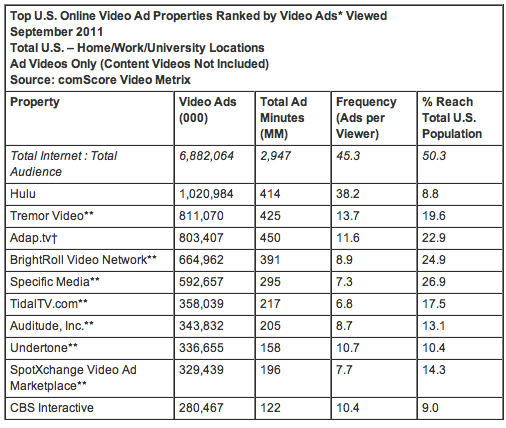 According to comScore, “video ads” are defined solely by streaming-video advertising and “do not include other types of video monetization, such as overlays, branded players, matching banner ads, homepage ads, etc.”
In September, Hulu served 1.02 billion video ads, with duration of these ads totaling 414 million minutes. The site resumed its 1 billion+ rate after dipping below the billion-benchmark over the summer, likely picking back up because our nation’s younguns are headed back to school. After all, let’s be honest, college kids returning to their dorm rooms no longer have the benefit of mom and dad’s cable package, so it’s back to watching their favorite TV shows on Hulu.
And, as video ads reached 50 percent of the U.S. population an average of 45.3 times during September, Hulu was the property that delivered the highest frequency of video ads to its viewers with an average of 38.2 per viewer. Anyone who watches Hulu knows that you can’t get through a broadcast without sitting through about 17 ads.
Hulu seems to be receiving a disproportionate share of video ad dollars because the platform is viewed as brand-safe, as advertisers know that they can run their ads on Hulu’s content without having to be red-faced when that ad shows up on some random user-generated video posted by someone’s uncle.
Disrupt 2026: The tech ecosystem, all in one room
Your next round. Your next hire. Your next breakout opportunity. Find it at TechCrunch Disrupt 2026, where 10,000+ founders, investors, and tech leaders gather for three days of 250+ tactical sessions, powerful introductions, and market-defining innovation. Register now to save up to $400.
Save up to $300 or 30% to TechCrunch Founder Summit
1,000+ founders and investors come together at TechCrunch Founder Summit 2026 for a full day focused on growth, execution, and real-world scaling. Learn from founders and investors who have shaped the industry. Connect with peers navigating similar growth stages. Walk away with tactics you can apply immediately
Offer ends March 13.
And, as we wrote last month, Hulu has never done social particularly well, but on September 22nd, Hulu went live on Facebook, meaning that video site’s users now get to watch their content directly within Facebook without having to leave the social network. This also means that the ads played by advertisers on Hulu get the added benefit of Facebook users’ eyeballs. Ads galore.

