


When Microsoft launched Windows Phone last year, I was of the opinion that it was a platform that would never build steam. The entrenched players – iOS, RIM, and Android – already controlled the market, and the hiatus between the last Windows Mobile phone and the first Windows Phone was too long for even the most dedicated or curious customers to wait.
It seems that this was uncharacteristically prescient as both Gartner and Horace Dediu both estimate that Microsoft sold 1.4 to 1.7 million Windows Phones this last quarter. As Gruber quips: “In other words, for that entire quarter, they sold about as many total Windows Phones as Apple sold iPhone 4S preorders last weekend.”
The WinPho Mango update recently reached our shores and thus far everyone has been quite happy. That’s the odd thing: no one I know, no one I’ve spoken to, is particularly disappointed by Windows Phone nor are they particularly interested in picking one up. Like Palm, the consensus is that the platform is solid, charming, and aesthetically pleasing but that nice phones finish last. Even Steve Ballmer admitted that year one sales have been far below expectations, not a particularly rousing endorsement of the platform.
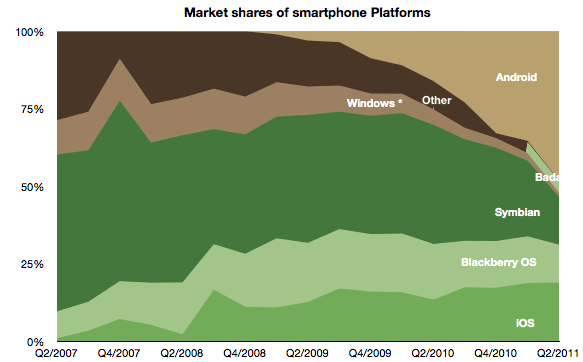
Alternatively we can follow the money. Microsoft pledged $1 billion to Nokia in order to promote Windows Phone and part of this cash will go towards sales incentives. Throwing money at a problem is Microsoft’s traditional MO and I don’t doubt this will be successful. Every phone will be a smartphone in the next few years and the only thing standing in the way of Microsoft’s ascendency is price when compared to similarly outfitted Android and iOS models.
Microsoft has a lot of catching up to do. Although I can’t refute their massive lead in the PC space, Google and Apple have a commanding lead in mobile and it will be hard for Microsoft to buy its way to the top. It seems that the old way of doing business – subsidies, bundling, and a healthy dose of scare tactics and FUD – will not help Microsoft in this case. It used to be that you’d never get fired for buying Microsoft. While I can’t speak for the mass of IT departments, it seems like that is increasingly not the case.
So whither Windows Phone? I can’t see the platform going away, especially with the improvements we can expect from Windows 8 and the Metro UI and how the PC and the mobile interfaces will eventually merge. My concern, simply, is that it still is too late to come to dominance, which I suppose is fine.
Disrupt 2026: The tech ecosystem, all in one room
Your next round. Your next hire. Your next breakout opportunity. Find it at TechCrunch Disrupt 2026, where 10,000+ founders, investors, and tech leaders gather for three days of 250+ tactical sessions, powerful introductions, and market-defining innovation. Register now to save up to $400.
Save up to $300 or 30% to TechCrunch Founder Summit
1,000+ founders and investors come together at TechCrunch Founder Summit 2026 for a full day focused on growth, execution, and real-world scaling. Learn from founders and investors who have shaped the industry. Connect with peers navigating similar growth stages. Walk away with tactics you can apply immediately
Offer ends March 13.
Looking at the numbers and general sluggishness on Microsoft’s part, a pessimist might call this platform dead. I don’t agree, but I think it definitely needs a shot of adrenaline to the heart. Nokia has been slow to bring its devices to market, but they’re set to debut at Nokia World in two weeks. If the fruits of that collaboration don’t provide the boost WP7 needs to succeed, it may be that nothing ever will.
[Image: Huguette Roe/Shutterstock]

