


Right now, many of you are likely downloading iTunes 10, the latest version of Apple’s media software. The most notable feature in this new version is Ping, Apple’s first stab at building a music social network (or really any kind of social network). It’s interesting on a number of levels, but even the most basic level is pretty interesting: Ping’s social graph.
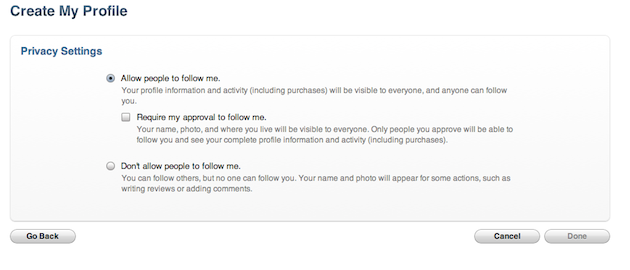
First of all, to use Ping at all you have to opt-in to it. While Apple CEO Steve Jobs touted the 160 million built-in users (it’s currently available in iTunes in 23 countries), that’s a bit misleading because many people won’t opt-in to using it — many of them for no other reason than they’re lazy or just don’t care. But assuming you do opt-in to it, the next social layer is interesting as well. Immediately, you’re taken to a Privacy Settings page where Apple asks you how you’d like to use the service. This is where you decide if you want to use the friend model, the follow model, or the lurk model.
To be more clear, Apple asks you to decide between two things: do you want to allow people to follow you, or do you want no one to be able to follow you? The latter is a nice option because you can still use Ping, you simply use it as a lurker. You can see what other people with public profiles are doing, but they can’t see what you are doing. The other option is to let people follow you — but there’s a sub option to this. You can either let anyone follow you (think: Twitter) or you can get notifications to approve everyone who wants to follow you (think: Facebook).
Leave it to Apple to come up with a social graph dynamic that is fairly complicated but made to seem simple. I mean, this is almost the opposite of many of Facebook’s convoluted social rules. My argument recently has been that Facebook should have a simplified option to allow you to have both friends and followers — you know, like what Apple is doing here. Instead, everyone on Facebook is a friend or they’re some sub-list quasi-friend that you really hate but are connected with anyway. Or something. Or you can make a Page — which creates double the work for you and those people who also happen to be friends and followers. It’s just so ugh.
I didn’t even consider this lurker option for Facebook because quite frankly, it would freak out a lot of people. But Apple does this smartly as well. While you’re free to roam and and see other public updates, if you do want to post something like a comment, your identity is shown. So no, there will be no anonymous trolling.
I haven’t used Ping enough to tell if it will actually be useful. Given that this is Apple’s first real foray into social, it wouldn’t be a huge surprise. But they’ve won the first battle: simple privacy settings. Facebook could learn a thing or two from this.

